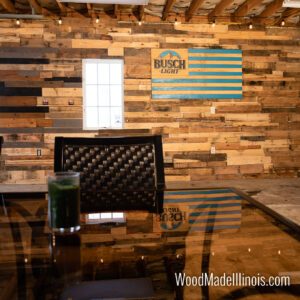
When repeated exterior cleaning no longer holds back the damage, the right move is a carpentry-led fix: full or partial siding replacement, new wood or composite cladding, a pallet-wood accent wall, or built-in trim solutions that replace weathered surfaces rather than mask them. These alternatives address root causes and satisfy IRC 2024 R703.3 code requirements (6 in. clearance to grade, 2 in. to horizontal surfaces, finish coat within 60 days), and hold their value far longer than a cleaning cycle.
- Rot or delamination at the base → replace siding boards and restore grade clearance
- Faded or peeling finish → re-clad with new wood or composite, or apply a fresh stain system
- Recurring staining from moisture → install a water-resistive barrier (WRB) and correct flashing
- Worn trim or exposed end grain → built-in trim replacement with back-primed boards
- Low-budget refresh on a sheltered wall → pallet-wood or reclaimed-board accent feature
Key Takeaways
Carpentry-led alternatives to exterior cleaning — siding replacement, cladding, accent walls, and built-ins — address root-cause moisture failures that repeated washing cannot fix, and they must meet IRC 2024 R703.3 clearance and WRB requirements to perform long-term.
| Point | Details |
|---|---|
| Grade clearance is non-negotiable | IRC 2024 R703.3 requires 6 in. to finish grade and 2 in. to horizontal surfaces; correcting this stops recurring rot. |
| Back-prime before you install | All six sides of each board need primer before installation; finish coat must follow within 60 days. |
| Material choice drives maintenance cycles | Composites need minimal upkeep; solid lumber needs periodic staining or sealing. |
| Pressure washing accelerates damage | Forced water behind panels loosens caulk and promotes rot — carpentry repairs fix the pathway, not just the surface. |
| Woodmadeillinois for local projects | The team handles siding, cladding, accent walls, and trim replacement across Central Illinois with WRB integration included. |
Table of Contents
- What siding and cladding materials should you consider?
- Which finishes and surface treatments protect wood siding best?
- Why carpentry fixes outlast cleaning in Central Illinois
- Woodmadeillinois brings 100+ years of local carpentry experience to your project
- Sources
What siding and cladding materials should you consider?
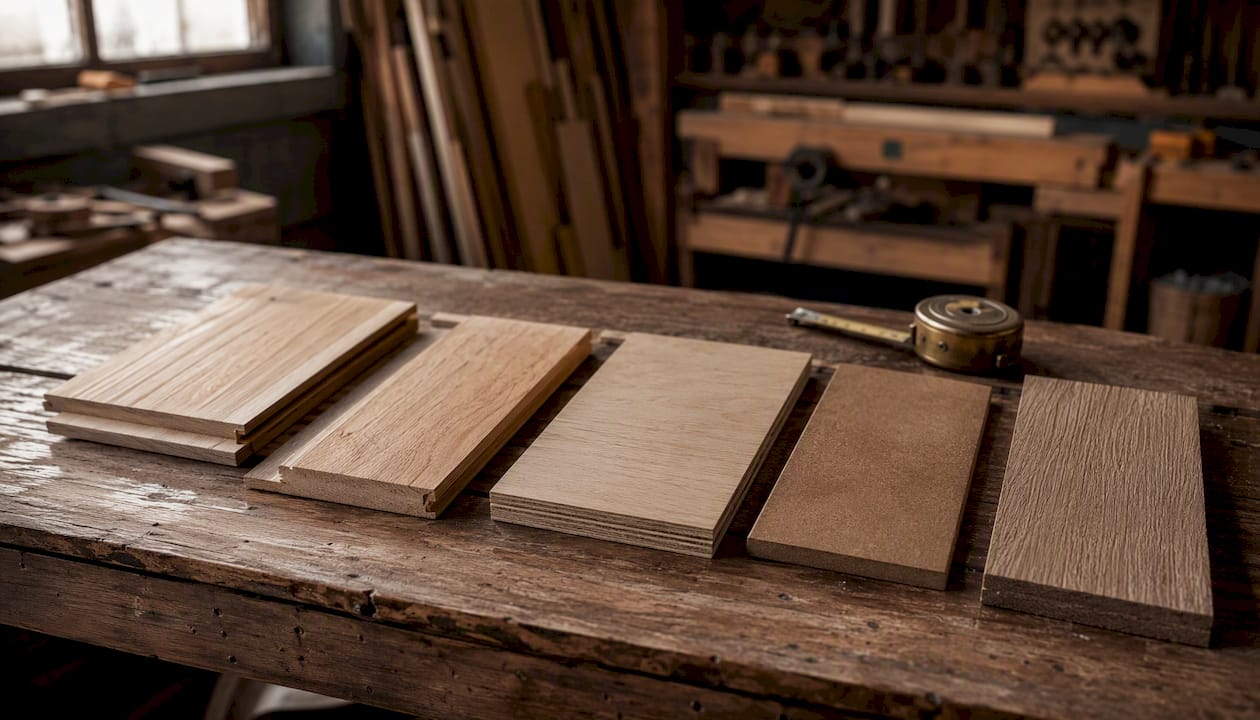
Wood siding falls into three broad categories: solid lumber (bevel, shiplap, board-and-batten), plywood or sheet siding, and reconstituted products such as hardboard and fiberboard. Each behaves differently under finish and moisture.
Solid lumber is dimensionally stable when properly dried and back-primed, takes stain beautifully, and can last decades with periodic maintenance. Plywood sheet siding installs faster and costs less per square foot, though its edges are especially vulnerable to moisture if left unsealed. Hardboard and fiberboard are dense and paint-friendly but swell irreversibly when end grain absorbs standing water — making correct installation non-negotiable. Composite cladding is engineered for low maintenance and high resistance to moisture and fading, trading the warmth of natural grain for a predictable, lower-maintenance lifecycle.
Which finishes and surface treatments protect wood siding best?
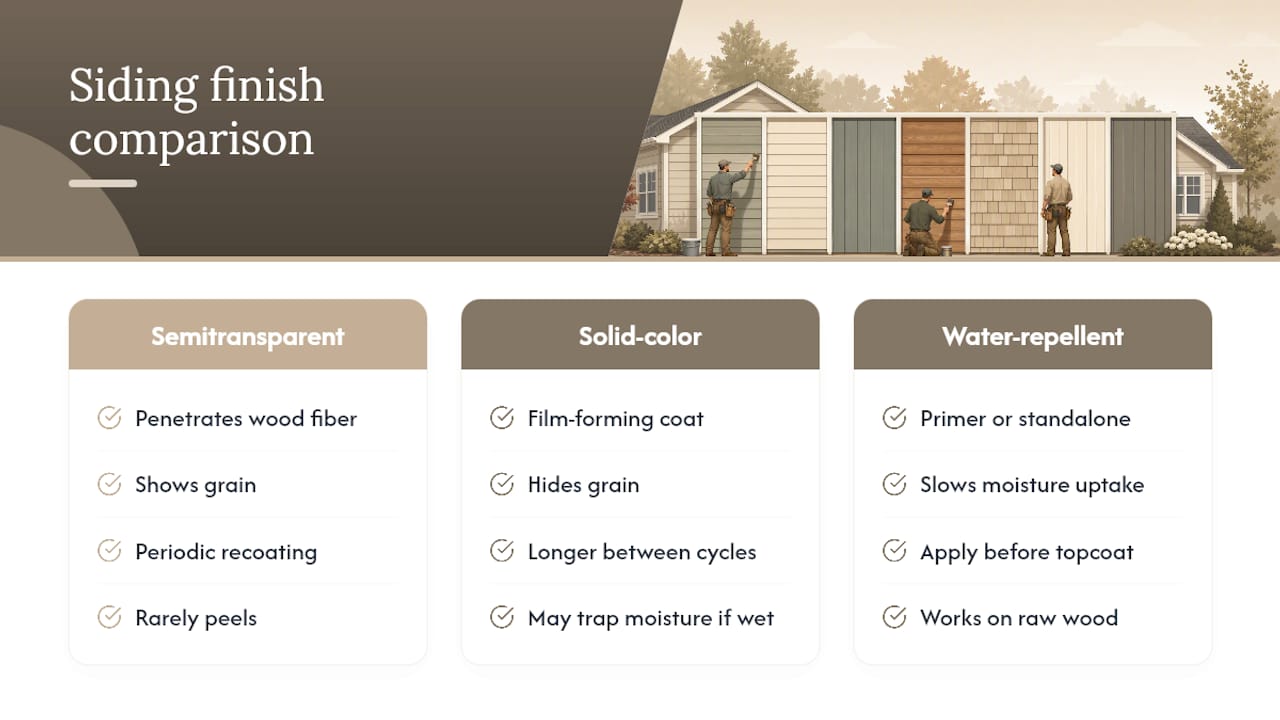
Finish choice is the skin protecting the bones of any wood exterior. Semitransparent stains penetrate the wood fiber and let grain show through; they require periodic recoating but rarely peel. Solid-color stains and paints form a film coat that hides grain and lasts longer between cycles, though they can trap moisture if the substrate is not fully dry. Water-repellent preservatives work as a primer layer or standalone treatment on raw wood, slowing moisture uptake before a topcoat is applied.
The step most often skipped is back-priming: coating all six sides of each board before installation. Skipping it allows differential moisture movement that buckles paint within a season. End-sealing — applying a liberal coat of primer or sealant to every cut end — is especially critical for hardboard, where exposed edges act like a wick. The NELMA installation guide recommends installing siding near its local equilibrium moisture content to minimize post-installation shrink and swell.
Why carpentry fixes outlast cleaning in Central Illinois
Pressure washing is not a reliable long-term maintenance method for wood siding — it treats symptoms while the underlying moisture pathway stays open. Consumer Reports documents how even moderate pressure forces water behind panels, loosens caulk, and etches wood fiber, accelerating the very decay homeowners are trying to clean away.
In Central Illinois, freeze-thaw cycling compounds this. Water trapped behind siding expands each winter, widening gaps and lifting paint. Mulch piled against the base eliminates the code-required 6-inch grade clearance, keeping wood perpetually damp. A carpentry repair that restores clearance, installs a proper WRB, and provides a ventilated rain-screen air gap breaks that cycle permanently.
Pro Tip: Before calling anyone, walk the base of your exterior walls. Swollen boards, paint buckling at the bottom course, or mulch touching siding are signs that grade clearance and WRB integrity need attention — not another wash.
For sheltered interior or semi-exterior accent walls, pallet wood is a cost-effective option: clean, dry for 24 hours, sand lightly, test a spot, then apply multiple finish coats. Best windows for exterior carpentry and finish application in Central Illinois fall between late April and early October, when temperatures stay above 50°F and humidity is manageable.
Woodmadeillinois brings 100+ years of local carpentry experience to your project
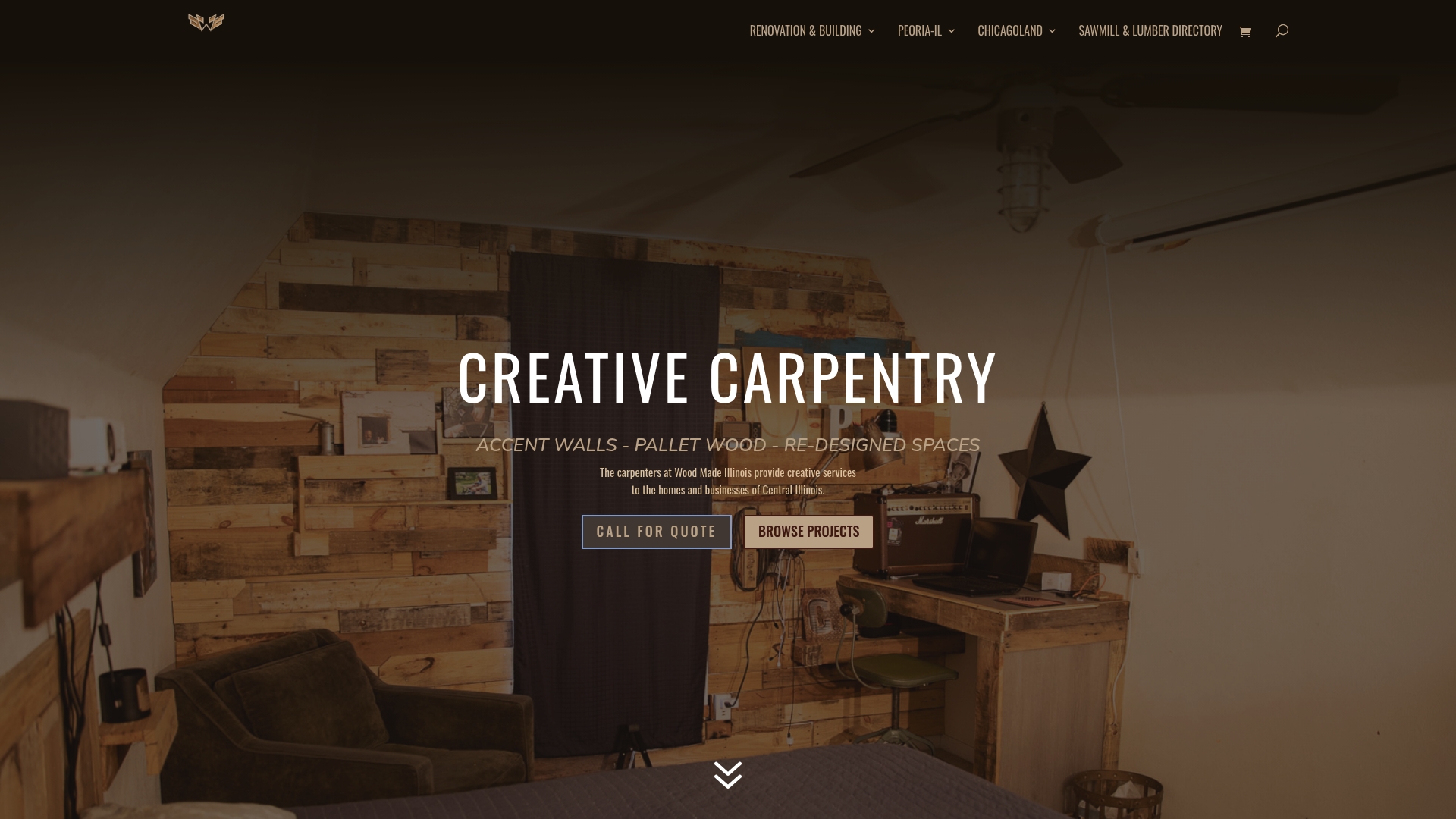
Woodmadeillinois offers Central Illinois homeowners and small-business owners a direct path from weathered surfaces to lasting results: siding repair and replacement, wood and composite cladding, pallet-wood accent walls, exterior trim replacement, and end-sealing and re-finishing — all executed with WRB and flashing integration built in. The team carries over 100 years of combined carpentry experience and a local portfolio spanning residential and small commercial projects across the region. Typical exterior projects run 1–3 weeks depending on square footage, material choice, and whether WRB or flashing repairs are needed; permit requirements vary by municipality, so having approximate wall dimensions and photos of visible damage ready speeds the estimate process. Request an on-site assessment from trusted local carpentry experts or browse custom carpentry project ideas to match your budget before the first conversation.
Sources
The single most important document for any siding replacement or re-cladding project is IRC 2024 R703.3, which governs clearances, WRB requirements, back-priming, and finish timelines. The USDA Forest Products Laboratory wood siding guide covers material categories and finish behavior in detail.
- USDA Forest Products Laboratory: Wood Siding Guide (hgb203.pdf)
- Can You Pressure-Wash It? – Consumer Reports
- InspectAPedia: Wood siding best practices and installation
- A Practical Guide to Wood Siding Cleaning (2026) | Today’s Homeowner
- Wood Cladding vs Composite Cladding: Which Is Better for Your Home? – AdvantageLumber Blog
- DIY Guide To Installing A Pallet Wall | Sherwin-Williams project center