
Landscaping Services
Site Prep, Grade & Drainage Control
-
Establishing the Pitch: Shooting elevations with a transit or laser level to build in a mandatory 1% to 2% slope ($1/8$ to $1/4$ inch per foot) away from foundations to control surface runoff.
-
Subgrade Compaction: Mechanically packing the raw, excavated soil using a vibratory plate compactor or rammer (jumping jack) to eliminate air pockets and achieve maximum density before importing material.
-
Geotextile Subgrade Stabilization: Laying down a woven or non-woven geotextile fabric directly over the raw dirt to act as a separation layer, preventing the crushed stone base from migrating into the native subgrade under heavy loads.
-
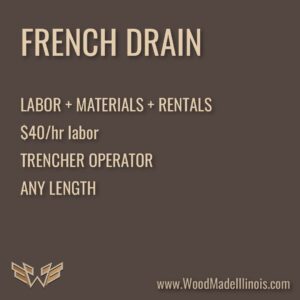
Hydrostatic Pressure Relief: Installing a perforated drain tile (weep pipe) at the heel of a wall, wrapped in filter fabric and surrounded by clean stone, to collect and channel away subsurface water.
Base & Flatwork Engineering
-
Lift Compaction: Importing dense-grade aggregate (like 3/4-inch crushed limestone with fines) and compacting it in controlled, sequential “lifts” of no more than 2 to 3 inches at a time to ensure uniform density throughout the entire base depth.
-
Open-Graded Base Systems: Utilizing clean, angular, washed stone (such as #57 for the deep base and #8 for the bedding) instead of traditional gravel with fines. This technique allows for rapid drainage and can be installed in freezing temperatures or wet conditions.
-
Screeding the Bedding Layer: Pulling a straightedge across parallel screed pipes to establish a perfectly uniform, uncompacted 1-inch layer of washed concrete sand or #8 stone chips directly beneath paving units.
-
Lateral Edge Restraint: Spiking heavy-duty PVC/aluminum border restraints into the aggregate base, or troweling a hidden concrete “toe” (masonry wedge) along the perimeter to lock pavers in place and prevent outward shifting.
Vertical Masonry & Wall Systems
-
Frost Line Footing: Digging and pouring a concrete footer below the local frost line for all mortared masonry walls to prevent frost heave from cracking the joints.
-
Building with a Batter: Engineering a intentional backward lean into a dry-stacked or segmental retaining wall—typically $1:12$ or about $5^{\circ}$—so gravity pulls the structure into the hillside it is retaining.
-
Geogrid Reinforcement: Sandwiches of high-tensile synthetic grid pinned between block courses and extended horizontally back into the structural backfill zone to tie the wall and the soil mass together on heights exceeding 3 to 4 feet.
-
Clean Stone Backfilling: Dumping a minimum 12-inch column of clean, angular, angular drainage stone (no fines) directly behind the back of a retaining wall to ensure water drops straight down to the drainage tile rather than pressing against the face of the blocks.
-
Coping/Cap Installation: Securing the top structural course of a wall or steps with high-strength exterior masonry adhesive or mortar, preventing water from infiltrating the core of the structure.
Interlocking & Joint Finishing
-
Polymeric Sand Stabilization: Sweeping a specialized mixture of graded sand and binders into dry-laid paver joints, compacting it to fill voids, and misting it with water to activate the polymers for a flexible joint that resists erosion and weed growth.
-
Pointing/Striking Joints: Filling open joints in wet-laid natural stone or brick with structural mortar using a grout bag, then finishing the joint with a striking tool to compress the mortar and seal out moisture.
-
Breathable Penetrating Sealers: Applying silane/siloxane or water-based acrylic sealers that protect against salt and oil staining while allowing vapor transmission so moisture isn’t trapped beneath the surface.
Showing all 3 resultsSorted by price: low to high


Products
-
 Large Lumber Yard Pickup on Trailer
$250.00
Large Lumber Yard Pickup on Trailer
$250.00
-
 Lumber Yard Pickup without trailer
$75.00
Lumber Yard Pickup without trailer
$75.00
-
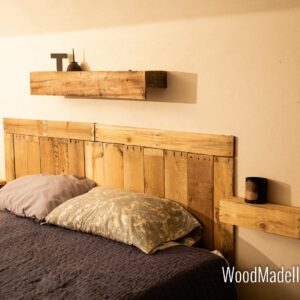 Wood Shelving
Original price was: $250.00.$200.00Current price is: $200.00.
Wood Shelving
Original price was: $250.00.$200.00Current price is: $200.00.
-
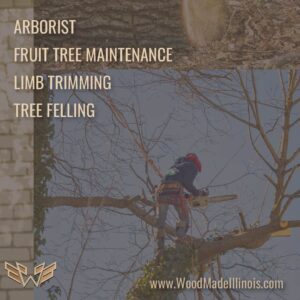 Arborist - Tree Trimming Service
$50.00
Arborist - Tree Trimming Service
$50.00
-
 Pay Any Invoice
$1.00
Pay Any Invoice
$1.00
-
 Solid Red Oak Kitchen Cabinets
$400.00
Solid Red Oak Kitchen Cabinets
$400.00
-
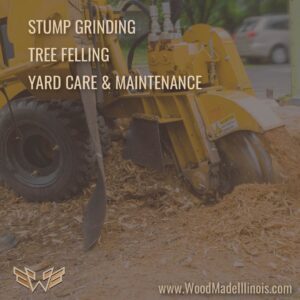 Peoria Area Stump Grinding Service
$450.00
Peoria Area Stump Grinding Service
$450.00
-
 Power Washing Peoria
$50.00
Power Washing Peoria
$50.00
-
 Hourly Rate Peoria Handyman
$50.00
Hourly Rate Peoria Handyman
$50.00
-
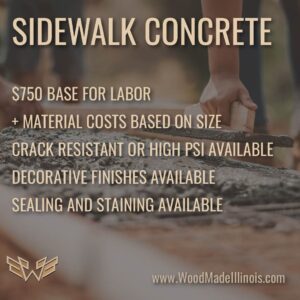 Sidewalk Concrete Peoria IL
$750.00
Sidewalk Concrete Peoria IL
$750.00
-
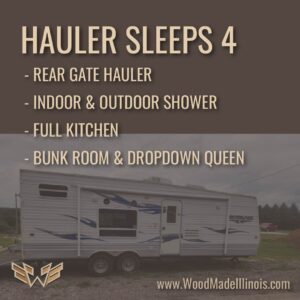 Temporary Construction Worker Housing Delivered and Setup
Original price was: $15,000.00.$12,000.00Current price is: $12,000.00.
Temporary Construction Worker Housing Delivered and Setup
Original price was: $15,000.00.$12,000.00Current price is: $12,000.00.
-
 Hardwood Floor Repair Service
$50.00
Hardwood Floor Repair Service
$50.00
-
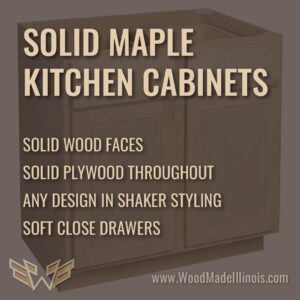 Solid Maple Kitchen Cabinets
$400.00
Solid Maple Kitchen Cabinets
$400.00
-
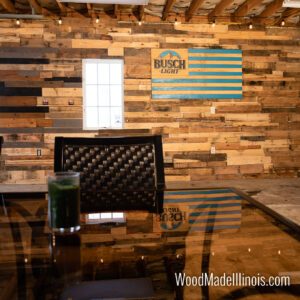 Basic Pallet Wood Accent Wall
Original price was: $1,000.00.$900.00Current price is: $900.00.
Basic Pallet Wood Accent Wall
Original price was: $1,000.00.$900.00Current price is: $900.00.
-
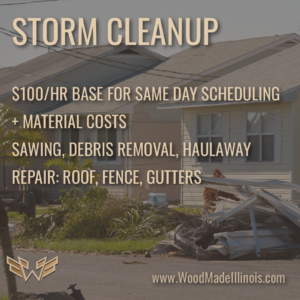 Peoria IL Storm Cleanup Services
$100.00
Peoria IL Storm Cleanup Services
$100.00
-
 Kitchen Renovation
$50.00
Kitchen Renovation
$50.00
-
 Aurora IL Kitchen Installer
$800.00
Aurora IL Kitchen Installer
$800.00
-
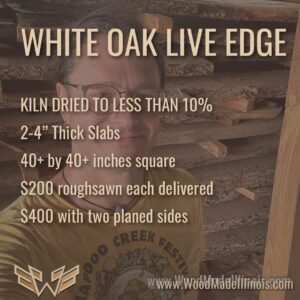 Live Edge Slab White Oak
$20.00
Live Edge Slab White Oak
$20.00
-
 Peoria Illinois Storm Cleanup Services
$100.00
Peoria Illinois Storm Cleanup Services
$100.00
-
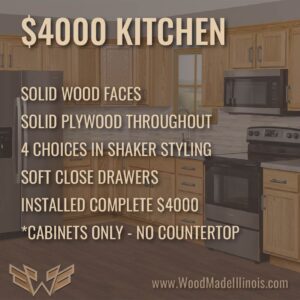 $4000 simple kitchen package
$4,000.00
$4000 simple kitchen package
$4,000.00
-
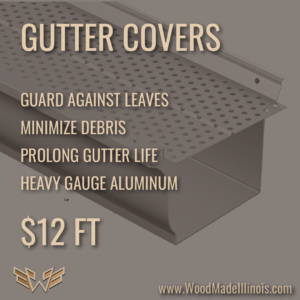 Gutter Guard Leaf Protecting Covers Installed Price Peoria IL
$12.00
Gutter Guard Leaf Protecting Covers Installed Price Peoria IL
$12.00
-
 Gutter Cleaning
$50.00
Gutter Cleaning
$50.00
-
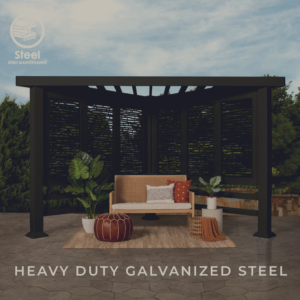 Black Metal Freestanding Pergola with Canopy
Original price was: $3,600.00.$2,900.00Current price is: $2,900.00.
Black Metal Freestanding Pergola with Canopy
Original price was: $3,600.00.$2,900.00Current price is: $2,900.00.
-
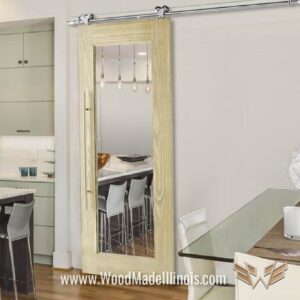 Rustic Barn Door Hanging Service
Original price was: $250.00.$200.00Current price is: $200.00.
Rustic Barn Door Hanging Service
Original price was: $250.00.$200.00Current price is: $200.00.
-
 Craftsman Home Restoration & Renovation
$50.00
Craftsman Home Restoration & Renovation
$50.00