Yes, targeted storage additions can replace many types of expensive furniture while costing a fraction of the price. A tiered storage unit that retails around $22 can perform the same organizational function as a dedicated sideboard or media console costing significantly more. Woodmadeillinois has built this principle into dozens of Central Illinois homes and businesses: the right storage addition, whether custom-built or thoughtfully assembled from freestanding units, eliminates the need for costly standalone furniture while often delivering more capacity. The main tradeoff is permanence versus flexibility. Custom built-ins are fixed assets; freestanding modular systems move with you.
Table of Contents
- Should you replace furniture with storage additions?
- Concrete storage options that can replace expensive furniture
- What do storage additions actually cost, and how long does installation take?
- How to choose materials and finishes that hold up without overspending
- Non-permanent solutions that work like built-ins for renters and tight budgets
- How to hire a carpenter or installer without getting burned
- How Woodmadeillinois approaches storage replacement projects
- Key Takeaways
- The case for thinking like a carpenter, not a furniture shopper
- Woodmadeillinois custom storage projects in Central Illinois
- Useful sources
Should you replace furniture with storage additions?
Three questions will tell you which direction to take before you spend a dollar.
- Do you own your home? If yes, custom built-ins are worth serious consideration. If you rent, prioritize non-permanent, modular storage options that protect your deposit and move with you.
- Is the room’s purpose stable for the next five or more years? A dedicated home office or a bedroom that won’t change function is a strong candidate for built-in storage. A flex room or a space you’re still figuring out calls for freestanding or modular.
- Is your timeline under four weeks and your budget under $500? Freestanding or modular units are the practical path. Longer timelines and larger budgets open the door to custom carpentry with a much higher return on investment.
Each answer points to a clear next step: measure your wall and call a carpenter, order a modular system, or visit a home goods store for a quick-win piece.
Concrete storage options that can replace expensive furniture
Four categories cover most situations, and each one maps to specific rooms and needs.
Custom built-ins are the gold standard for permanent storage. A floor-to-ceiling wall of cabinetry in a living room replaces a media console, a bookcase, and a side table in one installation. A built-in desk with overhead cabinets in a home office eliminates the need for a separate filing cabinet and credenza. Woodmadeillinois’s custom shelving work shows how a single carpentry project can consolidate three or four furniture purchases into one fitted solution.
Full-height freestanding cabinets grouped together are the most underused alternative. One buyer saved $4,000 by lining up identical 72-inch tall units and finishing the gaps with simple painted pine trim. The result reads as built-in from across the room. Full-height units also push storage upward, eliminating the dead space above waist-high furniture that collects dust and wastes vertical real estate.
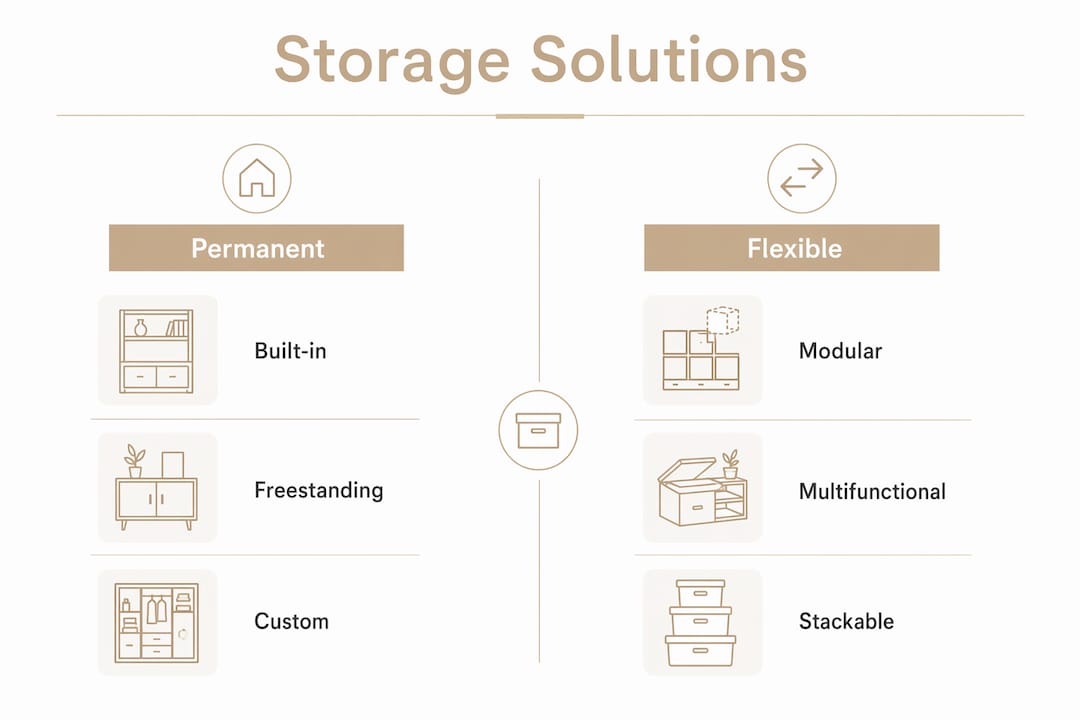
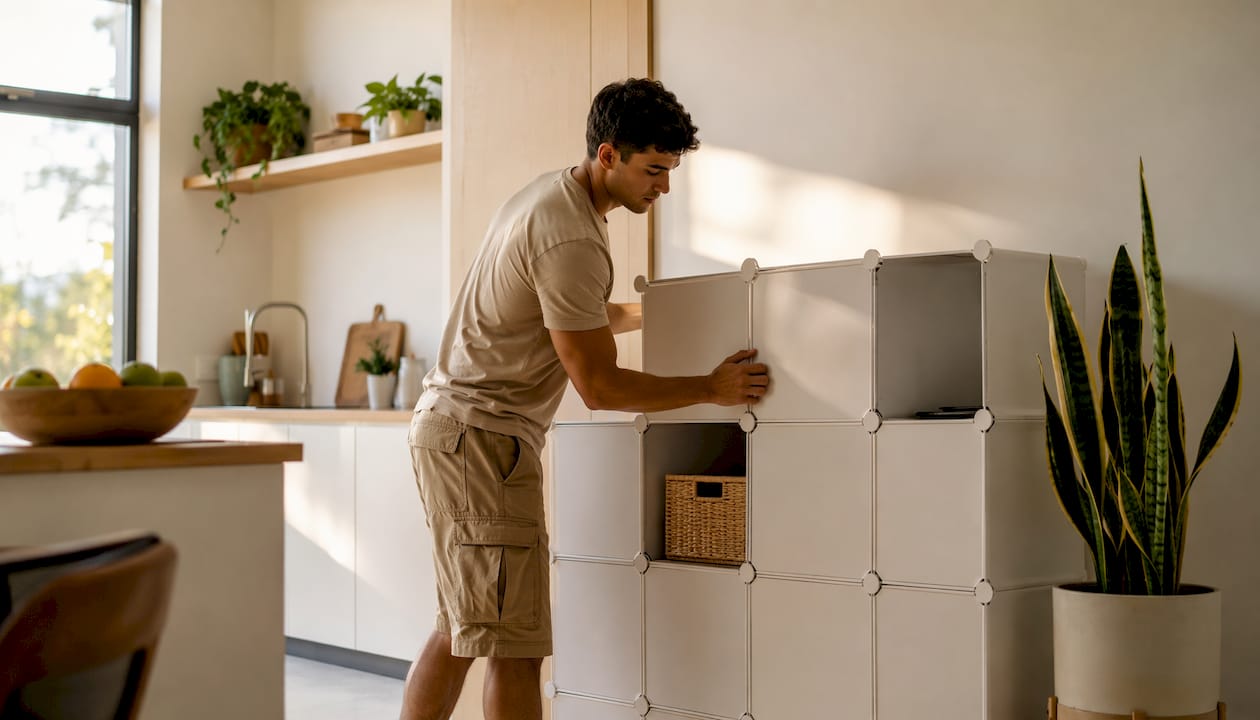
Modular stackable systems work best in entryways, closets, and home offices where needs shift over time. Cube organizers, drawer inserts, and stackable bins let you reconfigure without tools. They’re the right choice when the room’s function is still evolving.
Multifunctional storage furniture closes the gap between pure storage and traditional furniture. An ottoman with interior storage replaces both a coffee table and a blanket chest. A lift-top coffee table adds a work surface and hidden compartment. A window seat with drawers built beneath it replaces a dresser in a small bedroom.
Pro Tip: To make freestanding units look built-in, anchor them to wall studs for safety, then run a continuous piece of painted pine trim along the top and sides to close the gap between the cabinet and the wall. Swap the factory hardware for solid-metal pulls in a consistent finish, and the assembly becomes nearly indistinguishable from custom millwork.
What do storage additions actually cost, and how long does installation take?
Realistic numbers prevent budget surprises. The table below covers the four main approaches.
| Approach | Ballpark Cost | Typical Timeline |
|---|---|---|
| DIY modular/cube organizers | $50–$150 | A few hours |
| Assembled freestanding full-height units | $100–$600 | under a day |
| Basic custom built-ins (MDF, painted) | $800–$2,000 | 1–3 weeks |
| High-end custom millwork (solid wood, complex finish) | $3,000–$6,000 | 3–8 weeks |
The biggest cost drivers are material choice, finish complexity, and site preparation. Solid wood costs more than quality MDF; a painted finish costs less than stained hardwood; a simple rectangular run of shelving costs far less than a unit with face frames, doors, and integrated lighting. Site prep issues, such as out-of-plumb walls or hidden plumbing, add time and labor. To minimize delays, clear the room before the carpenter arrives, confirm wall stud locations in advance, and have finish decisions locked in before the project starts.
Built-in storage in certain rooms, particularly pantries, mudrooms, and bedroom closets, can add perceived resale value, though the return depends on quality and local market conditions.
How to choose materials and finishes that hold up without overspending
Material choice is where most budget projects succeed or fail. Quality MDF with a factory-applied finish outperforms contact-paper-wrapped particleboard in almost every real-world test. Contact paper delaminates at corners and edges within months, especially near moisture. One buyer described watching a “solid wood” cabinet’s veneer peel within six months after a damp vase sat on it. High-quality MDF or kiln-dried hardwood frames cost more upfront and last years longer.
Design strategies that make budget pieces look custom: run cabinets floor to ceiling to fill the vertical plane; use consistent hardware across every unit; add a toe kick or base molding to conceal adjustable feet; and choose a high-contrast color scheme (deep matte frame, lighter door panels) to break up visual mass. Full-height scale alone makes a room feel more architectural, not more crowded.
On sustainability, furniture experts recommend buying one quality piece per year and building out with modular stackable storage over time rather than furnishing all at once with disposable fast furniture. That approach produces a home that fills gradually with durable pieces instead of one that needs replacing in three years.
Pro Tip: Swapping factory pulls for solid-metal hardware is the single highest-return upgrade on a budget cabinet. A $30 set of pulls from a hardware store can make a $150 flat-pack unit read as a $600 piece. Add a painted toe kick and the transformation is complete.
Non-permanent solutions that work like built-ins for renters and tight budgets
Renters and anyone on a strict budget have more options than most realize.
- Modular cube organizers stack to ceiling height and reconfigure without tools.
- Drawer organizers and closet systems from home organization installers require no drilling and move out cleanly.
- Labeled bins on open shelving replace a dedicated linen cabinet or pantry unit.
- Tiered storage units handle small-item organization at a cost of about $22, while sets of glass jars for organizing small items are typically around $11 for a 12-set.
- Storage ottomans and lift-top tables double as seating and work surfaces.
- No-drill anchors and furniture safety straps secure tall freestanding units without damaging walls.
To avoid a temporary look, stack units to the same height, use a consistent color palette across all pieces, and add a few curated accessories at eye level. A row of identical baskets or a continuous line of matching bins signals intention rather than improvisation.
How to hire a carpenter or installer without getting burned
A short checklist protects you before any contract is signed.
- Verify the contractor carries general liability insurance and, where required by Illinois law, the appropriate contractor’s license.
- Ask to see a portfolio of comparable projects, specifically storage and built-in work.
- Request two or three references from recent clients and actually call them.
- Get a written quote that itemizes materials, labor, and finish work separately.
- Confirm a realistic timeline in writing, including start date and completion date.
Interview questions worth asking: What material do you recommend for this application, and why? How will the units be anchored? What finish options are available at this price point? Who handles site prep if the walls are out of plumb?
Red flags: no references offered, cash-only payment requests, a vague scope of work, or a timeline that sounds too fast for the complexity described. A reliable carpenter will welcome specific questions. Payment schedules typically run 30–50% upfront with the balance due on completion; avoid paying in full before work begins.
How Woodmadeillinois approaches storage replacement projects
Woodmadeillinois brings over 100 years of combined carpentry experience to projects across Central Illinois. A typical engagement starts with a site visit and a conversation about how the room is used, what the furniture it’s replacing actually failed to do, and what the budget allows. From there, the team proposes a solution that may be fully custom, a hybrid of custom trim work around freestanding units, or a phased plan that starts with quick wins and builds toward a permanent installation. Materials range from painted MDF for clean modern interiors to reclaimed pallet wood for clients who want warmth and character. Timeline from consultation to finished installation on a basic built-in project typically runs two to three weeks.
Key Takeaways
Storage additions replace expensive furniture most effectively when the solution is matched to the room’s permanence, the owner’s budget, and the specific storage failure the furniture created.
| Point | Details |
|---|---|
| Match solution to ownership | Renters should use modular and freestanding; homeowners with stable room functions benefit most from built-ins. |
| Full-height scale is the key move | Running units floor to ceiling multiplies capacity and eliminates dead space above waist-high furniture. |
| Material quality determines longevity | Quality MDF or hardwood frames outlast contact-paper particleboard; the extra cost pays back quickly. |
| Hardware upgrades punch above their weight | Solid-metal pulls and a painted toe kick can make a budget cabinet read as custom millwork. |
| Woodmadeillinois for custom work | The team handles everything from basic built-in shelving to full-room carpentry in Central Illinois. |
The case for thinking like a carpenter, not a furniture shopper
Most people approach a storage problem by searching for a piece of furniture that fits the space. Carpenters approach the same problem by asking what the space needs to do, then building or specifying exactly that. The difference sounds subtle, but it produces dramatically different outcomes. A $900 credenza that looks right but holds four serving platters is a worse investment than a $400 pair of full-height cabinets that hold everything and leave the room looking more finished. The furniture industry profits from selling aesthetics. Carpentry, at its best, sells function that happens to look good.
The hybrid approach—freestanding units finished with custom trim and hardware—is where most budget-conscious homeowners find the best ratio of cost to result. It’s not a compromise; it’s a strategy. And for projects that genuinely warrant custom millwork, the investment pays back in daily utility, room quality, and, in the right rooms, resale value.
Woodmadeillinois custom storage projects in Central Illinois
Replacing a piece of furniture with a purpose-built storage solution is exactly the kind of project Woodmadeillinois was built for. The team offers custom carpentry consultations, full-height cabinet installs, custom shelving, floating shelves, trim and finish work, and complete room transformations across Central Illinois.
The process is straightforward: one consultation to scope the project, a written quote with itemized costs, a confirmed timeline, and a finished installation with no loose ends. Whether the goal is a living room media wall, a home office built-in, or a bedroom closet overhaul, the team designs around your actual storage needs, not a catalog template. To get started, reach out to Woodmadeillinois’s carpentry team for a consultation and written quote.
Useful sources
- AP News: How to avoid fast furniture without spending too much — Expert guidance on buying modular, stackable storage over time as a sustainable alternative to fast furniture. Useful for long-term value and sustainability context.
- VBU Furniture: Built-In vs Freestanding Storage Guide — Thorough comparison of built-in and freestanding storage across flexibility, installation, and resale value. Primary framing source for the built-in vs freestanding tradeoff.
- Fufugaga: I Saved $4,000 Buying Full Height Storage Cabinets Instead of Built-Ins — First-person account of replacing custom millwork with full-height freestanding units finished with trim. Concrete cost-savings example.
- Fufugaga: Why I Traded My Dining Buffet for Furniture Storage Cabinets — Practical breakdown of vertical storage strategy, material quality pitfalls, and design choices for tall cabinets.
- Lifehacker: Five Cheap Storage Solutions for Small Apartments — Budget organizer options including tiered units and small-item storage; useful for the low-cost alternatives section.
- Nest N Thrive: The Renter’s Guide to Apartment Storage Without Drilling — Practical no-drill strategies for renters; supports the renter-friendly section and the quick-assessment checklist.
- Better Homes & Gardens: 21 Affordable Storage Ideas Using Everyday Items — Creative, low-cost organizer ideas priced under $15; useful for budget-alternatives inspiration. Consult local carpentry pages for region-specific pricing on custom built-in work.