Custom carpentry is defined as the practice of designing and building furniture and storage systems to fit a specific room’s exact dimensions and a worker’s precise daily needs. The role of custom carpentry in remote work goes far beyond aesthetics. A purpose-built home office addresses the ergonomic failures, wasted corners, and visual clutter that standard retail furniture simply cannot fix. Cornell University research shows that purpose-designed office spaces deliver 23% higher productivity and measurably less physical discomfort for remote workers. That single finding reframes custom woodworking from a luxury into a practical investment. Woodmadeillinois has spent over 100 years of combined team experience solving exactly these problems for Central Illinois professionals.
What is the role of custom carpentry in remote work?
Custom home office carpentry is the professional practice of designing, building, and installing furniture systems tailored to a specific room’s dimensions, a worker’s workflow, and the physical demands of daily computer use. The industry term for the finished result is built-in cabinetry, and it covers everything from floor-to-ceiling shelving to integrated desk runs and concealed cable systems.
Standard retail furniture is built to fit the average room. Your room is not average. Mass-produced desks come in fixed widths, typically 48 to 72 inches, and they leave dead corners, awkward gaps, and exposed wiring that accumulate clutter over time. Custom carpentry fits exact dimensions, including the awkward L-shaped corners and sloped ceilings that off-the-shelf pieces ignore entirely.
The process that separates bespoke carpentry from a trip to a furniture store involves three distinct phases:
- Design consultation: A carpenter measures the room precisely and maps your workflow requirements, including monitor count, storage needs, and lighting preferences.
- Fabrication: Components are built to the exact specifications agreed upon, using materials chosen for durability and visual consistency.
- Scribing and installation: Scribing techniques allow cabinets to press tightly against non-square walls and uneven floors, eliminating gaps and the dust that collects in them.
The result is a workspace that feels like it grew out of the building rather than being placed inside it. That distinction matters more than most remote workers realize until they experience it firsthand.
How does custom carpentry improve productivity and comfort?
The 23% productivity increase documented in Cornell University ergonomic research is not a coincidence. It reflects what happens when a workspace is built around the human body rather than forcing the body to adapt to the furniture. Proper monitor height, keyboard positioning, and chair clearance reduce neck, shoulder, and wrist strain over the course of a full workday.
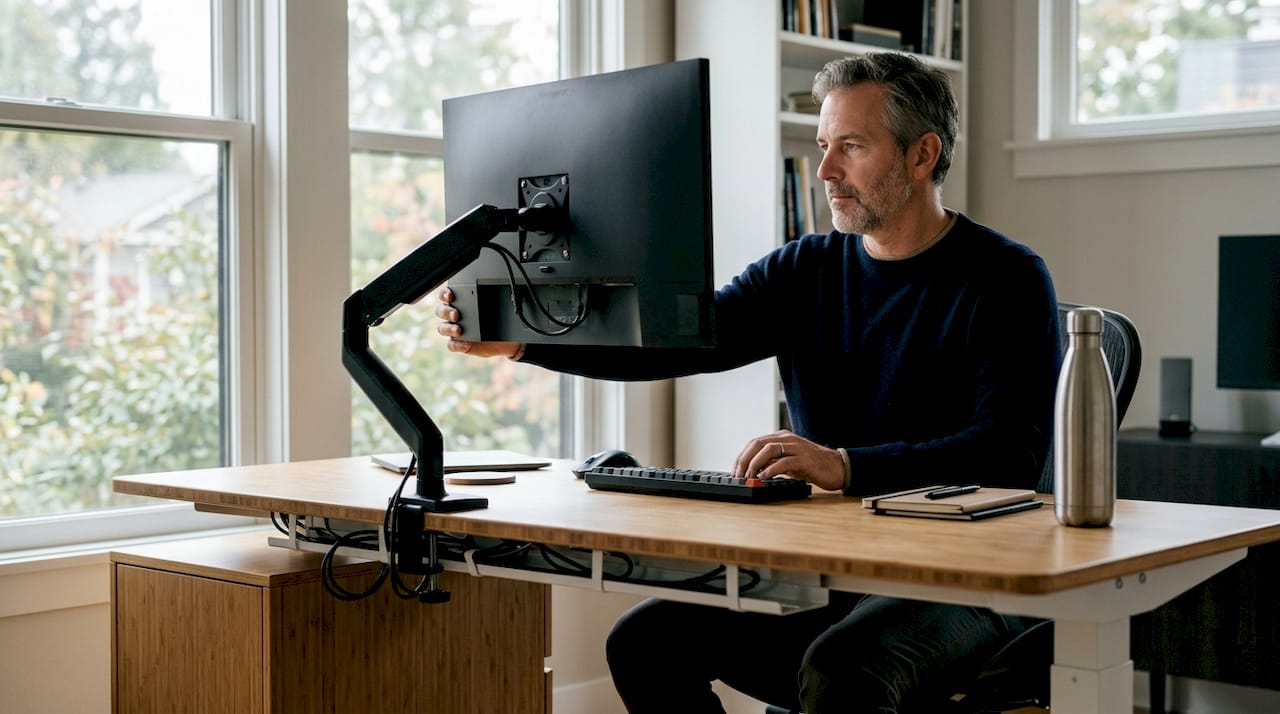
Visual noise is the second, less discussed factor. Mismatched furniture, tangled cables, and open shelving packed with unrelated items all compete for your attention. Integrated storage and cable management reduce this visual noise, which directly supports sustained focus. A cleaner visual field is not just pleasant. It is measurably less cognitively demanding.
The benefits extend to professional perception as well. Remote workers spend hours on video calls, and the background visible behind them communicates competence or chaos. A built-in wall of cabinetry with consistent wood tones and concealed wiring reads as professional without any extra effort. Visual symmetry and a clutter-free environment contribute directly to how remote workers present themselves during video conferencing.
Key productivity benefits delivered by bespoke carpentry for remote workers include:
- Ergonomic monitor and keyboard positioning that reduces physical strain
- Concealed cable runs that eliminate visual distraction
- Dedicated storage zones that keep work materials within reach without cluttering the desk surface
- A consistent, professional backdrop for video calls
Pro Tip: Before your design consultation, spend one full workday noting every time you reach for something, stand up unnecessarily, or feel physical discomfort. That list becomes your functional brief for the carpenter.
What practical features should a remote worker’s custom office include?
The difference between a functional custom office and a great one comes down to specific design decisions made before a single board is cut. Each feature below solves a real problem that standard furniture leaves unaddressed.
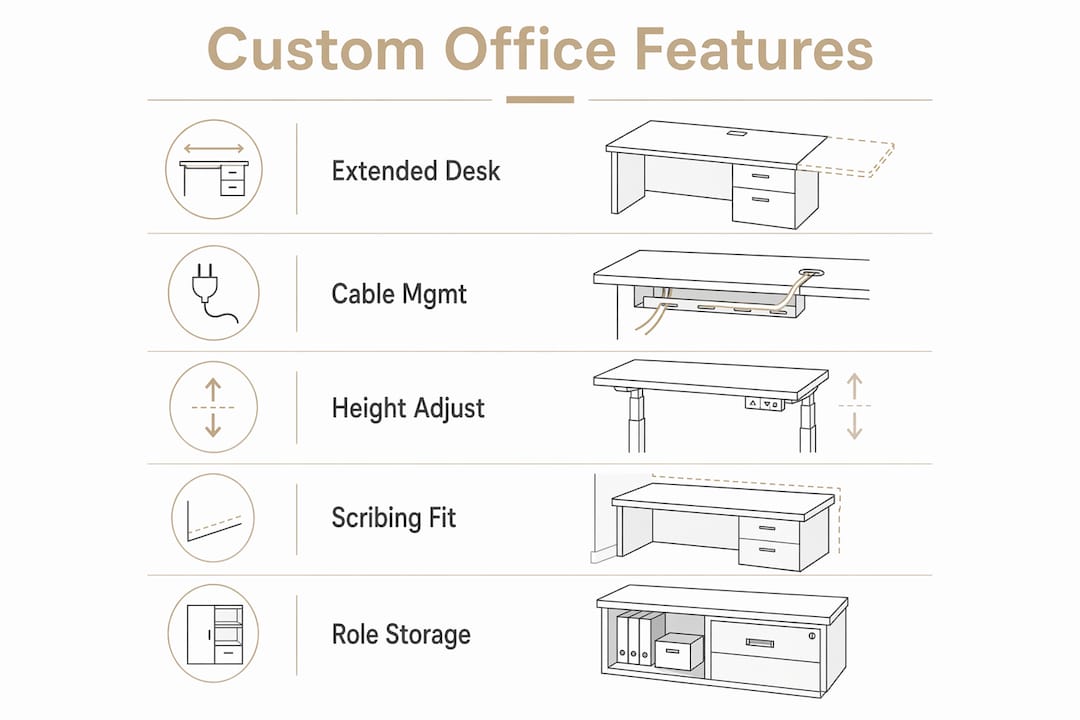
Extended desk runs
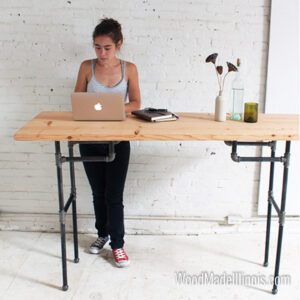
Standard desks stop at 72 inches. Custom desk runs extend to 96–120 inches, which is the minimum length needed to spread out two or three monitors, a laptop, documents, and a notepad without stacking items on top of each other. That horizontal space is the foundation of a clutter-free work zone.
Integrated cable management
Effective cable management in custom cabinetry uses grommets cut into the desk surface, internal raceways routed through cabinet walls, pull-out trays for power strips, and enclosed compartments for routers and network switches. The cables disappear. The desk surface stays clear.
Adjustable height integration
A skilled carpenter can integrate a motorized height-adjustable desk mechanism directly into a built-in cabinet run. The adjustable section sits flush with fixed cabinetry on either side, so the ergonomic furniture solution does not look like an afterthought bolted onto a wall.
Scribing for a perfect fit
Scribing is the technique of tracing the exact profile of an uneven wall or floor onto the cabinet panel and then cutting to that profile. Scribing creates a seamless fit that eliminates gaps, prevents dust accumulation, and gives the installation the appearance of a permanent architectural feature rather than added furniture.
Role-specific storage
A graphic designer needs flat file drawers and monitor arms. A financial advisor needs lockable document storage and a second screen at a precise angle. A teacher needs open shelving for books and a clear wall for a whiteboard. Custom storage is built around the specific tools of your profession, not a generic assumption about what office workers need.
| Feature | Problem it solves | Typical specification |
|---|---|---|
| Extended desk run | Too little horizontal workspace | 96–120 inches |
| Cable grommets and raceways | Tangled, visible cables | Built into desk surface and cabinet walls |
| Scribing | Gaps at uneven walls and floors | Cut to exact wall profile |
| Adjustable height section | Static posture and physical strain | Motorized mechanism, flush with fixed cabinetry |
| Role-specific storage | Generic storage that wastes space | Designed to the worker’s actual tools |
Pro Tip: Ask your carpenter to include a dedicated router compartment with a ventilated back panel. Routers generate heat, and enclosing them without airflow shortens their lifespan significantly.
What are best practices for working with a carpenter on your home office?
The success of any custom home office project depends as much on the quality of communication before construction as on the quality of the woodworking itself. Planning and clear communication prior to installation prevent expensive rework and ensure the finished workspace functions exactly as intended.
The most common failure point is a vague brief. Remote workers often describe what they want in aesthetic terms, “I want it to look clean and modern,” without describing how they actually work. A carpenter cannot build ergonomic furniture solutions without knowing your monitor count, your dominant hand, whether you stand during calls, and how much paper-based work you do daily.
Follow these practices to get the best result from your collaboration:
- Define your workflow first. Write down your daily tasks, the tools you use, and the physical movements your work requires before the first consultation.
- Bring measurements and photos. Photograph every wall, corner, and outlet in the room. Measure ceiling height, window sill heights, and any architectural features that will affect the design.
- Discuss durability requirements openly. A home office used eight hours a day needs commercial-grade drawer slides and hardwood or plywood construction, not particleboard. Finish carpentry quality directly impacts durability and lowers long-term maintenance costs in high-use environments.
- Ask about future needs. If you plan to add a second monitor, a printer, or a standing desk section within two years, design for it now. Retrofitting built-ins is expensive.
- Review the shop drawings carefully. Before fabrication begins, confirm that every dimension, drawer depth, and cable grommet location matches your workflow. Changes on paper cost nothing. Changes after installation cost significantly more.
Working with trusted local carpentry experts who understand the specific demands of home office design shortens this process considerably. Experience with remote work environments means the carpenter already knows the right questions to ask.
Key Takeaways
Custom carpentry delivers measurable productivity gains, ergonomic benefits, and professional presentation that standard retail furniture cannot match in a remote work environment.
| Point | Details |
|---|---|
| Productivity gains are documented | Purpose-designed office spaces produce 23% higher productivity per Cornell University research. |
| Scribing ensures a perfect fit | Scribing techniques eliminate gaps on uneven walls and floors, creating a built-in appearance. |
| Cable management is structural | Grommets, raceways, and enclosed compartments must be designed into cabinetry before fabrication. |
| Communication prevents rework | Defining workflow requirements before the first consultation avoids costly changes after installation. |
| Finish quality affects longevity | High-quality finish carpentry reduces maintenance costs and supports a professional image over time. |
Why I believe custom carpentry is the most underrated remote work investment
Most remote workers spend more on software subscriptions in a year than they ever consider spending on the physical space where they work. That ordering is backwards. The software changes. The room does not.
After years of working with remote professionals on home office makeovers, the pattern I see most often is this: a worker tolerates a cramped, poorly lit, cable-tangled corner for years, then commissions a built-in and immediately wonders why they waited. The physical change is obvious. The psychological shift is harder to articulate but just as real. When your workspace is built specifically for you, the act of sitting down at it signals that work is serious. That signal matters.
The other thing I have observed is that people underestimate finish quality until they see the difference. A built-in with tight scribing, consistent grain matching, and properly fitted doors does not look like furniture. It looks like architecture. Finish carpentry delivers durability and polished results that hold up in high-use professional environments for decades, not years. That durability is the real return on investment.
My advice is simple. Build for how you actually work, not for how you imagine you might work someday. Buy the extended desk run now. Add the cable management now. Design the storage around your real tools. The cost of doing it right the first time is always lower than the cost of retrofitting later.
— Wood
Woodmadeillinois custom home office carpentry in Central Illinois
Woodmadeillinois brings over 100 years of combined carpentry experience to every home office project in Central Illinois. The team specializes in built-in cabinetry, extended desk runs, integrated cable management, and ergonomic workspace design tailored to each remote worker’s specific room and workflow.
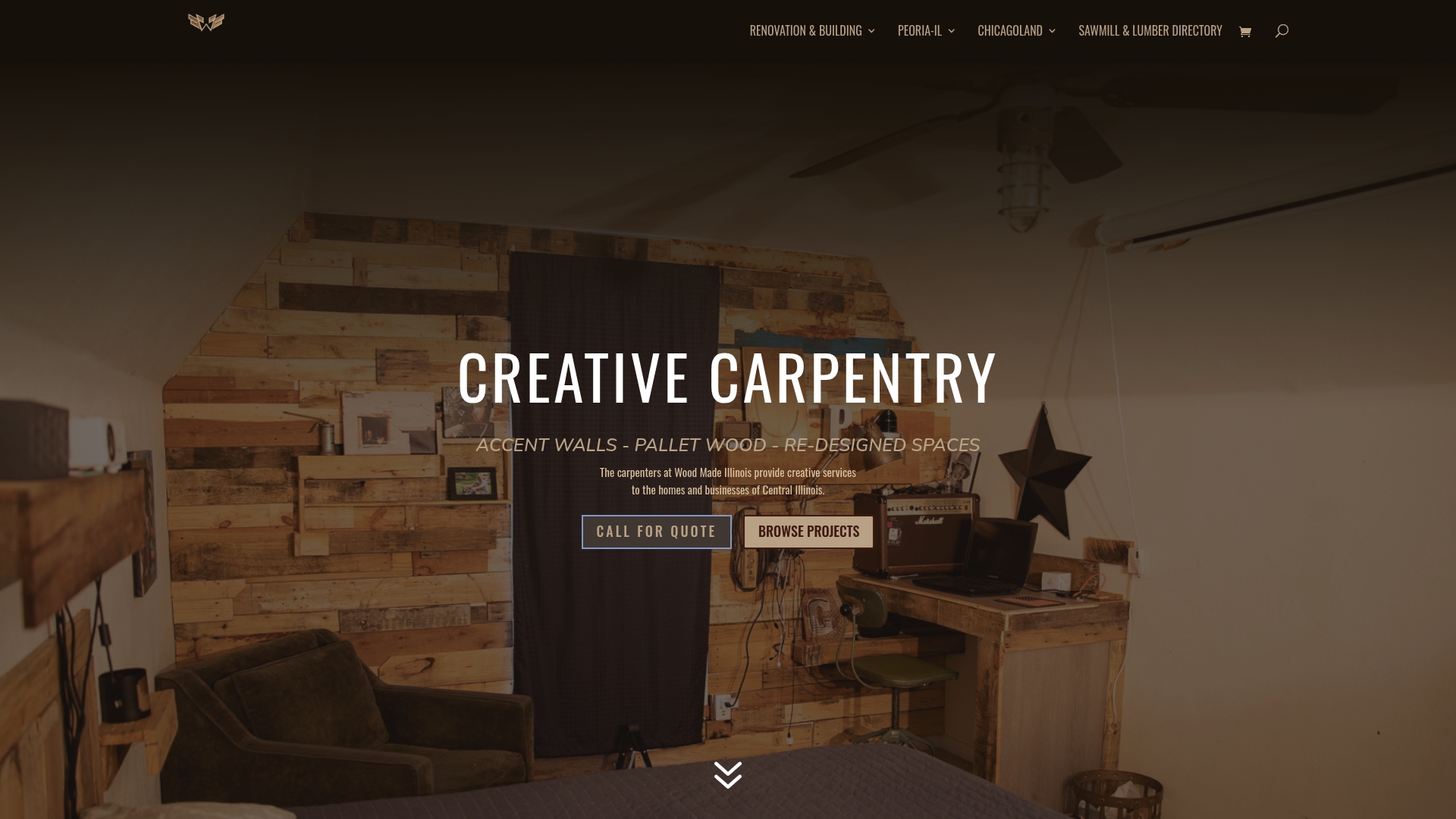
Every project begins with a personalized design consultation where measurements, workflow requirements, and material preferences are mapped before a single cut is made. The result is a workspace that fits your room, your body, and your profession. Contact Woodmadeillinois through the home office builder page or reach the team directly at the Peoria IL carpentry services page to schedule your consultation.
FAQ
What is custom carpentry for a home office?
Custom home office carpentry is the design and installation of built-in furniture systems, including desks, cabinetry, and storage, built to fit a specific room’s exact dimensions and a worker’s daily workflow requirements.
How much does a custom home office built-in cost?
Pricing varies by room size, materials, and feature complexity and is not publicly listed as a standard rate. A design consultation with a local carpenter is the most accurate way to get a project-specific estimate.
Does custom carpentry actually improve productivity?
Cornell University ergonomic research shows that purpose-designed workspaces produce 23% higher productivity and less physical discomfort compared to standard office setups.
What is scribing in carpentry?
Scribing is a technique where a carpenter traces the exact profile of an uneven wall or floor onto a cabinet panel and cuts to that profile, eliminating gaps and creating a seamless built-in appearance.
How do I prepare for a custom home office consultation?
Document your daily workflow, measure every wall and architectural feature in the room, and list every tool and device you use regularly. That information gives the carpenter everything needed to design a workspace that fits how you actually work.