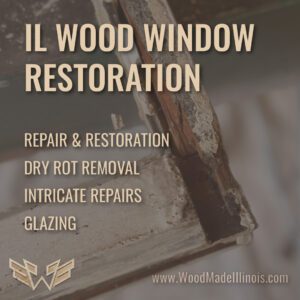
If the frame, sill and jambs of your old window are sound but the sash is rotted, warped or beyond repair, you can replace only the sash and keep the original window opening. It is usually the most faithful and least costly route for a historic Illinois home. We restore and repair historic wood windows for homeowners in Central Illinois, and our window sash repair work starts with the question this guide answers: does the sash need replacing, or only restoring?
The sash is the movable part of a window: the framed panel that holds the glass. Its parts are the stiles (the vertical sides), the rails (the horizontal top, bottom and meeting pieces) and the muntins (the thin bars between panes). Sash replacement swaps that panel and leaves the frame in place.
TL;DR
- Replace the sash, not the whole window, when the frame, sill and jambs are sound. The National Park Service (NPS) accepts new sash installed in existing frames when repairing parts becomes prohibitively expensive.
- The new sash must match the old in profile, proportions, glass pattern and operation. That is a carpentry task, not a catalog order.
- In a historic district or landmarked home, Illinois towns such as Oak Park, Geneva and Aurora require approval before you replace windows. Check before you order anything.
- Pre-1978 paint almost certainly contains lead. Plan dust-controlled work and keep children and pregnant women away from the area.
- Weatherstripping and storm windows often close most of the energy gap, so you may not need new sash at all.
Table of Contents
- Sash replacement versus repair versus full replacement
- How to tell if your sash needs replacing
- Matching the original: what a good replacement sash has to get right
- Permits and preservation approval in Illinois
- Lead paint: plan for it before any sash comes out
- Energy performance: what new sash can and cannot do
- What does sash replacement cost?
- Why a carpenter, not a catalog
- A sensible order of work
- Our perspective
- Ready to have your windows assessed?
- FAQ
- Sources
Sash replacement versus repair versus full replacement
There are three levels of intervention, and the right one depends on what is actually failing.
| Approach | What it means | Typically fits when |
|---|---|---|
| Repair | Fix, consolidate or patch the existing sash, replace cords, reglaze | Wood is mostly sound, damage is local |
| Sash replacement | New sash built to match, installed in the original frame | Sash is too far gone, frame is healthy |
| Full window replacement | Frame, sill and sash all removed | Frame itself is rotted or the opening must change |
The federal preservation guidance is plain on the order of preference. Standard 6 of the Secretary of the Interior’s Standards for Rehabilitation calls for repairing deteriorated historic features, and where replacement is necessary, the new piece must match the old in design, color, texture and, where possible, materials. Preservation Brief 9 adds that when extensive parts replacement becomes prohibitively expensive, new sash can be bought and installed in the existing frames, whether as exact custom reproductions or as close facsimiles with similar profiles.
A useful rule of thumb from a professional paper on historic wood windows: a failure of 30% or more of a window component may warrant complete removal and restoration of that component. Below that, patching and splicing in new wood usually makes more sense than starting over.
How to tell if your sash needs replacing
Walk the window the way a carpenter would. The Geneva, Illinois design guidelines list what to look at: the condition of the paint, frame and sill, sash rails, stiles and muntins, glazing, hardware and the overall window. They also note that moisture is the main cause of wood window decay, so start where water collects.
- Bottom rail and sill. Press a screwdriver tip into the wood. If it sinks in easily and the rot runs across the grain, the bottom rail is a likely candidate for replacement.
- Joints. Loose mortise-and-tenon corners can often be tightened. Joints that have split or lost their wood cannot.
- Muntins. Delicate bars rot and break at glass edges. A few can be spliced. A whole sash of failed muntins may be cheaper to rebuild.
- Glazing and putty. Cracked putty and loose glass are routine repairs and not a reason to replace anything.
- Operation. Painted-shut sash, rusted pulleys and broken cords are maintenance problems. They rarely justify new sash.
- Frame and jambs. If these are sound, sash replacement is on the table. If they are rotted, the scope grows.
The NPS also advises documenting the condition of the windows with good quality photographs and notes that a sample repair is the best way to answer questions about feasibility. Photos matter again later, because most local review boards ask for them.
Matching the original: what a good replacement sash has to get right
A sash that fits the opening but looks wrong from the street changes the whole facade. Preservation Brief 9 says to begin by studying the existing window: the size and pattern of the openings, the proportions of frame and sash, the pane configuration, muntin profiles, the type of wood, paint color and the character of the glass, plus details such as arched tops or hoods.
In practice, that becomes a short specification:
- Species and grain. Old-growth wood in a historic window is denser than much of today’s lumber. A carpenter chooses a stable, rot-resistant stock and mills it true.
- Rail and stile widths. Even a quarter inch off in a meeting rail changes the sightlines.
- Muntin profile. The cross-section of the bar, often an ovolo or a simple bevel, gives the window its shadow line. Preservation Brief 9 cautions that some mills lack the knives to duplicate muntin profiles, and some avoid old sash because nails can damage expensive cutters. This is why custom carpentry fits the job better than a stock order.
- Glass. Original wavy glass is part of the character. If the sash is being rebuilt anyway, glass that is carefully salvaged can often go back in.
- Operation. A double-hung stays double-hung. The Geneva guidelines ask for replacements consistent with the original in detailing, proportions, operation and styling.
If an exact match is not possible, Oak Park’s historic windows guide offers a fallback: replace it with something similar in appearance. The same guide notes that exterior aluminum or vinyl cladding on new wood windows reduces maintenance, though cladding can change the look of the profile, so confirm what your local board accepts.
Permits and preservation approval in Illinois
There is no single statewide rule for window sash. Requirements come from your city or village, and they are strictest in historic districts and for landmarked buildings. Some examples:
- Geneva. A building permit is needed to replace windows. For historic properties, the Historic Preservation Commission must also approve the application before the permit is issued.
- Oak Park. Owners in historic districts or of designated landmarks must get permits before replacing windows, and replacements should match in materials, operation and design.
- Aurora. The city’s FAQs say original wood windows should first be repaired, and if that is not feasible, replaced in kind. A Historic Certificate of Appropriateness is required, with photos of the existing windows and cut sheets or sections of the proposed ones.
- River Forest. Replacing windows on the street facade of a Significant Property needs a certificate of appropriateness, and the commission has 7 days to review a complete building permit application for windows.
- Evanston. Its Certificate of Appropriateness application asks for a viability statement on repair from a licensed general contractor, architect or restoration specialist, plus scaled drawings with dimensions for the stile, rails, muntins, sill and trim.
These are examples, not a full list. In Peoria, Knoxville and other Central Illinois communities, call your city’s building or planning department first and ask whether your address sits in a historic district or is individually landmarked. That one call decides whether you need a commission review before any permit.
The drawings and photos these boards ask for are the same ones a carpenter makes when specifying a custom sash. That is one reason to have the person who will build the sash also document the existing one.
Lead paint: plan for it before any sash comes out
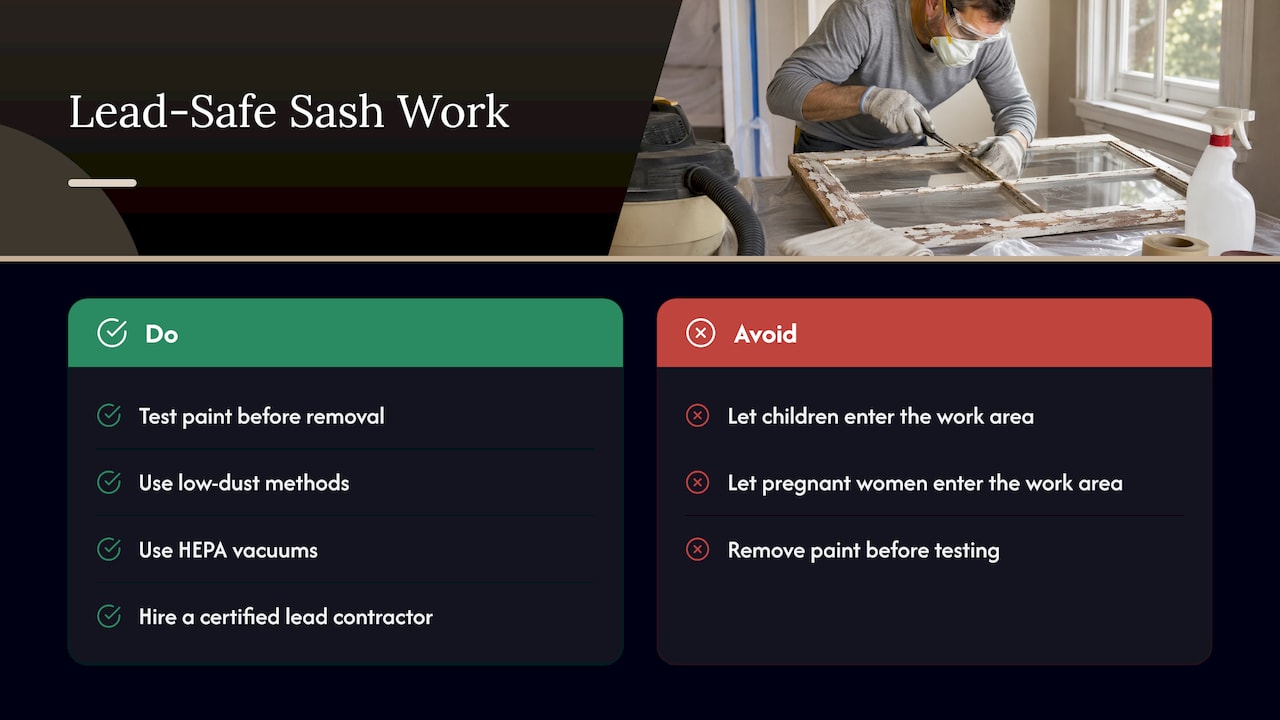
Homes built before 1978 should be treated as having lead paint. The Chicago Bungalow Association notes lead paint is present in almost all homes built before 1978 and advises low-dust work methods, keeping children and pregnant women out of the work area, HEPA-filter vacuums and a certified lead contractor. A professional paper on historic windows adds that paint must be sampled and tested for lead before it is removed, since many windows were repainted repeatedly before 1978.
Friction is the reason windows are a special lead hazard. The District of Columbia’s preservation office points out that replacing the sash inside existing frames mitigates the lead hazards that become airborne when old sash rubs against the jamb. The same guide says sash replacement is often the least expensive way to replace windows, gives an air-tight seal between sash and jamb and allows double-insulated glass.
If you are renovating with young children at home, tell your contractor before the quote, so containment and cleanup are priced in from the start.
Energy performance: what new sash can and cannot do
Many homeowners assume old windows must go for comfort. The NPS says otherwise: studies show the energy performance of historic windows can be significantly improved with storm windows and weatherstripping, or by replacing the glazing or the sash. Preservation Brief 9 quotes ASHRAE figures giving single-glazed wood windows a U-value (a measure of heat loss, where lower is better) of 0.88 to 0.99, and roughly 0.44 to 0.49 with a storm window added.
The Geneva guidelines call weatherstripping the single most cost-effective way to improve energy performance, and say storm windows can match or beat many modern windows while the originals stay in place.
In practical terms for a sash project:
- A rebuilt sash fitted with new weatherstripping closes the leaks that cause most drafts.
- New sash can take insulated glass if the profile allows and your local board approves it.
- A storm window over the sash adds a second layer and protects the wood.
What does sash replacement cost?
Prices vary widely by window size, species, muntin count and how much historic detail must be reproduced. One national cost guide puts wood sash at roughly $250 to $600 per sash, and notes that replicating sash for a historic home costs more because of the custom work. Treat that as a starting range and not a quote for your house.
What moves the price in a historic window:
- Number of panes and muntins. A six-over-six sash has far more joinery than a one-over-one.
- Profile. A custom knife or hand-shaped muntin costs more than a standard one.
- Condition of the frame. Repairing jambs and sill before the new sash goes in adds labor.
- Lead-safe procedures. Containment, cleanup and testing add time.
- Glass. Reusing original glass, restoring it or specifying new insulated units changes the cost.
- Finish. Priming, painting and glazing are part of the job and not an afterthought.
- Access. Second-story and rear windows take longer.
We do not publish a fixed price for window work, because every historic opening is different. We price per project after seeing the windows, and a consultation is the way to get a number that fits your house.
Why a carpenter, not a catalog
Ordering sash from a catalog works when your openings are standard. Historic openings rarely are: they are slightly out of square, the stops have been painted over a dozen times and the old sash has taken the shape of the frame. A carpenter measures the actual opening, builds to it and fits the sash by hand.
That is the work we do. Wood Made Illinois offers historic window restoration as one of its custom carpentry services in Central Illinois, and the team brings over 100 years of combined carpentry experience to it. You can see how we approach wood window restoration and historic window repair on our site, and our historic home renovation page covers the wider work that often goes with it, such as trim and finish carpentry.
A sensible order of work
- Confirm your status. Ask your municipality whether the house is in a historic district or landmarked.
- Document. Photograph each window inside and out and note which ones have operational problems.
- Test for lead. Do this before paint is disturbed.
- Get an assessment. Have a carpenter judge each sash: repair, replace sash, or replace more.
- Apply for approvals. Submit photos, drawings and product details if your town requires them.
- Build and install. Sash is fitted, weatherstripped, glazed and finished.
- Add storms. A storm window over the finished sash protects the wood and the comfort gain.
Do the windows in stages if the budget is tight. Start with the street-facing and most weathered ones, and keep the cord, hardware and weatherstripping upgrades for the rest.
Our perspective
Old windows are the eyes of a historic house, and most of them are worth more than they look. When people call us about replacing windows, the first thing we do is look for what can be saved. Often the frame is fine, and the answer is a well-built sash that lines up with the old profile, closes tight and takes paint the way the original did.
Paint is the skin of a house and the wood is its bones. A sash rebuilt in sound wood, glazed properly and kept painted, will outlast a lot of the products that promise to replace it. Maintenance on a historic home is a marathon, not a sprint, and a window done once and done right is one less thing to chase.
That is why we handle the carpentry ourselves, from consultation to installation, and why we tailor the work to each house and budget. Our team’s more than 100 years of combined experience is in exactly this kind of work: matching what was there and making it function for how you live today.
Wood
Ready to have your windows assessed?
If you own an older home in Peoria or elsewhere in Central Illinois and want to know whether your sash can be saved or rebuilt, we start with a design consultation and look at the windows in person. Our custom carpentry, including historic window restoration, is billed per project. You can start from our main page or browse our wooden window service pages.

FAQ
Can you replace just the sash in a historic window?
Yes. If the frame, sill and jambs are sound, new sash can be installed in the existing frame. The National Park Service accepts this when repairing parts of the old sash becomes prohibitively expensive. The new sash should match the original in profile, proportions, glass pattern and operation.
Do I need a permit to replace windows in Illinois?
It depends on your municipality, since no single statewide rule covers it. Towns such as Geneva and Oak Park require a building permit, and historic districts or landmarks also need preservation commission approval. Call your local building or planning department before you order or remove anything.
How much does historic window restoration or sash replacement cost?
A national cost guide lists wood sash at about $250 to $600 per sash, with historic replication costing more. Window size, muntin count, profile, lead-safe procedures and frame condition all change the figure. A carpenter has to see the windows to give a reliable number.
What are old-style windows called?
Most older Illinois homes have wood double-hung windows, in which two sash slide up and down in the frame, often divided by muntins into multiple panes such as six-over-six. Casement windows, which swing open on hinges, also appear in older houses. Both can usually be restored or fitted with new sash.
Sources
- NPS: Evaluating Historic Windows for Repair or Replacement
- NPS Preservation Brief 9: The Repair of Historic Wooden Windows
- IIBEC: A Systematic Approach to Evaluating Historic Wood Windows
- Village of Oak Park: Historic Windows
- City of Aurora: FAQs
- Village of River Forest: Historic preservation
- Evanston Preservation Commission: Certificate of Appropriateness Application
- Chicago Bungalow Association: Bungalow Maintenance
- DC Office of Planning: Window Repair and Replacement
- Modernize: Window Sash Replacement Cost