A custom mudroom bench built and installed by a Central Illinois carpenter typically runs from lower to higher price ranges, with most straightforward projects landing in a moderate mid-priced range. The final number depends entirely on the specific line items in the written scope: materials, storage features, hardware, and site conditions. Before comparing bids, request an itemized, site-specific quote rather than a flat, unexplained number.
TL;DR:
- The cost of a custom mudroom bench in Central Illinois typically ranges from $800 to over $4,500, depending on materials and features.
- Materials vary from budget plywood to premium hardwoods like oak or walnut, with reclaimed wood offering a distinctive but labor-intensive option.
- Itemized quotes separating materials, fabrication, and installation are crucial for accurate comparison and to avoid surprise costs.
- Site repairs, hardware choices, reinforcement, and timeline urgency can significantly increase the final price.
- A written warranty covering structural and finish issues should be secured to ensure long-term durability and service after completion.
Table of Contents
- What goes into a mudroom bench quote: materials, fabrication, and labor
- What makes a mudroom bench cost more or less
- Three sample budgets: simple, midrange, and premium benches
- How to request a comparable, site-specific estimate
- How we estimate mudroom bench projects
- Warranty coverage and service after installation
- The real lesson in mudroom bench pricing
- Requesting a quote from Wood Made Illinois
- FAQ
- Sources
What goes into a mudroom bench quote: materials, fabrication, and labor
A well-built quote reads like a recipe, not a guess. Each ingredient has a reason for being there, and a carpenter who can explain every line is a carpenter worth trusting.
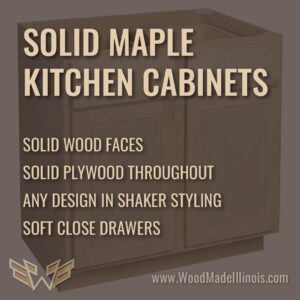
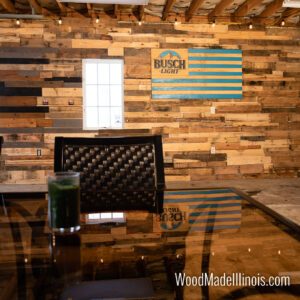
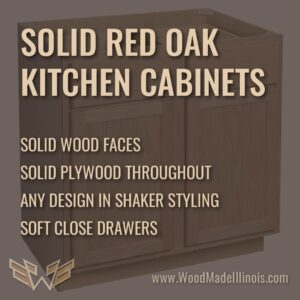
Materials make up the first category, and the range is wide. Paint-ready plywood with a simple face frame sits at the budget end, while solid hardwood faces (oak, maple, or walnut) climb considerably higher per board foot. Reclaimed or pallet wood sits in between: visually distinctive, often less expensive than clear hardwood, but labor-intensive to prep because every board needs de-nailing, planing, and sorting before it is shop-ready.
Shop fabrication and on-site installation are usually billed as separate phases, and for good reason: building a bench carcass, drawer boxes, or cubby dividers happens in a controlled shop environment, while installation means working around uneven walls, baseboard, and existing trim in a real house. A quote that lumps these together often hides where the hours actually go.
Installation allowances commonly include:
- Delivery and site protection for floors and adjacent surfaces
- On-site fitting, scribing to walls, and fastening into studs or blocking
- Trim work to close gaps between the bench and existing millwork
- Disposal of packaging and offcut material
Labor rates in a quote should track regional wage reality, not a national average pulled from an online calculator. The Bureau of Labor Statistics reports a mean hourly wage of $35.58 for carpenters in Illinois as of May 2023. A contractor’s billed rate will sit above that figure once overhead, insurance, travel, shop time, and profit margin are factored in, and finish carpentry, the kind of precise joinery a mudroom bench requires, commands a premium over rough framing work.
The Bureau of Labor Statistics puts the mean hourly wage for Illinois carpenters at $35.58 as of May 2023, a baseline that helps explain why a quoted labor rate of $55 to $75 per hour for finish carpentry is not padding, it reflects real overhead on top of a tradesperson’s wage.
What makes a mudroom bench cost more or less
Two benches with the same footprint can land thousands of dollars apart once you account for features and site conditions. A few variables drive most of that spread:
- Storage additions. Drawers, hinged lids, and divided cubbies each add shop hours and hardware costs beyond a simple open bench with hooks.
- Hardware selection. Soft-close slides, heavy-duty hinges, and coat hooks vary widely in price, and the hardware you choose affects the layout of pre-drilled holes.
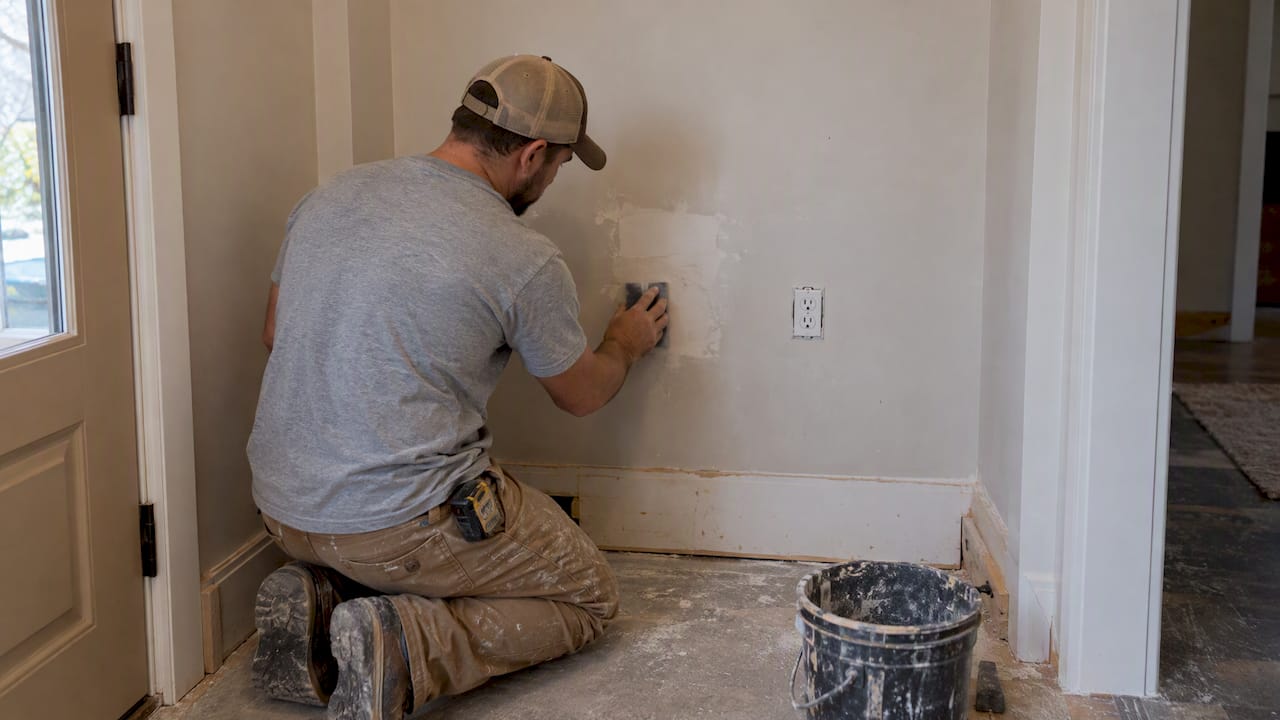
- Site repairs. Damaged drywall, uneven subfloor, or an outlet that needs relocating before the bench goes in will appear as a separate line item, not folded into the base price.
- Reinforcement needs. A bench intended for heavy daily use, a mudroom serving a large family or a small business entry, may need thicker stock or additional blocking for structural support.
- Rush timelines. Asking a shop to compress a four-week build into one week usually carries a scheduling premium.
Pro Tip: Finalize your hardware choices before fabrication begins. Hinges, slides, and hooks determine where holes get pre-drilled, and swapping hardware after the fact often means reworking finished panels.
Site work deserves special attention because it is the most common source of quote surprises. If a wall needs patching or an outlet needs moving before installation, that cost belongs on the estimate as its own line, not buried in an “installation” lump sum.
Three sample budgets: simple, midrange, and premium benches
These figures are illustrative examples meant to show how line items stack up, not a quote for your specific project. Treat them as a starting point for comparing bids, and always request at least two local, itemized quotes before committing.
- Simple bench: Painted plywood construction, open base, three to four coat hooks, basic trim to match existing baseboard. Rough total: $800 to $1,400.
- Midrange bench: Solid-wood face frame, two to three drawers with soft-close slides, divided cubbies for shoes, upgraded hook hardware. Rough total: $2,000 to $3,200.
- Premium bench: Hardwood face in oak or walnut, upholstered seat cushion, integrated upper cabinets for coats and bags, custom crown or trim detail to match an existing historic interior. Rough total: $3,500 to $4,500 and up.
Every scenario assumes standard access and no major site repairs. Add a wall patch, an electrical relocation, or a floor leveling pass, and the simple scenario can start to overlap with the midrange band. That overlap is exactly why a line-item quote matters more than a single round number.
How to request a comparable, site-specific estimate
A quote is only useful if you can compare it against another quote line by line. A few steps before the first site visit make that possible.
Start by preparing information the carpenter needs before setting foot in your home:
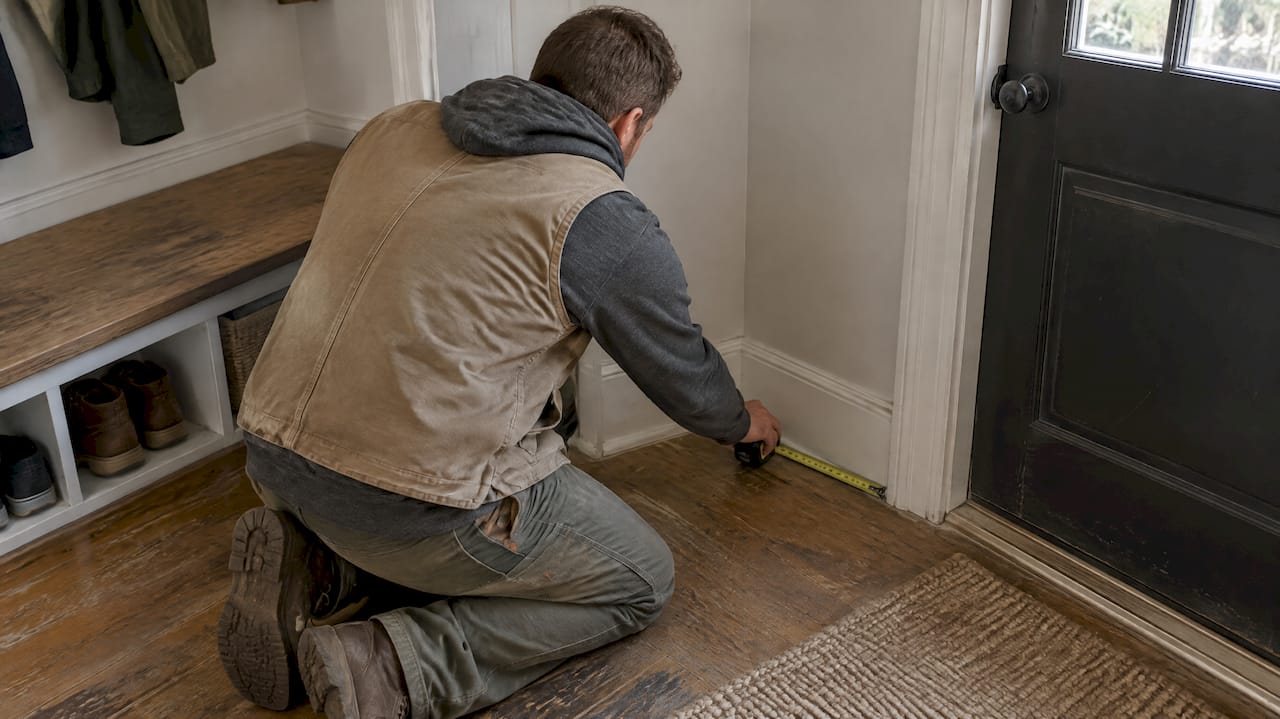
- Measure the mudroom space, including ceiling height, wall width, and the location of outlets, vents, or trim that might interfere.
- Photograph the space from several angles, including close-ups of existing baseboard, flooring material, and any wall damage.
- Decide on rough priorities: storage type, finish level, and whether upholstery or hardware upgrades matter to you.
Once you have that information, ask the carpenter for a written quote that separates:
- Materials cost by category (wood, hardware, finish)
- Shop fabrication hours and rate
- On-site installation hours and rate
- Any third-party trade work, such as electrical or drywall repair
- A clear allowance or line item for delivery and disposal
Also ask about estimated timeline from signed contract to finished installation, the payment schedule, proof of insurance, and whether the work carries any warranty. A vague scope of work, a single lump-sum number with no breakdown, or a contractor who cannot produce proof of insurance are all reasons to keep looking. For readers weighing a built-in bench against a modular, ready-made storage system, dealer networks like One Day Doors & Closets of North Chicago offer a useful price comparison point, though a modular system and a custom build solve different problems.
How we estimate mudroom bench projects
Experience shapes how we write a quote for every mudroom project. Our process starts with a design consultation where we talk through storage needs, finish preferences, and budget range, then move to an itemized written quote that separates materials, fabrication, and installation before any work begins.
One habit we have learned to insist on: locking in hardware selections before cutting begins. A drawer slide or hinge style chosen after fabrication starts almost always means rework, and rework costs more than planning ahead. We also walk every site in person rather than quoting from photos alone, because a mudroom’s existing trim, flooring, and wall condition change the real labor hours more than most homeowners expect.
Warranty coverage and service after installation
A built-in bench is a long-term fixture, and what happens after installation day matters as much as the build itself. Ask any carpenter directly what their workmanship warranty covers and for how long, since terms vary by shop and by project scope.
Reasonable questions to raise before signing a contract include whether the warranty covers structural issues like loose joints or sagging drawer slides, whether it covers finish problems such as peeling paint or cracked stain, and whether a service call for a minor adjustment carries a separate fee once the warranty period ends. Some shops fold minor post-installation adjustments, a sticking drawer, a loose hook, into the original price for a set period, while others bill a standard service call rate afterward.
Get warranty terms in writing as part of your quote, not as a verbal assurance. A contractor confident in their joinery and finish work will not hesitate to put coverage terms on paper, and having that document on hand saves friction months or years later when a drawer slide needs adjusting or a cushion needs re-covering.
The real lesson in mudroom bench pricing
The conventional advice on this topic treats cost ranges as the finish line, as if knowing “$1,200 to $2,800” settles the question. It does not. The range tells you almost nothing about your specific wall, your specific storage habits, or your specific finish preferences, and treating it as a target rather than a starting point is how homeowners end up disappointed by a quote that looked fine on paper.
What actually protects a budget is the itemized breakdown: knowing that drawer hardware is a separate line from face-frame material, that installation is priced apart from fabrication, and that site repairs show up before they become a surprise invoice. Regional wage data from the Bureau of Labor Statistics explains why labor rates sit where they do, but it cannot tell you whether your mudroom needs a wall patched first.
Prioritize the written, itemized quote over the headline number. A carpenter willing to break down every cost is also a carpenter willing to stand behind the work.
— Wood
Requesting a quote from Wood Made Illinois
We build custom mudroom benches the same way we approach every project: a design consultation first, then a written, itemized quote before any wood gets cut. That sequence means you see exactly what you are paying for, broken into materials, shop fabrication, and installation, rather than a single number you have to take on faith.
A typical Central Illinois mudroom bench project moves from consultation to finished installation within a few weeks, depending on current shop scheduling and the complexity of storage features you choose. To get started:
- Reach out through our contact page to describe your space and goals
- Prepare rough measurements and photos of the mudroom area, as outlined above
- Expect a site visit to confirm wall condition, outlet placement, and flooring before we finalize the quote
We also handle related built-in storage and finish carpentry work across Central Illinois, so a mudroom bench can be scoped alongside other projects if you are planning a broader renovation.
FAQ
How much does a custom mudroom bench cost in Central Illinois?
Most custom mudroom benches built and installed by a local carpenter cost between $1,200 and $2,800, with simple designs starting around $800 and premium built-ins reaching $4,500 or more. The exact price depends on materials, storage features, and site conditions listed on your written quote.
Why do carpenters list fabrication and installation as separate costs?
Fabrication happens in a controlled shop environment, while installation involves fitting the bench to your actual walls, floor, and trim, which takes different time and skill. A documented custom mudroom build separated cabinetry fabrication at $15,200 from installation at $1,700, showing how distinct these phases are on a real invoice.
Is it cheaper to build a mudroom bench myself than to hire a carpenter?
DIY materials alone can cost less upfront, but without fabrication experience, mistakes in measuring, joinery, or hardware placement often mean redoing sections, which erases the savings. Hiring a carpenter also includes labor accounted for at regional rates; Illinois carpenters earn a mean hourly wage of $35.58, a baseline that factors into a contractor’s billed rate once overhead and insurance are added.
What should be included in a mudroom bench quote?
A complete quote separates materials, shop fabrication hours, on-site installation hours, hardware costs, and any third-party trade work like electrical or drywall repair. It should also state the project timeline, payment schedule, and warranty terms in writing rather than verbally.
Does Wood Made Illinois offer financing or payment plans for custom builds?
Payment schedule details are determined during the design consultation and written quote for each project rather than published as a fixed plan. Reach out directly through our contact page to discuss payment structure for your specific mudroom bench project.