A drop zone is the single spot near your front door where keys, mail, shoes, bags, and coats land the moment you walk in, instead of scattering across the house. The simplest working version needs only a small wall area with a run of hooks, a small surface or bin for mail and keys, and a place for shoes underneath. Get that much right, and the rest is styling.
TL;DR:
- Small entryway drop zones should prioritize vertical storage, such as two-height hook rails, to maximize space without cluttering floor area.
- Use sealed finishes on hooks and baskets to withstand daily wear from wet boots, muddy paws, and frequent use.
- Renters can effectively create a drop zone with no-drill hooks, over-the-door organizers, and freestanding furniture, avoiding permanent wall damage.
- Seasonal adjustments, like swapping in boots and coat hooks, are essential to maintain a functional drop zone year-round.
- Assign one designated hook and storage space per household member and keep valuables out of view with lockable or covered storage options.
Table of Contents
- Entryway Drop Zone Ideas for Every Space and Budget
- Small Apartments and Rentals: What Actually Works
- Materials and Styling That Hold Up to Daily Use
- Your Weekend Drop Zone Checklist
- When to DIY and When to Call a Carpenter
- A Quick Note From Experience
- Ready to Build a Drop Zone That Actually Works?
- Seasonal Adjustments That Keep the System Working
- Where Pet Gear Actually Belongs
- Keeping Valuables Out of Sight
- Sources
- FAQ
Entryway Drop Zone Ideas for Every Space and Budget
Not every home has room for a mudroom, and not every household needs one. What follows is a working list, ordered roughly from most substantial to most minimal, so you can find the version that fits your square footage and your lease.
- Bench with cubbies. This is the workhorse for families with kids. Build or buy a bench at least 16 to 18 inches deep so it can double as a seat for putting on shoes, with open cubbies below sized for a shoe pair or a small basket per person.
- Slim console plus baskets. A slim console fits hallways that a bench never could. Woven baskets underneath hide the daily clutter while the tabletop holds a tray for keys.
- Wall peg rail at two heights. One rail at adult shoulder height, one lower for kids, increases your hanging capacity without adding to floor depth.
- Floating shelf with a key tray and mirror. This is the smallest true drop zone you can build. A shallow shelf, a small dish for keys, and a mirror above it turns a blank wall into a functional and guest-ready corner.
- Backpack station with labeled hooks and cubbies. School-age households benefit from one labeled hook and one cubby per kid, so nobody is hunting for a missing backpack at 7:45 AM.
- Shoe solution. A boot tray catches winter runoff, an angled shoe shelf keeps pairs visible, and a tilt-out cabinet hides the mess entirely if floor space allows for one.
- Mail slot with a single weekly purge basket. One basket, one rule: whatever hasn’t been dealt with by the weekly reset gets opened, filed, or tossed before more mail lands on top.
- Folding wall seat or flip-down bench. In apartments where every square foot of floor matters, a bench that folds flat against the wall gives you a seat only when you need one.
- Garage entry drop zone. If your household comes and goes through the garage, mount hooks, a shelf, and a shoe rack off the floor so the whole zone can be hosed down or swept without moving anything.
- Command center pairing. Add a family calendar, a mail slot, and a charging station next to your hooks and you have converted a coat rack into an actual launch pad for daily routines.
- Aesthetic variants. Basket-fronted cubbies keep clutter out of sight, a pallet-wood accent shelf adds warmth and texture at a lower material cost than solid slab, and brass tray accents dress up an otherwise utilitarian corner.
- Renter-friendly kit. A freestanding slim cabinet, a set of Command hooks, and a key bowl on top give you a full drop zone with zero holes in the wall and zero deposit risk.
Pro Tip: Assign one hook per household member, plus one guest hook. Overcrowded hooks are the number one reason coats end up on the floor instead of on the wall.
Small Apartments and Rentals: What Actually Works
Depth is your biggest constraint in a small entryway, and it’s also the easiest one to solve. Two-height hook rails and vertical shelving multiply your storage without eating into walkway space, since design galleries consistently show the best small-scale drop zones are shallow and carefully measured rather than deep and bulky.
For renters, no-drill options have gotten genuinely good:
- Command large-coat hooks (3M) hold real weight and remove cleanly, no wall patching required.
- Over-the-door shoe organizers turn wasted door space into a shoe zone.
- Tension rods create an instant hanging bar inside a closet or alcove.
- Freestanding slim shoe cubbies slide against a wall and can move with you.
If you’re measuring your own space, aim for a floating shelf 6 to 12 inches deep, a console 10 to 12 inches deep, or a bench 16 to 18 inches deep where the layout allows it, since smaller, purpose-built solutions tend to outperform one oversized piece crammed into a tight footprint. Leases rarely ban freestanding furniture or removable adhesive hooks, so start there before you touch a drill.
Materials and Styling That Hold Up to Daily Use
Your entryway takes more abuse than almost any other spot in the house, so pick finishes accordingly.
- Sealed wood, laminate, and metal hooks shrug off wet boots, dropped keys, and dog leashes far better than raw or unfinished surfaces.
- Open storage moves faster; closed storage looks calmer. Baskets hide clutter at a glance, while cabinet doors reduce visual mess but add a step that busy households sometimes skip.
- Follow a 70/30 split. Keep 70% of the zone a calm, neutral base (matching baskets, a simple bench) and let the remaining 30% carry personality through a brass tray, a small plant, or a piece of art.
- Add a mirror and a warm light source. Both make a narrow zone read as designed space rather than an afterthought, and a mirror is one of the cheapest ways to make a shallow console feel intentional.
Design collections consistently point back to the same combination: baskets and built-ins do the heavy lifting for both function and appearance.
Your Weekend Drop Zone Checklist
Turning these ideas into a working system takes one weekend, not a full renovation.
- Map the arrival flow. Stand at your front door and list which of the five problem items (keys, mail, shoes, bags, coats) pile up worst. That tells you what to prioritize.
- Measure before you buy. A bench should run 16 to 18 inches deep, adult hooks belong at 60 to 66 inches, kid hooks at 40 to 48 inches, and each person needs roughly 12 to 16 inches of hook width to avoid crowding.
- Install in order. Hooks first, then the surface, then bins, then labels, then a light or charging spot. Doing it in this sequence helps keep the setup organized and functional.
- Set a five-minute weekly reset. Pick one evening to empty the mail basket and return stray shoes to their spot. Photo labels help younger kids find their own hook or cubby without asking.
Pro Tip: Measure twice before you commit to a bench. A too-deep bench is the single most common reason a promising drop zone ends up blocking foot traffic instead of easing it.
When to DIY and When to Call a Carpenter
Hooks and a floating shelf are a Saturday project anyone can handle. Built-in benches, under-stairs storage, and custom shelving that has to match existing trim are a different job entirely, and that’s where a local carpenter earns their keep.
- Awkward angles or sloped ceilings near a front door usually need a custom template, not a stock bench.
- Built-ins that must match existing trim or millwork call for on-site measuring and finish matching most homeowners can’t replicate with box-store lumber.
- Charging stations wired into a built-in need integrated electrical work planned before the cabinetry goes in, not after.
- Budget-friendly custom options exist too: a shallow built-in shelf, a pallet-wood accent wall behind your bench, or a narrow built-in bench are all realistic entry points that don’t require a full mudroom remodel.
A Quick Note From Experience
A five-minute weekly reset saves more arguments than any storage bin ever will. Start with one wall, one bench, one basket. Iterate as your household’s chaos points reveal themselves, and pair it with a small command center so the routine runs itself.
— Wood
Ready to Build a Drop Zone That Actually Works?
If you’ve read this far and realized your entryway needs more than a simple hook rail, that’s where Chicago home organization systems can help. We build the pieces that off-the-shelf furniture can’t replicate: benches sized to fit your wall, shelving that matches existing trim, and pallet-wood accents that add warmth and texture to an entry area.
Our mudroom organization work and built-in bench projects are built around personalized design consultations, so you’re not guessing at measurements from a blog post. Central Illinois homeowners also lean on us for tighter spots, like turning wasted under-stairs space into real cubbies when a straight wall run isn’t an option. With more than 100 years of combined carpentry experience on the team, we can typically turn around a custom entryway build faster and at a lower cost than a full-service remodeling contractor, especially when pallet wood is part of the design. Reach out through Woodmadeillinois to book a design consultation and get a real quote for your space.
Seasonal Adjustments That Keep the System Working
A drop zone built for July won’t hold up in January. Winter brings salt-stained boots, heavy coats, gloves, and scarves that a summer setup simply wasn’t sized for, so swap in a boot tray and add extra hooks for scarves and hats during the colder months. Move lightweight spring jackets and umbrellas to the front of the zone as the weather turns, and rotate heavier winter coats to a back closet or under-bed bin once temperatures climb.
The easiest way to manage this without a full overhaul twice a year is a rotating bin system: one labeled bin for out-of-season gear that lives in a closet, garage, or under a bench, swapped out each time the season changes. Sports equipment follows the same logic. Cleats and shin guards belong in the drop zone during active seasons and in the garage the rest of the year.
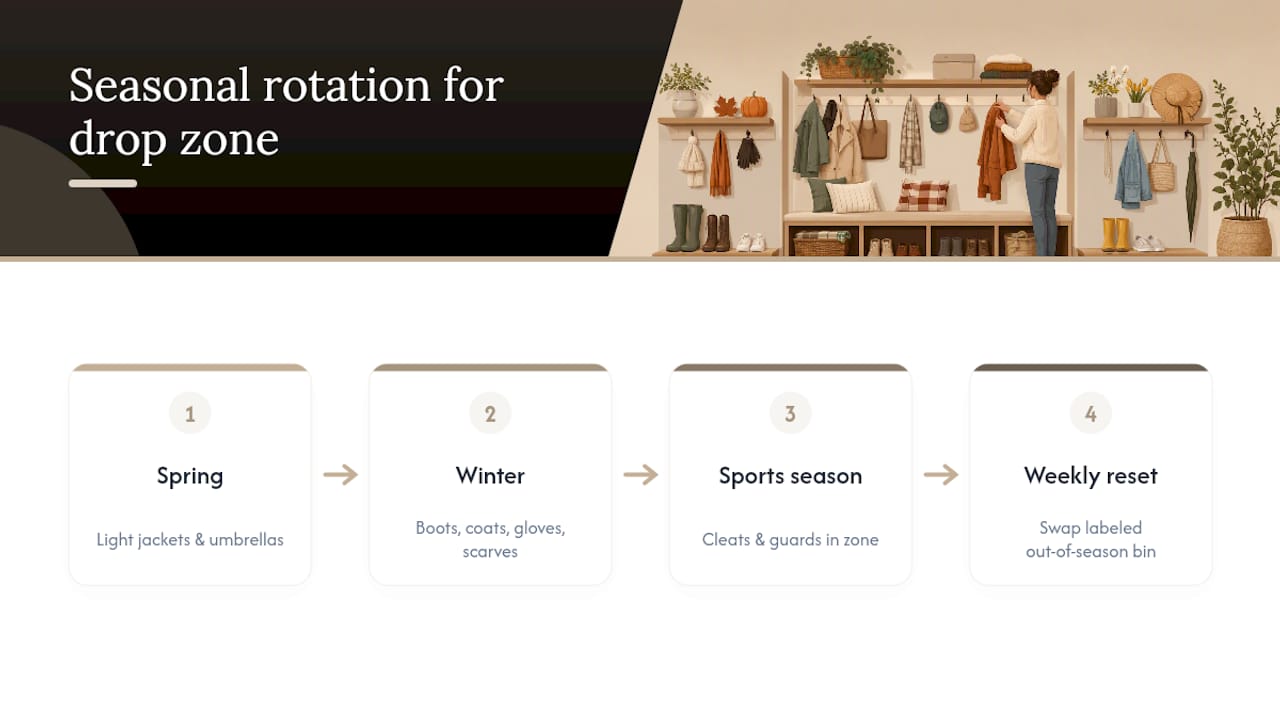
Build the swap into your weekly reset routine so it never becomes a separate chore. The first reset of each new season, spend an extra ten minutes pulling out-of-place items and swapping bins instead of just doing the usual purge. That small habit prevents the drop zone from slowly filling with gear nobody’s using, which is how a functional five-item system quietly turns into an unmanageable pile by mid-winter.
Where Pet Gear Actually Belongs
Leashes, collapsible bowls, and pet shoes create their own version of entryway clutter if they don’t have a dedicated spot. A single extra hook, mounted at a height that works for whoever walks the dog most often, is usually enough for a leash and a harness. Add a small basket or shallow bin below your existing shoe storage for pet booties, a towel for wet paws, and treat pouches, so grabbing the leash doesn’t turn into a five-minute search.
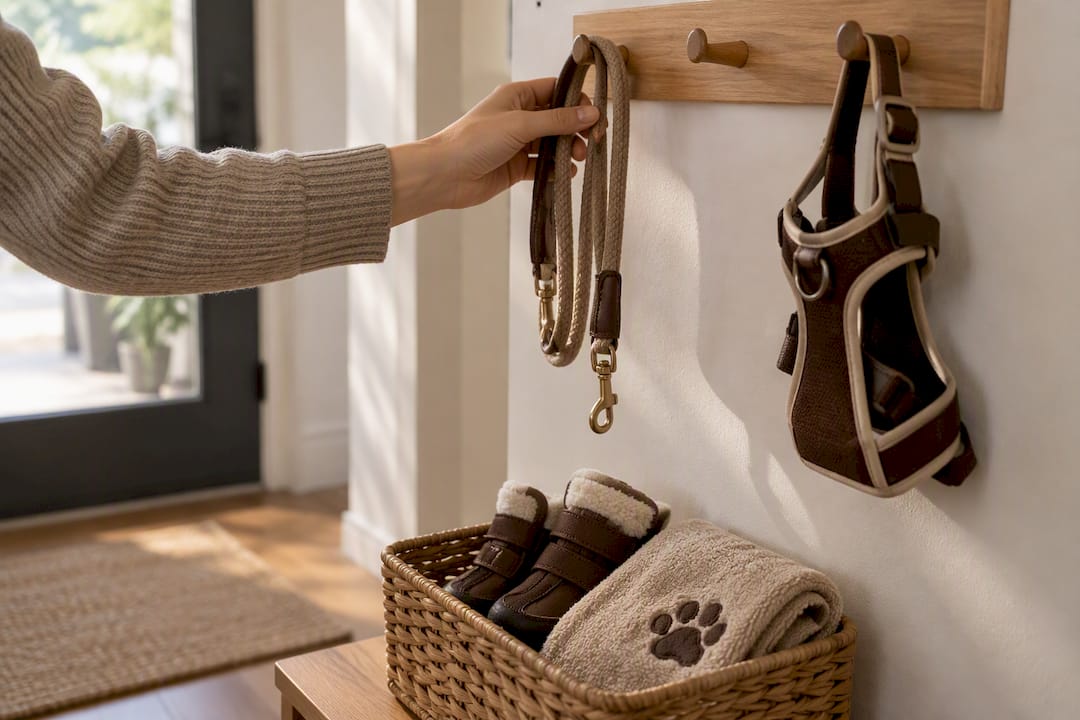
Households with multiple pets benefit from the same per-person logic used for hooks: one hook or hanger per animal keeps leashes from tangling into a knot. A low shelf or cubby near the door also gives you a spot to stash a towel specifically for wiping muddy paws before anyone tracks it through the house, which matters more in a rental where the flooring isn’t yours to replace.
If your entryway is genuinely tight, a wall-mounted leash hook doubles as a cheap answer that costs almost nothing and requires no drilling if you use a Command hook rated for the leash’s weight. The goal is the same as the rest of the drop zone: one designated spot per category of item, so pet gear doesn’t end up looped over a doorknob or dropped on the floor.
Keeping Valuables Out of Sight
An entryway table with a key bowl in plain view is convenient, but it also tells anyone glancing through your front window exactly where your keys, wallet, and sometimes even spare cash sit. Closed storage solves this without sacrificing function. A drawer in a console table, a lidded basket instead of an open one, or a small cabinet with a door keeps valuables out of direct sightlines from the street.
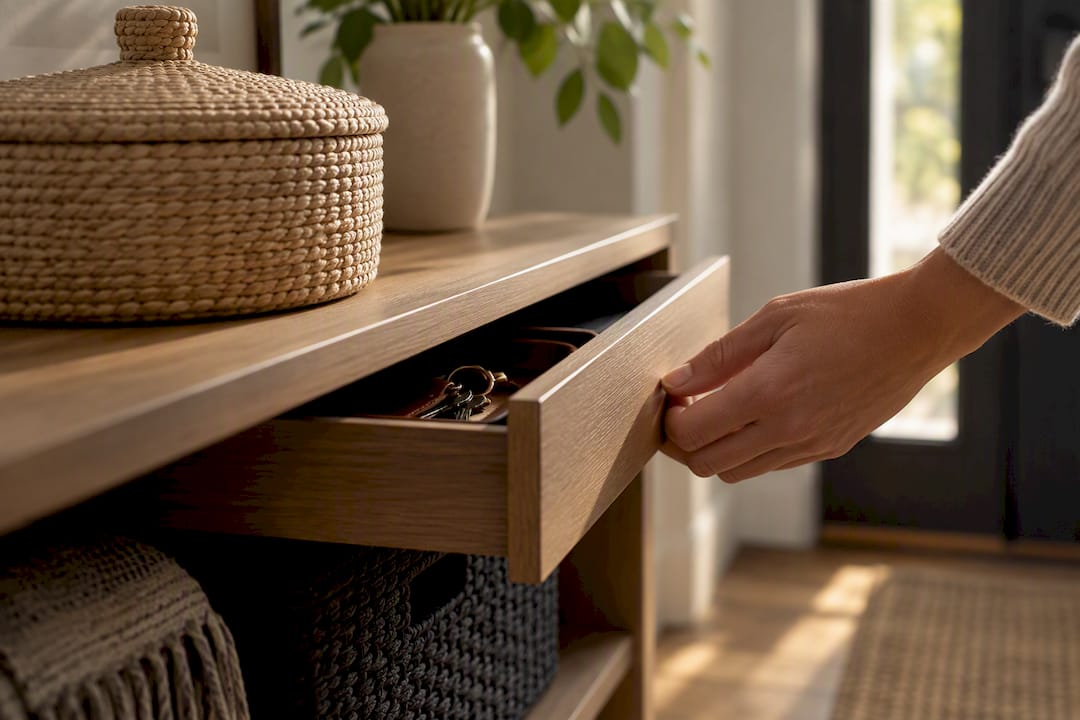
Avoid mounting a key hook directly beside a window or sidelight where it’s visible from outside. If your only option is a wall spot near glass, add a curtain, film, or simply relocate the hook a few feet to a less visible stretch of wall. Mail is another overlooked risk. A stack of opened mail with your name and address sitting on an entry table is worth going through weekly, both for clutter and for basic privacy.
For homes without a dedicated mudroom, a lockable drawer or a decorative box with a lid is a low-cost way to store spare keys, garage codes, or a spare wallet without turning the entryway into an obvious target. This doesn’t require built-in cabinetry. A single lidded basket from any home goods store, positioned in your existing setup, closes the gap.
Sources
- Entryway drop zone setup for busy families | HomeOrganizeHacks
- Drop zone photos & ideas | Houzz
- Drop-zone ideas to inspire your entryway makeover | Better Homes & Gardens
FAQ
What are some ideas for a drop zone in an entryway?
The strongest ideas combine a hanging spot, a shoe solution, and a small surface for mail and keys, whether that’s a bench with cubbies, a slim console with baskets, or a single floating shelf with a key tray. Choose based on your available depth: benches need 16 to 18 inches, while a shelf can work in as little as 6 inches.
What are some entrance decor mistakes to avoid?
The most common mistake is treating the drop zone as pure storage and skipping any styling, which makes it look neglected instead of intentional. The second is overcrowding one hook or bin for the whole household instead of assigning a spot per person, which is what causes coats and bags to pile on the floor.
What are some good ideas for decorating an entryway in 2026?
Warm, textured materials are leading the way, including pallet-wood accent shelves, brass hardware, and woven baskets that soften an otherwise functional space. A 70/30 split between a calm neutral base and one styled accent, like a mirror or a small tray, keeps the look current without sacrificing storage.
What is the difference between a mudroom and a drop zone?
A mudroom is a dedicated room, usually with built-in storage, a sink, or a bench, positioned between an exterior door and the main living space. A drop zone is smaller in scope: it’s the specific area, whether inside a mudroom or just a stretch of hallway wall, that handles the five daily items of keys, mail, shoes, bags, and coats.