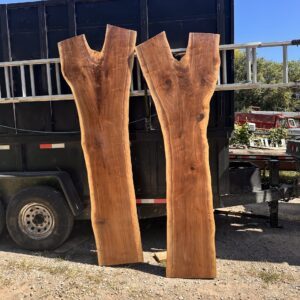
A reclaimed wood desk is a work surface made from lumber that had a first life as a barn beam, a warehouse floor joist or a plank of old flooring. Done well, it is denser, steadier and far more characterful than a new-lumber top. Done carelessly, it can cup, hide old nails or carry lead paint into your house. This guide covers what to look for, how to size and plan the desk, how to prepare and finish the wood, and when to hand the job to a carpenter.
TL;DR
- Reclaimed lumber often comes from slow-grown old-growth trees, so it tends to be dense and stable, but only if it is properly dried and acclimated before it becomes a desk.
- Plan on a top at least 24 inches deep and 60 to 72 inches wide for one person, then add storage such as a shallow pencil drawer.
- Screen every board for rot, insects, hidden metal, preservatives and, in pre-1978 buildings, lead paint before it enters your home.
- Seal the top with a hard finish, and control dust while you work.
- A built-to-fit desk from a carpenter costs more than a kit, but it solves layout, storage and wood-movement problems at once.
Table of Contents
- What makes a reclaimed wood desk different
- Slab, glued panel or frame: choosing the construction
- Size and layout: planning for real work
- Reclaimed wood desk ideas for different rooms
- Is the wood safe to bring indoors?
- Drying and acclimating the wood
- Dust and air quality in the shop
- Finishing and protecting the top
- Building a reclaimed wood workbench
- Cost and environmental impact
- Perspective: why we build desks around the room
- Build it yourself or hire a carpenter
- Custom desks and home office builds in Central Illinois
- FAQ
- Sources
What makes a reclaimed wood desk different
The wood usually comes from barns, warehouses and old houses. The Seattle Times notes that much of it came from old-growth trees, whose slow growth produces tight rings, and that decades of drying can leave boards stable yet visibly warped, cracked or checked. That wear is part of the appeal: oxidation color, nail stains and original saw-blade marks all show up on the surface.
Two things follow for a desk buyer.
- No two tops match. Knots, nail holes and color shifts are the product, not defects. If you want a uniform surface, reclaimed wood is the wrong material.
- The wood has already moved. Reclaimed boards have been through many seasons of swelling and shrinking, which is why they often hold their shape better than fresh lumber. They still respond to the humidity of your room, so a top has to be built to allow for that. Our guide to seasonal wood movement for woodworkers explains the rules we follow in the shop.
Slab, glued panel or frame: choosing the construction
There are two common ways to build the top, according to Norfolk Lumber: a single wide slab or a glued-up panel on legs or a base, or a frame-and-panel build from narrower reclaimed boards. Each suits a different person.
| Construction | Best for | Watch out for |
|---|---|---|
| Single wide slab | A statement piece, a wide grain pattern | Hard to find at 24 inches or deeper, and prone to cupping if not dry |
| Glued-up panel | Most home offices; predictable flatness | Visible glue lines if boards are not matched |
| Frame and panel | Narrow, salvaged boards; lighter weight | More joinery, so more labor |
| Reclaimed beams, laminated | Heavy-duty desks and workbenches | Weight, and cleaning old surfaces first |
For most rooms we recommend a glued-up top. Narrow strips with alternating grain direction resist cupping better than one wide board, a principle that woodworking guides apply to laminated tops of every species.
Size and layout: planning for real work
A desk that looks good but forces you to hunch is a failed desk. Start with the numbers.
- Depth: for a slab desk, look for reclaimed planks at least 24 inches deep, per Norfolk Lumber. If you use two monitors or a laptop plus paperwork, go deeper.
- Width: the same source puts 60 to 72 inches as standard for a single-person desk.
- Storage: HGTV’s reclaimed-joist desk adds an optional shallow pencil drawer under the top. It is a simple way to keep cables, pens and chargers off the surface.
- Legs: the same HGTV build pairs reclaimed joists with vintage cast-iron table legs, a good example of mixing old wood and old metal.
Before you commit, mark the footprint with painter’s tape and sit there with your actual equipment. Check where outlets, windows and the door fall. Then decide on height: a fixed desk is simplest, but if you alternate between sitting and standing, ask about a standing desk build.
Reclaimed wood desk ideas for different rooms
The style should fit the room you have, not the room in a photo.
- Small bedrooms and shared rooms: floating wall desks, slim console desks, ladder desks and convertible units that double as dining tables are among the options design roundups list for tight spaces. A wall-mounted top needs solid blocking in the wall, so plan it before drywall is closed or locate studs carefully.
- Industrial lofts: thick joist or beam tops with black steel or cast-iron legs.
- Traditional or farmhouse rooms: a drawer desk with a planed, lightly sanded top and warm wax or clear finish.
- Dual-purpose rooms: a built-in desk along one wall with cabinets above, so the work surface disappears behind a door at the end of the day.
Lighting matters as much as the wood. A dark, textured top absorbs light, so plan for an adjustable lamp and good ambient light. This overview of home office lighting for productivity is a good place to start.
Is the wood safe to bring indoors?
This is the section most desk articles skip, and the one that matters most with salvaged material. Family Handyman advises checking salvaged boards for rot, insects, hidden nails or screws, preservatives and lead paint before they come inside.
Lead paint
If the boards came from a building constructed before 1978, assume any painted surface might contain lead. The EPA’s remodeling guidance warns that dry-sanding or scraping lead-based paint produces hazardous dust, and its parent reference guide says that disturbing the paint can contaminate dust and expose people to lead. Our own advice: choose unpainted barn siding or raw beams for a desk, and leave painted trim to a professional. If you are unsure, read our note on managing lead paint safely and have the material tested by a certified lead professional before cutting.
Structural quality
Old boards lose strength where nails were pulled and where they were pried out of a building. The Forest Service recommends regrading reclaimed lumber before reuse, and notes that existing grading rules do not specifically address multiple nail holes or dismantling damage. For a tabletop, that is rarely a concern. For legs, aprons and a workbench frame, choose clean, sound pieces.
Metal detection
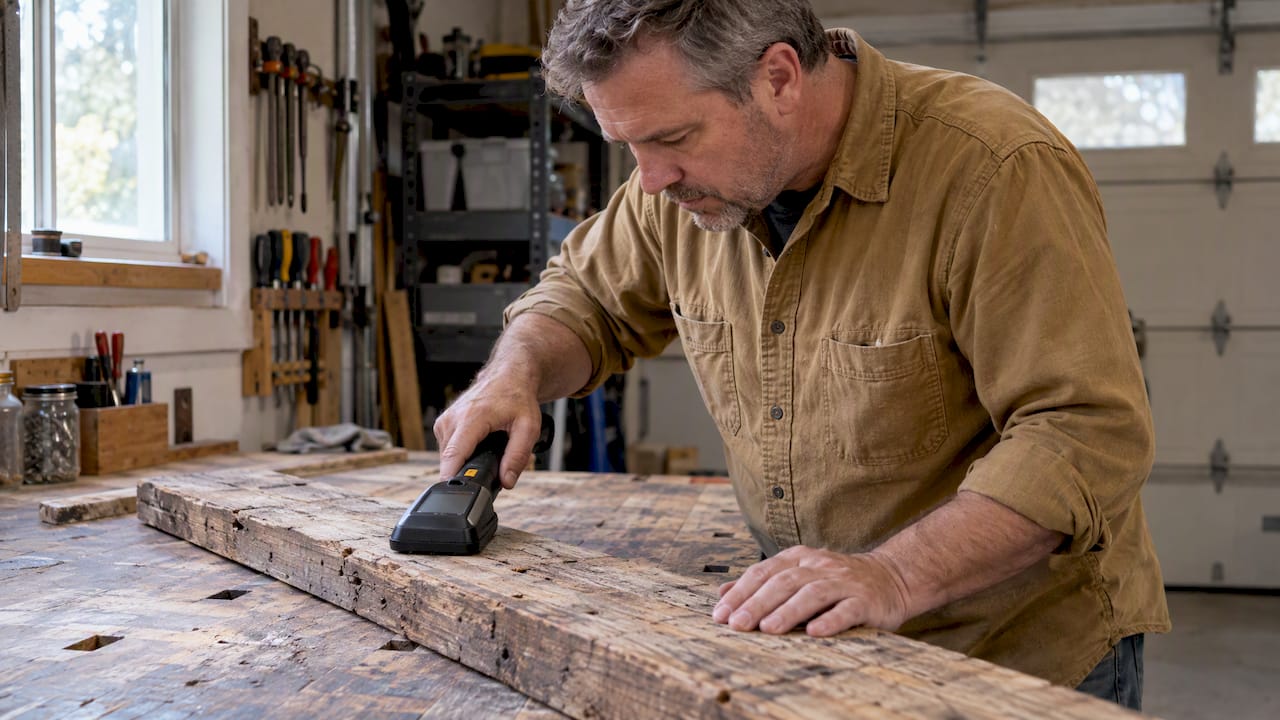
Run a metal detector or a magnet-and-eye inspection over every board before it touches a planer or saw blade. One buried nail can ruin a knife set and throw a fragment.
Drying and acclimating the wood
Moisture is the quiet reason many handmade desks fail. Norfolk Lumber says reclaimed wood should be kiln-dried to 6% to 8% moisture content and acclimated to the home, and that this control prevents cupping, bowing and warping.
In practice:
- Buy from a source that dries or kiln-treats the wood, or have it done before milling.
- Stack boards with stickers (small spacers) in the room where the desk will live for at least a couple of weeks.
- Check with a pin or pinless moisture meter before glue-up.
- Mill, join and finish all faces of the top, not only the visible one, so moisture exchanges evenly.
Illinois humidity swings widely between a damp summer and a heated, dry winter, so a top that is only acclimated in July can still move in January. That is why attachment hardware matters: use figure-eight fasteners, slotted holes or tabletop clips rather than rigid screws through the top into the base.
Dust and air quality in the shop
Sanding and planing old wood is dusty work. OSHA’s wood dust publication describes exposure as a health hazard linked to respiratory problems and cancer, and advises local exhaust ventilation to capture dust at the source. If you build in a garage or basement, use a dust collector or a shop vacuum on your tools, wear a fitted respirator rated for fine dust, and keep the dust out of living areas. For the home side of the problem, this practical guide to office air quality and HVAC covers filtration and ventilation once the desk is in place.
Finishing and protecting the top
A desk top takes more abuse than a shelf: coffee cups, laptop heat, elbows and pens. HGTV’s build says the top can be sanded or left as is, then finished with clear furniture wax or polyurethane, and its example used paste wax.
Our read on the choice:
- Wax: soft sheen, easy to refresh, shows the character of the wood. Marks more readily, so use a desk pad.
- Polyurethane: a harder film for a daily-use surface. Even makers of polyurethane-finished reclaimed tables say it is durable but not indestructible, and that spills should be wiped up quickly and harsh cleaners avoided.
- Rough versus smooth: a heavily textured top with saw marks looks good but writes poorly. Sand the writing area smooth and leave the edges rugged.
Fill nail holes and cracks with a tinted epoxy where a pen or mouse would catch, and ease every sharp edge. Then finish the underside with at least a coat of the same product to balance moisture.
Building a reclaimed wood workbench
A workbench is a different animal. It needs mass and flatness more than looks. One budget workbench guide points to reclaimed Douglas fir or Southern yellow pine beams as a strong choice, because they are dense, dry and stable, with the trade-off that old lumber usually has nails, paint or finish residue and is rarely straight or square.
If you are making one, keep these points in mind:
- Laminate narrow strips rather than relying on a single wide board.
- Flatten the top after glue-up and again after a few weeks of seasonal change.
- Use clean, structurally sound members for the legs and stretchers, per the Forest Service’s regrading advice above.
- Leave the top bare or use an oil finish you can renew, so glue, paint and solvents do not leave a slick surface.
- Be sure that all old paint has been checked for lead, since a workbench is sanded and scraped constantly.
Cost and environmental impact
Reclaimed does not automatically mean cheap. Retail desks in the results we reviewed range from a few thousand dollars for drawer desks to log desks listed at more than $5,000 before sale pricing. You pay for sourcing, de-nailing, drying, milling and finishing, not just the board.
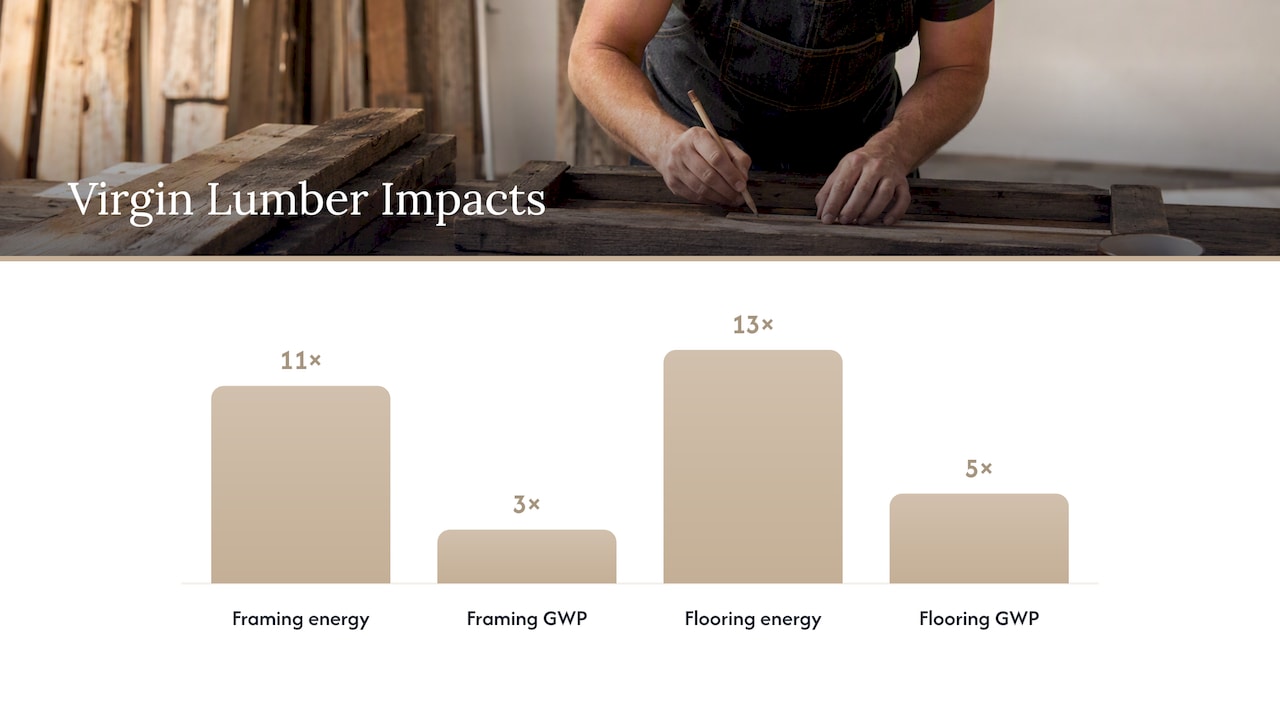
The environmental case is real but should be stated carefully. A U.S. Forest Service life-cycle study found that producing virgin framing lumber and flooring used about 11 and 13 times more cumulative energy than the reclaimed alternatives it studied, with global-warming potential about 3 and 5 times greater. Those figures describe the study’s specific recovery and production processes, not every desk you can buy.
Perspective: why we build desks around the room
We have more than 100 years of combined experience in carpentry, and the lesson we repeat most is that a desk fails at the edges: the outlet that is behind the leg, the drawer that hits the radiator, the top that cups the first January. Reclaimed wood forgives a lot, but it rewards planning. We start with a consultation about how you work, what you store and how much wall you really have, then choose boards and joinery to match.
We also like using what is at hand. Pallet wood, salvaged boards and offcuts can give a home office warmth for far less than a showroom piece, as long as every board is screened and dried first. That is how a budget-conscious project ends up looking intentional rather than improvised.
— Wood
Build it yourself or hire a carpenter
Build it yourself if you own a planer, jointer, clamps and a dust collection setup, enjoy the process and have time to let the wood acclimate. Hire a carpenter if you want a specific size, built-in storage, a wall-mounted desk, a standing-height top, or a desk that matches cabinetry. Pre-1978 salvage with painted surfaces is another reason to let a professional handle the work.
Custom desks and home office builds in Central Illinois
We build custom desks, built-ins and complete home office renovations for homes and small businesses across the Peoria area. You can browse our custom desk projects and home office makeovers to see the range. If you want a pallet wood accent wall behind the desk, our Pallet Wall Accents service starts from $500. Home office renovation and built-in work are quoted per project after a design consultation.

To discuss your space, start on our home page and send us the room dimensions, a few photos and what you need the desk to do.
FAQ
How deep should a reclaimed wood desk be?
Aim for at least 24 inches of depth, and go deeper if you use more than one monitor. For width, 60 to 72 inches suits a single-person desk, according to Norfolk Lumber. Test the footprint with tape before cutting any wood.
Is reclaimed wood safe for an indoor desk?
It can be, once it is screened. Check for rot, insects, hidden metal, preservatives and lead paint, and avoid painted boards from pre-1978 buildings unless a certified professional has tested them. Dry the wood fully and control dust whenever you cut or sand it.
Will a reclaimed wood desk warp?
It is less likely than a fast-grown new board, but not immune. Kiln-drying to 6% to 8% moisture and acclimating the boards in your home greatly reduce cupping and bowing. Attach the top to the base with fasteners that let it move.
What finish is best for a reclaimed wood desk top?
Polyurethane gives the hardest surface for daily use, while furniture wax gives a softer look that is easy to refresh. Either way, sand the writing area smooth and finish the underside too.
Sources
- Build character by incorporating reclaimed wood, The Seattle Times
- Building a Home Office with Reclaimed Wood, Norfolk Lumber
- How to Build a Rustic Industrial Office Desk From Reclaimed Wood, HGTV
- Desk ideas with reclaimed wood for rustic style
- What to Know Before Buying Reclaimed Wood, Family Handyman
- Reducing Lead Hazards When Remodeling Your Home, EPA
- Lead in Your Home: A Parent’s Reference Guide, EPA
- Engineering Properties of Douglas-fir Lumber Reclaimed from Deconstructed Buildings, USDA Forest Service
- Wood dust publication OSHA 3157, OSHA
- Using Reclaimed Lumber and Wood Flooring in Construction, USDA Forest Service
- Best Wood for a Workbench Top on a Budget
- Care & Cleaning of a Polyurethane Finished Table, Grain Designs
- Home Office Lighting for Productivity and Comfort, Lights & Things
- Office Air Quality and HVAC: A Practical Guide