The most reliable accent wall materials are paint and removable wallpaper for budget-conscious updates, and wood slats, shiplap, or stone veneer for lasting texture and depth. The single rule that matters more than any material choice: pick a wall that already has architectural purpose, like the plane behind a bed or flanking a fireplace, and match your material to how that room actually gets used.
TL;DR:
- Painted walls with eggshell or satin finishes resist scuffs and are the most budget-friendly option, costing under $50 per wall in materials.
- Removable wallpaper now convincingly mimics traditional wallpaper or wood grain, with better quality options available for renters and testers.
- Wood slats and panel systems in smoked oak or walnut add shadow depth, conceal cords, and are a trend for 2026 interior design.
- For humid climates or high-moisture areas, materials like MDF and certain wallpaper types are unsuitable due to swelling or delamination risks.
- DIY installation ranges from a few hours for paint and wallpaper to several days for complex wood or stone finishes, with higher-skilled work recommended for heavy materials.
Table of Contents
- What Are the Best Accent Wall Materials to Choose From?
- How Do You Choose the Right Material for Your Room?
- What Installation and Finish Steps Actually Matter?
- How Much Does DIY vs. Professional Accent Wall Installation Cost?
- What Is the Environmental Impact of Accent Wall Materials?
- How Do You Maintain and Clean Different Accent Wall Materials?
- Practical Take on Accent Wall Materials
- Ready to Bring Your Accent Wall Vision to Life?
- Sources
- FAQ
What Are the Best Accent Wall Materials to Choose From?
Every material on this list photographs well. Not every material survives a Central Illinois humid summer, a toddler with sticky fingers, or five years of sunlight through a west-facing window. Here’s how the common options actually perform once the paint dries and the “wow” wears off.
Paint remains the cheapest entry point, often under $50 a wall in materials. Skip flat finish. Eggshell or satin resists scuffs and wipes clean, while matte swallows light in a way that can flatten a feature wall rather than highlighting it. Prime any patched drywall first, or the color will absorb unevenly and you’ll see it under lamplight for years.
Removable wallpaper has genuinely improved. Peel-and-stick options now convincingly mimic wallpaper or wood grain for renters or anyone testing a bold pattern before committing. Quality varies wildly between brands, so check for a textured, matte vinyl rather than the glossy, bubble-prone sheets that dominated the category a decade ago.
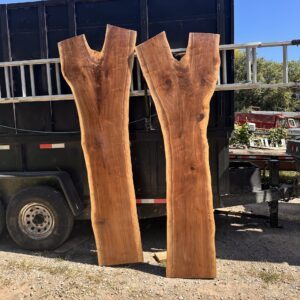
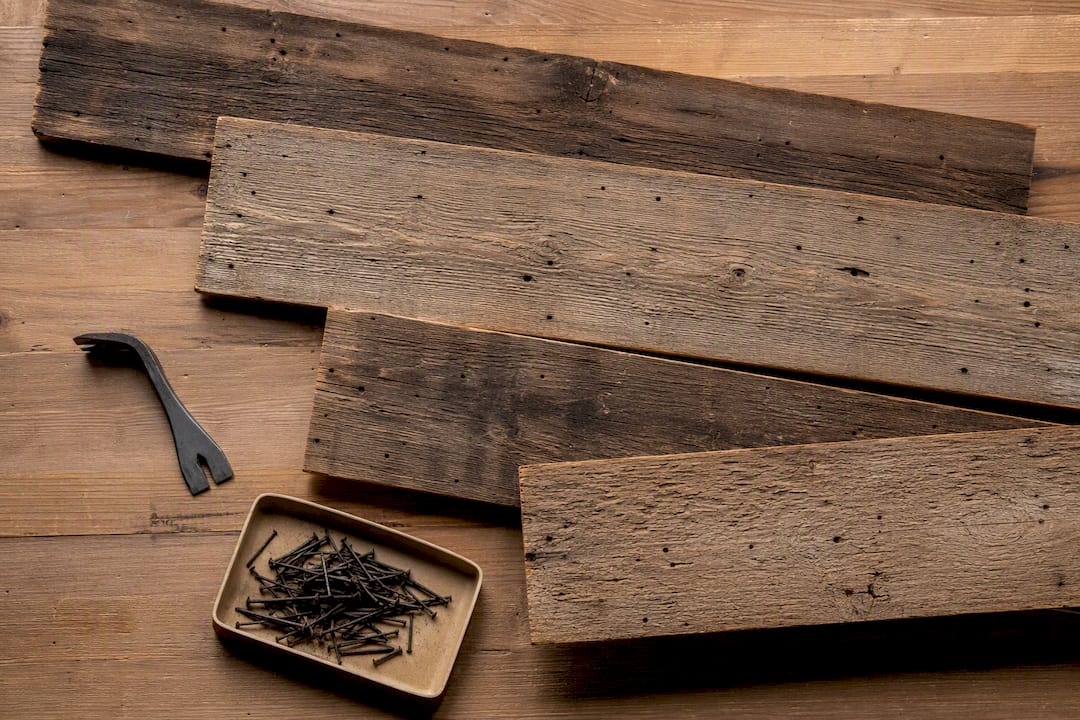
Wood splits into three practical camps. Painted millwork favors poplar because it sands smooth and resists knot bleed-through. Stained feature walls call for white oak or walnut, where grain and color depth are the whole point. Reclaimed wood brings history and irregularity that no factory board can fake, though it demands more prep work for nails, warping, and finish matching.
Wood slats and vertical slat systems are the material trend defining 2026 accent wall design, particularly in smoked oak and walnut tones. They add real shadow depth, hide TV cords and outlets between the gaps, and read as custom carpentry even in a budget kit form.
Shiplap and board-and-batten deliver classic texture but punish sloppy spacing. Uneven gaps or skipped caulk lines show up the moment light hits the wall at an angle.
Pre-finished tongue-and-groove systems solve the consistency problem site-finished lumber creates. These factory-finished panel systems install faster and eliminate the color-matching guesswork of staining boards on-site.
MDF and paneling work fine for painted detail in dry, climate-controlled rooms, but swell and delaminate in bathrooms, mudrooms, or basements prone to humidity swings.
Stone and brick veneer earn their premium at fireplaces and entryways, where texture needs to carry real visual weight.
Tile is the only fully waterproof option on this list, making it the default for kitchen backsplash walls and bathroom feature walls.
Limewash, acoustic panels, fabric, and plant walls round out the field for anyone chasing softness, sound control, or organic texture over hard lines.
How Do You Choose the Right Material for Your Room?
Placement comes before material every time. A purposeful focal wall sits behind a bed, frames a fireplace, or anchors a built-in, following what designers call the 80% unbroken rule: the wall should be free of doors, windows, and other interruptions for at least four-fifths of its surface, so the accent highlights an existing architectural feature instead of competing with one.
Run through this sequence before you buy anything:
- Identify the wall’s job. Is it a bedroom backdrop, a kitchen splash zone, or a home office camera background?
- Test it against performance needs. Will it get wiped down, exposed to steam, or knocked by furniture?
- Match budget to permanence. Renters lean toward peel-and-stick or paint; homeowners planning to stay put can justify wood slats or stone veneer.
Pro Tip: If you’re torn between two materials, pick the one that’s easier to reverse. A removable wallpaper mistake costs an afternoon. A stone veneer mistake costs a demolition weekend.
Skill level matters just as much as taste. Paint and wallpaper are forgiving for a first-timer. Slat systems and board-and-batten require a level, a stud finder, and patience. Stone veneer and large-format reclaimed wood walls usually reward hiring a carpenter who’s done it before.
What Installation and Finish Steps Actually Matter?
Prep work decides whether an accent wall looks custom or looks like a weekend project gone sideways. Prime porous surfaces before painting or staining, confirm the wall is plumb before you start fastening battens or slats, and use the adhesive or fastener the manufacturer specifies, not whatever’s already in your garage.
Finish choice changes everything about how texture reads; understanding different cabinet finish types can guide your painted or stained accent wall finishing decisions.
- Use satin or eggshell on textured wood like shiplap, slats, or board-and-batten. The slight sheen catches light without exaggerating flaws.
- Use matte on masonry and stone veneer to keep the surface looking natural rather than plastic.
- Avoid high gloss inside grooves and reveals, since glare in textured recesses draws attention to every imperfection instead of the material itself.
- Caulk every batten seam and fill every nail hole before painting millwork. Skipping this step is the single most common reason a DIY board-and-batten wall looks unfinished.
- Grout and seal tile or stone veneer fully, especially in kitchens and bathrooms where moisture will find any gap.
Humidity deserves its own line item. MDF swells and fails at cut edges in humid climates, which rules it out for bathrooms, mudrooms, and below-grade rooms. Thermally modified wood holds its shape near exterior doors and in rooms with fluctuating moisture, where standard lumber would eventually cup or gap.
If you’re building a media wall, plan slat spacing around your TV mount and outlet locations before installation day. A well-planned slat wall conceals cords in the channel behind the boards instead of running them exposed down the drywall.
How Much Does DIY vs. Professional Accent Wall Installation Cost?
Cost and skill level track together closely. Paint and peel-and-stick wallpaper sit at the low end, usually a single afternoon and well under $150 in materials for an average wall. Shiplap, board-and-batten, and slat kits occupy the middle tier, where slat kits start around $150 but climb fast with premium wood species and wall size, and typically take a full weekend with a miter saw, level, and nail gun.
- Low cost, low skill: paint, removable wallpaper. A few hours, under $150.
- Mid cost, mid skill: shiplap, board-and-batten, slat kits. One to two days, $150 to $600 per wall.
- High cost, high skill: stone veneer, large reclaimed wood installations, custom millwork. Multi-day projects best handled by a professional carpenter who can prevent costly redo work.
Stone veneer and full-wall reclaimed wood belong in that last category for a reason. The margin for error on cutting, leveling, and fastening large or heavy material is thin, and a mistake often means tearing the whole thing out.
What Is the Environmental Impact of Accent Wall Materials?
Material choice carries a real environmental footprint, and it’s worth weighing alongside looks and budget. Reclaimed wood is the clear leader here. It diverts lumber from landfills or demolition waste and requires no new tree harvesting, which is part of why it’s become such a signature look for carpenters working with salvaged material.
Solid wood species like poplar and white oak are renewable when sourced from managed forests, and they biodegrade naturally at the end of a wall’s life, unlike vinyl wallpaper or laminate panels. MDF and most peel-and-stick wallpapers rely on synthetic resins and adhesives that don’t break down the same way, and manufacturing them tends to be more energy-intensive.
Paint sits somewhere in the middle. Low-VOC and zero-VOC formulas have closed much of the gap with more traditional paints, cutting down on indoor air pollutants without sacrificing durability. Limewash, meanwhile, is one of the more overlooked sustainable options: it’s mineral-based, breathable, and free of the petroleum-derived binders found in standard acrylic paint.
Stone and tile veneer are durable enough to outlast several paint cycles, which matters more than it seems. A material that lasts fifteen years without replacement often has a smaller lifetime footprint than a cheaper option redone every three years, even if its upfront production cost is higher.
How Do You Maintain and Clean Different Accent Wall Materials?
Maintenance needs vary more by material than most homeowners expect, and mismatched care routines are a common way a nice accent wall starts looking tired early.
Painted walls in eggshell or satin wipe clean with a damp microfiber cloth and mild soap. Avoid abrasive sponges, which burnish the sheen and leave visible dull patches.
Wood, painted or stained, just needs regular dusting and an occasional wipe with a slightly damp cloth. Keep standing water off any wood surface, since even sealed finishes can trap moisture at seams over time.
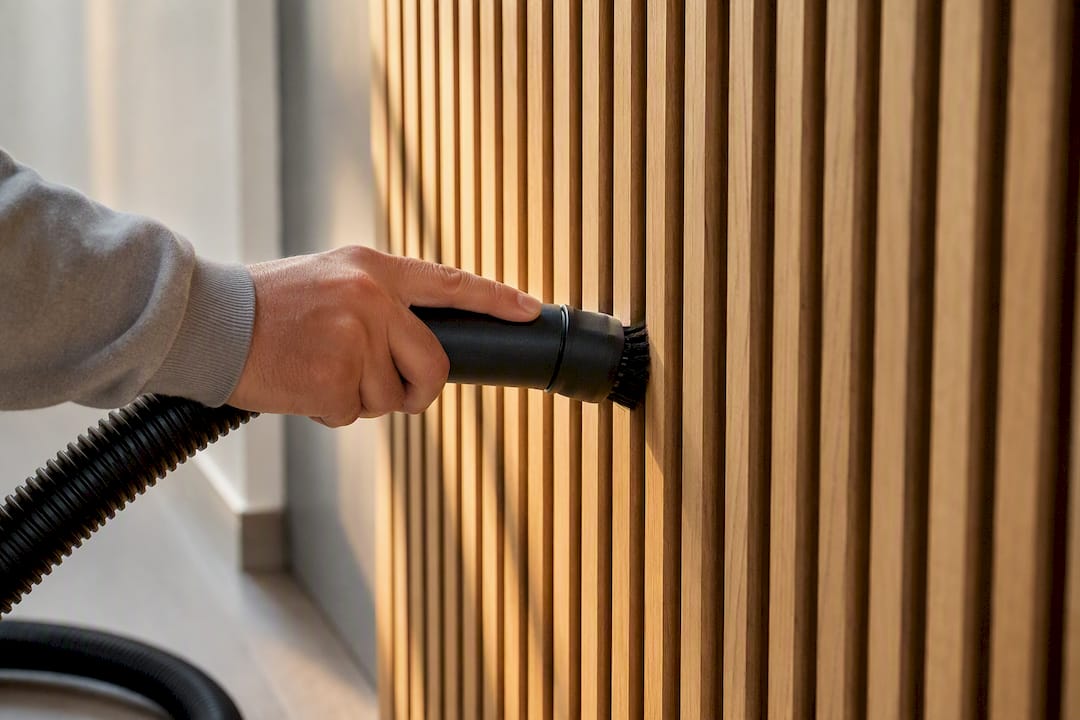
Wood slats and shiplap collect dust in their grooves faster than a flat wall. A vacuum brush attachment or a soft-bristle duster reaches the recesses that a cloth alone will miss.
Stone and brick veneer need almost no upkeep beyond occasional dusting, though grout lines benefit from a yearly resealing to resist staining.
Tile is the easiest to keep spotless. Soap, water, and a squeegee after steamy showers handle nearly everything.
Removable wallpaper tolerates light dusting and gentle spot cleaning, but skip harsh chemical cleaners, which can lift the adhesive at the seams.
Limewash is the one finish that asks for a gentler touch across the board. It’s breathable and matte by design, so scrubbing or glossy sealants defeat the texture that makes it worth choosing in the first place.
Practical Take on Accent Wall Materials
Solid poplar remains the professional standard for painted millwork because it holds a crisp seam through Illinois humidity swings, while white oak earns its place on stained feature walls for grain that MDF simply can’t fake. The rework calls carpenters get most often trace back to crooked battens, visible fastener heads, and uneven reveals, the kind of flaws a level and a steady hand catch before they become permanent. Large reclaimed wood installations, integrated storage, and precise millwork are where a custom install pays for itself.
— Wood
Ready to Bring Your Accent Wall Vision to Life?
Reading about slat spacing and batten caulk lines is one thing. Getting a crooked wall plumb, a seam invisible, and a finish that looks factory made is another, and this is where skilled carpentry makes the difference for homeowners seeking impact without the trial and error. Experienced carpenters bring over 100 years of combined experience to accent walls, built-ins, and custom installations.
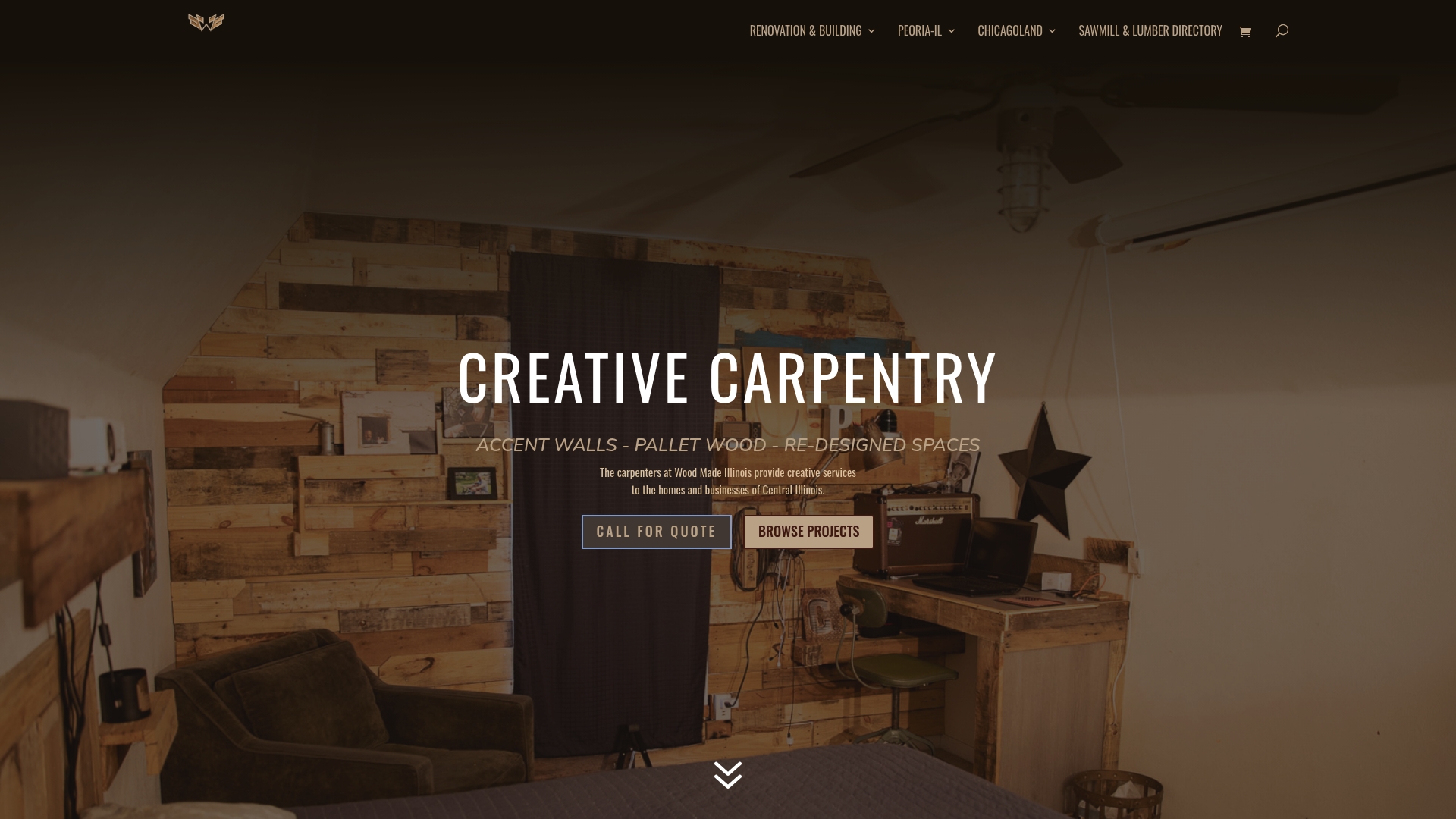
If you’re ready to talk through options, a design consultation is the fastest way to get a realistic price and timeline. Come prepared with a few photos of your space, rough wall dimensions, and any material preferences you’re leaning toward, whether that’s a walnut slat wall or a reclaimed pallet wood feature. Reach out through our trusted local carpentry experts page to schedule a consult, or browse budget-friendly project ideas if you’re still narrowing down what fits your space and budget.
Sources
- Accent walls color ideas | Benjamin Moore
- Accent wall ideas | Architectural Digest
- Textured accent wall guide | FacadeColorizer
FAQ
What Material Do You Use for an Accent Wall?
Paint, removable wallpaper, wood (painted poplar, stained white oak, or reclaimed), wood slats, shiplap, stone or brick veneer, and tile are the most common accent wall materials, each suited to different rooms and budgets.
Are Accent Walls Outdated in 2026?
No. Flat, single-color accent walls have lost popularity, but textured materials such as wood slats, limewash, and stone cladding dominate the 2026 trend, keeping the concept very much alive.
What Is the Rule for Accent Walls?
The core rule is placement with purpose: choose a wall that highlights an existing architectural feature, like a fireplace or headboard wall, and keep it roughly 80% unbroken by doors or windows so the accent reads as intentional.
Should Accent Walls Be Eggshell or Satin?
Both work well on textured wood surfaces like shiplap or slats, since either sheen catches light gently without exaggerating flaws the way high gloss does. Matte is better reserved for stone or masonry accent walls.