A toe kick drawer is a shallow drawer built into the recessed base of a kitchen cabinet, where the space usually sits empty. It holds flat items like baking sheets, trays, and placemats without changing how your kitchen looks. For most homeowners it is a low-cost, low-visibility way to gain storage you already own.
TL;DR:
- Standard toe kicks measure about 3 to 4 inches deep and 4 inches high, but the usable drawer height will be smaller.
- Store only light, flat items such as baking sheets, trays, or placemats; heavy cookware can make shallow slides sag or bind over time.
- Where accessibility rules require knee and toe space, keep at least 17 inches of depth clear; a drawer can block that required space.
- A basic cabinet drawer costs roughly $120 to $400, but this is only a budgeting guide; custom toe kick work may cost more.
- Choose a kit for standard openings; hire a carpenter for unusual widths, matched cabinet fronts, or hidden plumbing, vents, and electrical runs.
Table of Contents
- What can you actually store in a toe kick drawer?
- Which dimensions should you measure first?
- Should you buy a kit, retrofit, or build custom?
- How do you choose the right toe kick drawer?
- Can you install a toe kick drawer yourself?
- What does a toe kick drawer cost?
- How do you get the most out of toe kick drawers?
- When does a carpenter beat the DIY route?
- Custom toe kick drawers from our shop in Central Illinois
- FAQ
- Sources
What can you actually store in a toe kick drawer?
Think flat, wide, and light. The drawer opening is only a few inches tall, so anything with height will not clear the front.
- Baking sheets and cooling racks: the classic use, especially for cabinets next to the oven.
- Serving trays and platters: stored on edge or stacked flat.
- Placemats, table runners, and napkins: an easy fit near an island end or dining area.
- Slim cutting boards: they lie flat and stay out of the way.
- Rarely used items: pizza stones, extra parchment, holiday cookie sheets.
Length and thickness set the limits. Your usable height is the toe kick height minus the drawer box floor and the slide clearance, so even a small stack of pans can already be too tall. Keep the heavy gear, like cast iron, in the main drawers above. Toe kick slides work best with light, flat loads, and a weighed-down drawer will sag or bind over time.
Which dimensions should you measure first?
Measure before you buy anything. Standard toe kicks are commonly around 3 to 4 inches deep, with a height near 4 inches. Those figures vary by manufacturer and by older or custom cabinets, so confirm yours. Your real usable drawer height will be smaller than the opening itself.
If your kitchen needs to meet accessibility guidelines, check clearances too. Accessibility guidance on knee and toe space says that where knee and toe space is required it must be at least 17 inches deep, and that overlap limits affect usable depth. A drawer that fills this space can defeat its purpose.
Where knee and toe space is required, it must be at least 17 inches deep. That minimum is why you should confirm whether a given run of cabinets needs open toe space before filling it with a drawer.
Use this measure-for-fit checklist:
- Measure the interior depth of the base cabinet from the face frame to the back wall.
- Confirm the toe kick panel can come off without damaging the cabinet sides.
- Choose a slide length that fits inside the cabinet depth with at least a small gap to spare.
- Check the countertop overhang, since a deep overhang can block your view and reach.
- Note the width between cabinet sides, then subtract the thickness of your drawer box walls and slides.
Should you buy a kit, retrofit, or build custom?
There are three routes, and the right one depends on your cabinets and your finish standards.
- Prebuilt kits: usually plywood or MDF, quick to install, but offered in limited sizes. Retail listings for toe kick drawers show that kits and retrofit products are widely available.
- Retrofit inserts: shallow slide systems and adhesive-mounted parts that need very little cutting. They suit renters-turned-owners and anyone testing the idea.
- Custom carpentry: drawers sized to your exact opening, with fronts that match your cabinet doors, including solid-wood faces.
Design research on adaptable kitchens found that toe-kick systems built on existing cabinetry baselines often need customization to flex properly and to match the finish. That is the practical case for custom work when your cabinets are older or an unusual width.
Pro Tip: Bring a scrap of your cabinet door to the hardware or finish counter. A kit front that is off by one shade stands out on a toe kick far more than you would expect.
How do you choose the right toe kick drawer?
Work through this checklist in order. Each step can rule out an option before you spend money.
- Fit: verify the opening width, the interior depth, and a slide length that clears the back wall. Test with cardboard before cutting anything.
- Slides and hardware: look at weight capacity first. Full-extension slides let you reach the back of the drawer, which matters when the opening is this low. Soft-close adds quiet but also cost.
- Visual match: decide whether the front will be the same material as your toe kick, painted to match, or a contrast detail. Check the reveal gaps, because uneven gaps look like an afterthought.
- Budget and timeline: a kit is fine for a standard cabinet and a free weekend. Custom work makes sense for nonstandard sizes, tight schedules, or matched finishes.
- Obstructions: look behind the toe kick for plumbing lines, floor vents, electrical runs, and HVAC returns. A vent that sits behind the panel can end the project before it starts.
If two or more items on this list raise questions, that is usually the moment to call a carpenter instead of improvising.
Can you install a toe kick drawer yourself?
Many capable homeowners can. An Ikea instructable for a toe kick drawer walks through a simple three-step pattern of altering the toe kick, assembling the box, and installing it, which shows how doable the basics are.
You will need a tape measure, a level, a jigsaw or oscillating tool, a drill, slides, screws, and finish materials.
- Remove the toe kick panel and inspect behind it.
- Build or position the drawer box to your measured opening.
- Mount the slides, keeping them level and parallel.
- Attach the drawer face with even reveals.
- Finish, then load it and test the motion.
The usual pitfalls are slides that are too long, too little clearance, and hidden plumbing or vents. Check with a flashlight and a stud finder before you cut.
Pro Tip: Clamp the slides in place and cycle the drawer by hand before you drive the final screws. Slides that bind are far easier to fix at that stage.
What does a toe kick drawer cost?
Costs climb with materials, hardware, and labor. A 2026 drawer cost guide puts a basic drawer assembly at roughly $120–$400 per drawer in the U.S., with premium custom work running higher.
That range is for general cabinet drawers, so treat it as a budgeting anchor rather than a firm toe kick quote. What moves the number:
- Materials: solid wood costs more than plywood, which costs more than MDF.
- Slide quality: full-extension, soft-close slides add to the price.
- Labor hours: nonstandard openings and obstructions add time.
- Finish: matching a stain or paint takes extra steps.
To keep costs down, stay with standard sizes, phase the project one drawer at a time, and pick mid-range hardware instead of the top tier.
How do you get the most out of toe kick drawers?
Placement matters more than quantity. A few well-placed drawers beat a full row of them.
- Near the oven: baking sheets come out right where you need them.
- At island ends: placemats and runners sit close to where you eat.
- Dividers and shallow organizers: a simple tray insert keeps stacked sheets from sliding into a heap.
- Integrated looks: painting the drawer front the same color as the toe kick makes it read as part of the cabinet, not an add-on.
If you are weighing broader organization upgrades, professional home organization systems show how much storage can be reclaimed from awkward spaces. Our own piece on turning under-stairs space into real storage follows the same idea.
When does a carpenter beat the DIY route?
Toe kick drawers look simple, and that is exactly why the mistakes show. Even a small misalignment that disappears on a hidden drawer stands out in a visible run of cabinetry. Hire a professional when your cabinet widths are nonstandard, when you want a face that matches your doors, or when plumbing, vents, or structure sit behind the toe kick.
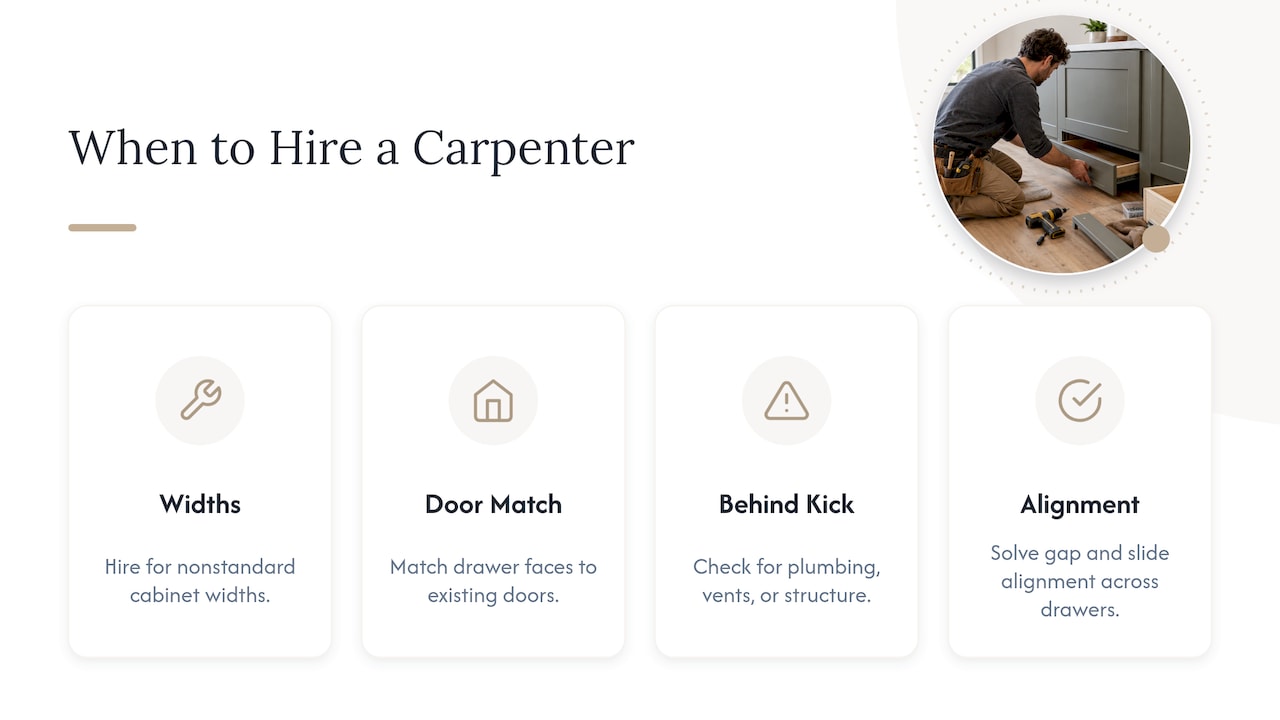
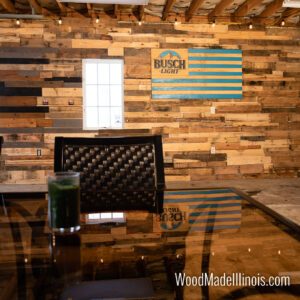
A carpenter also solves what kits and weekend builds tend to miss: gap tolerances, slide alignment across several drawers, and finish matching. Beyond the drawers, we bring personalized design consultations and creative material options, such as pallet wood accents, into the plan. Years of built-in work teach you where a toe kick hides surprises.
The honest view is that this is a trade project disguised as a hack. The idea is simple, but a good result depends on small tolerances that only repetition teaches.
— Wood
Custom toe kick drawers from our shop in Central Illinois
We design and install built-in storage for homes in Central Illinois, tailored to your space.

Here is what a consultation with us covers:
- Measurement: we check your toe kick, cabinet depth, and anything hiding behind the panel.
- Fit options: we walk you through drawer counts, locations, and slide choices.
- Finish samples: we match stain or paint to your existing cabinets.
- A clear estimate: you see the scope before any work begins.
If you are also planning cabinet work, our cabinet refacing and kitchen designer pages show how we handle matched finishes. Ready to price your project? Request an estimate through our kitchen renovation page and we will set up a measurement visit.
FAQ
Are toe kick drawers worth it?
Yes, for most kitchens with flat items to store. They use space that otherwise sits empty and cost little compared with new cabinets. They work best for baking sheets, trays, and placemats, not heavy cookware.
Can you add a toe kick drawer to existing cabinets?
In many cases, yes. You remove the toe kick panel, confirm there are no vents or pipes behind it, and fit a drawer box to the opening. Older or nonstandard cabinets may need a custom-sized drawer.
What is the purpose of a toe kick on cabinets?
A toe kick is the recessed base that lets you stand close to the counter without stubbing your toes. It also hides the cabinet legs or frame. That recess is the space a toe kick drawer puts to work.
How do I build a toe kick drawer?
Measure the opening, build a shallow box, mount full-extension slides, and attach a face that matches the toe kick. A step-by-step Ikea instructable shows a simple pattern. Check for plumbing and vents before you cut.
Sources
- Chapter 3: Clear Floor or Ground Space and Turning Space
- Drawer Cost Guide: Price Ranges for Cabinets 2026 – LatestCost – Real-Time Price Insights
- Ikea Kitchen Toekick Drawer : 3 Steps
- Real-Time Adaptable Residential Kitchen: A Plug-In Standard Rachel Fuelberth Under the Supervision of Professor Dr. Sharon Kuska