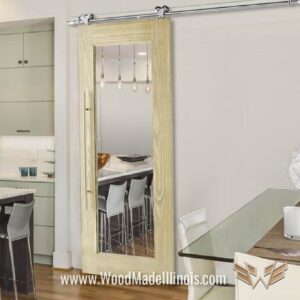
Custom closet design, the recognized industry term for tailored built-in storage, is the method professional carpenters use to turn an ordinary bedroom closet into a fully functional wardrobe system. Understanding how carpenters maximize bedroom closets means looking at precise rod placement, material selection, and hardware quality working together as a single system. The difference between a closet that frustrates you every morning and one that works like a well-built cabinet lies entirely in those details. Woodmadeillinois has spent years refining these techniques for Central Illinois homeowners, and the results speak for themselves.
What are the essential carpentry techniques for maximizing bedroom closet space?
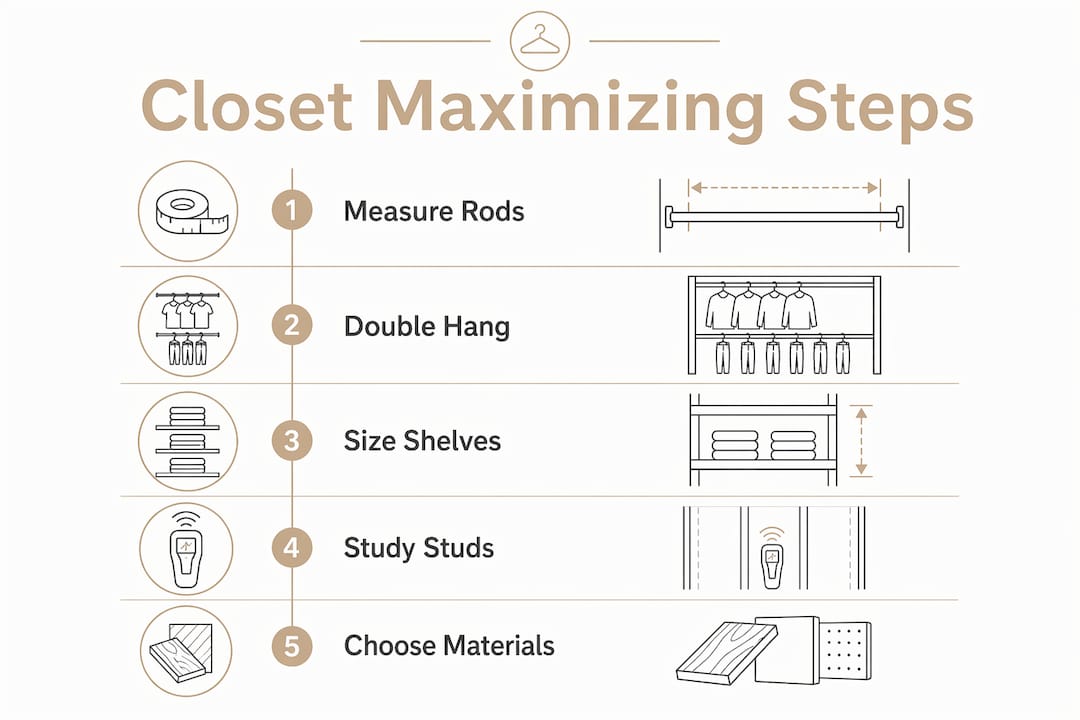
The single most impactful technique carpenters use is the double-hang rod system. Double-hang rods installed at 80–84 inches for the top rod and 40–42 inches for the bottom rod effectively double the hanging capacity of a standard reach-in closet. That height pairing works because shirts, folded pants, and jackets all fit comfortably in the lower zone while longer garments claim the upper space.
Shelf sizing is the second technique most homeowners overlook. Custom closet shelves sized to match actual item dimensions eliminate the dead air space that generic kits create. A carpenter will measure your tote bags, shoe boxes, and folded sweaters before cutting a single board. That specificity is what separates a built-in from a store-bought unit.
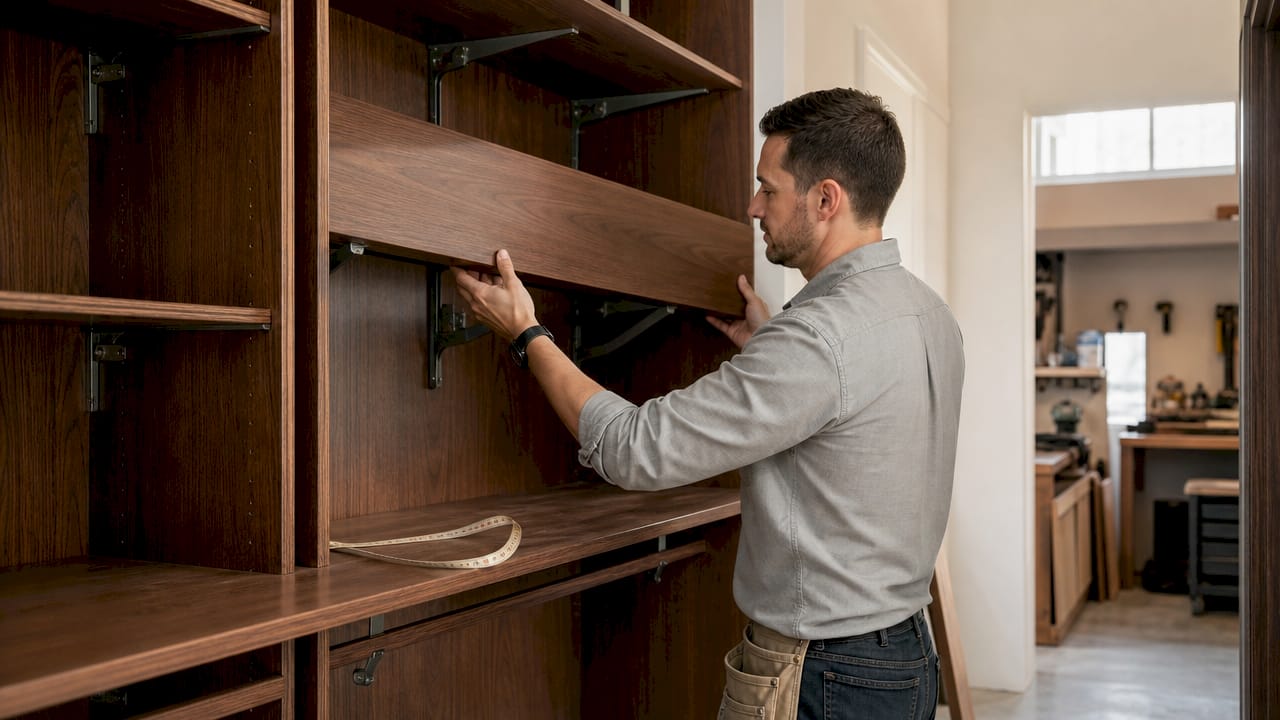
Material thickness matters more than most homeowners realize. Professional carpenters use 3/4-inch plywood or MDF for any shelf spanning more than 36 inches. Thinner boards sag under the weight of folded jeans or stacked shoe boxes within months. Choosing the right thickness from the start prevents that failure entirely.
Track systems are the backbone of the whole build. Heavy-duty aluminum track systems mounted directly into wall studs use mechanical locking cams to hold shelving and rods in place. Consumer-grade adjustable kits anchor into drywall alone, which fails under real load. Stud-mounted tracks distribute weight along the full wall height and stay put for decades.
- Measure your actual wardrobe before selecting rod heights or shelf depths.
- Install double-hang rods at the 80–84 inch and 40–42 inch marks for shirts and folded pants.
- Use 3/4-inch plywood or MDF for shelves longer than 36 inches.
- Mount track systems into studs, not drywall, for lasting stability.
- Size each shelf opening to the specific items it will hold.
Pro Tip: Mark every stud along the full closet wall before installation begins. A stud finder alone is not enough. Drive a finish nail to confirm the stud location, then build your track layout around those confirmed points.
How do material choices and hardware quality affect closet durability?
Material selection sets the ceiling on both cost and longevity. Custom built-in cabinetry costs range from $1,500 to over $5,000 depending on whether you choose melamine, MDF, or solid hardwood. That range reflects real differences in how a finished closet looks, feels, and holds up over time.
Melamine is the practical choice for most bedroom closets. It resists moisture, cleans easily, and costs significantly less than hardwood. Hardwood brings warmth and grain character that melamine cannot replicate, but it requires more finishing time and adds to the total project cost. The right choice depends on your budget and how visible the interior will be.
Hardware quality is where many homeowners cut corners and regret it. Full-extension, soft-close drawer slides rated for 100 pounds give full access to drawer contents and protect delicate items from slamming. Slides rated for 50 pounds or less fail quickly under the weight of folded denim or accessories.
The table below compares the two most common material categories for bedroom closet builds:
| Feature | Melamine / MDF | Solid Hardwood |
|---|---|---|
| Cost | Lower ($1,500–$2,500 range) | Higher ($3,000–$5,000+) |
| Moisture resistance | Good | Requires sealing |
| Finish options | Factory-applied, consistent | Stain, paint, or natural grain |
| Weight capacity | Strong with proper thickness | Excellent |
| Best use case | Reach-in and walk-in closets | Showpiece walk-in wardrobes |
- Choose affordable real wood cabinets when you want the warmth of natural grain without a full hardwood budget.
- Specify soft-close hardware on every drawer and door. The daily wear on standard hinges adds up fast.
- Ask your carpenter to confirm that fasteners penetrate studs, not just the drywall surface, on every anchor point.
- Match your hardware finish across all pulls, rods, and brackets. Mixing metals creates visual noise that makes even a well-built closet look unfinished.
What custom carpentry solutions work for awkward closet spaces?
Irregular closets are not problems. They are opportunities, and skilled carpenters treat them that way. Closet irregularities like awkward corners and narrow gaps become prime built-in storage zones when a carpenter designs around the actual dimensions rather than forcing a generic kit to fit.
Toe-kick drawers are one of the most underused solutions in residential closet work. Professional carpenters build toe-kick drawers approximately 3 inches deep into the baseboard recess at floor level. These hidden drawers use short undermount slides and match the baseboard profile so they disappear visually. They hold seasonal accessories, extra belts, or small folded items that would otherwise pile up on the floor.
The space above the closet door is almost always wasted. A carpenter can install a custom shelf spanning the full width of that opening, adding meaningful storage for items you reach for seasonally. The same logic applies to the wall space above windows in walk-in closets. Those high zones hold luggage, extra bedding, and bins that do not need daily access.
- Vertical dividers mounted into studs hold heavy items like handbags and boots upright without tipping or collapsing.
- Corner carousel units turn dead corner space in walk-in closets into rotating, accessible storage.
- Narrow pull-out towers fit gaps as slim as 6 inches and work well for ties, belts, or scarves.
- Door-mounted organizers built from wood rather than wire hold shoes, accessories, or small bins without flexing under load.
Pro Tip: Before finalizing any closet layout, photograph the space with a wide-angle lens and print it at scale. Seeing the room on paper reveals dead zones that are invisible when you are standing inside the closet.
How can homeowners organize their closets around their actual wardrobe?
Conducting a wardrobe audit before any design decision is the most important step a homeowner can take. Experts recommend laying out every garment by category: long hang, medium hang, short hang, folded items, and accessories. That inventory tells you exactly how many linear feet of rod space you need and where shelves should go.
Most homeowners discover during an audit that they have far more short-hang items than long-hang ones. Shirts, jackets, and folded pants all qualify as short-hang. That realization usually means a double-hang system serves them better than a single long rod, which is the default in most builder-grade closets.
- Pull everything out of the closet before measuring or planning.
- Sort by hang length: long (dresses, coats), medium (trousers), short (shirts, jackets).
- Count folded items and measure the stack height to determine shelf spacing.
- Identify accessories like bags, belts, and shoes that need dedicated zones.
- Assign each category a section of the closet before a carpenter draws the first plan.
Visual clutter is as disruptive as physical clutter. Using no more than three coordinating finishes and light-colored storage bins creates a unified look that makes a closet feel larger and calmer. Dark bins in a small closet absorb light and make the space feel compressed. Light-colored bins reflect light and create a boutique feel without adding cost.
Slim velvet hangers are a low-cost upgrade that delivers real results. Slim velvet hangers increase rod capacity by 30–50% compared to standard plastic ones because they are roughly four times thinner. That gain requires no carpentry at all. It is the first change any homeowner should make before investing in a full build.
Key Takeaways
Custom closet design built around precise rod heights, material thickness, and a wardrobe audit delivers the most durable and functional bedroom storage a carpenter can provide.
| Point | Details |
|---|---|
| Double-hang rod placement | Install top rod at 80–84 inches and bottom rod at 40–42 inches to double hanging capacity. |
| Material thickness | Use 3/4-inch plywood or MDF for shelves over 36 inches to prevent sagging under load. |
| Hardware quality | Specify full-extension, soft-close drawer slides rated for 100 pounds on every drawer. |
| Wardrobe audit first | Inventory all garments by hang length before finalizing any closet layout or measurements. |
| Irregular spaces | Toe-kick drawers, corner units, and over-door shelving turn dead zones into functional storage. |
What I have learned from years of closet builds
The most common mistake I see homeowners make is designing for the closet they wish they had rather than the one their wardrobe actually needs. They plan for a long-hang section that could hold a dozen evening gowns when they own two. That wasted rod space could have been a double-hang zone holding twice the shirts and jackets they use every week.
Vertical space is the second thing people consistently neglect. Most builder-grade closets stop at one rod and one shelf, leaving 18 to 24 inches of usable space above the shelf completely empty. A carpenter sees that gap and immediately thinks about a second shelf, a hat rack, or a row of hooks. That upper zone, once claimed, adds meaningful capacity without touching the floor plan.
Hardware is where I have seen the most regret. Homeowners choose a beautiful melamine finish and then spec the cheapest drawer slides available. Within a year, those slides bind, stick, and fail. The finish still looks great, but the drawers are a daily frustration. Spending an extra $15 to $20 per drawer on quality slides is one of the best investments in a closet build.
My honest advice is to consult a skilled carpenter before buying a single shelf bracket. The custom shelving options available today can fit almost any budget, and a professional measurement visit costs far less than tearing out a poorly planned kit system six months later. Build it right the first time, and the closet will serve you for the life of the home.
— Wood
Woodmadeillinois custom closet builds for Central Illinois homeowners
Woodmadeillinois brings over 100 years of combined carpentry experience to every bedroom closet project in Central Illinois. The team designs each build around your actual wardrobe, your wall dimensions, and your budget, using quality materials and hardware that hold up for the long term.
Whether you need a double-hang system in a reach-in closet or a full walk-in wardrobe with toe-kick drawers and corner storage, Woodmadeillinois delivers craftsmanship that fits your space and your life. Reach out to the trusted local carpentry experts at Woodmadeillinois to schedule a consultation and get a project estimate tailored to your home.
FAQ
What rod height should a carpenter use for a double-hang closet?
The top rod installs at 80–84 inches and the bottom rod at 40–42 inches. That spacing accommodates shirts and folded pants on the lower rod and longer garments on the upper rod.
What shelf material prevents sagging in a bedroom closet?
Professional carpenters use 3/4-inch plywood or MDF for shelves spanning more than 36 inches. Thinner material bends under the weight of folded clothing and shoe boxes over time.
How much does a custom bedroom closet build typically cost?
Custom built-in closet systems range from $1,500 to over $5,000 depending on material choice, finish complexity, and hardware quality. Melamine builds cost less than solid hardwood builds at comparable sizes.
What is a toe-kick drawer and why does it matter?
A toe-kick drawer is a hidden storage compartment built into the baseboard recess at floor level, approximately 3 inches deep. It uses the recessed floor space that standard closet kits leave completely empty.
Should I audit my wardrobe before planning a closet build?
Yes. Laying out every garment by hang length and category before design work begins ensures the finished closet matches your actual storage needs rather than a generic layout.