Trim upgrades are defined in the building trades as finish carpentry installations, including crown molding, baseboards, door casings, and window casings, that complete a room’s architectural character without altering its structure. The role of trim upgrades in home value is direct: targeted improvements can increase resale value by 5% to 15% by shaping buyer perception before a single price negotiation begins. Think of trim as the skin of a room. It does not hold the bones together, but it tells every visitor whether those bones were cared for. Woodmadeillinois has seen this dynamic play out across Central Illinois homes, where a well-trimmed room consistently draws stronger offers than a larger, untrimmed one.
How do trim upgrades influence perceived home value?
Trim defines the visual grammar of a room. It establishes proportion, frames transitions between surfaces, and signals whether a home was finished with intention or afterthought. Trim upgrades improve proportion, visual balance, and perceived quality across all rooms, creating a cohesive design language that buyers read immediately. That cohesion is not decorative. It is a credibility signal.
Buyers form impressions within seconds of entering a room. A room with tall, cleanly installed baseboards and a crisp door casing reads as maintained and deliberate. A room with thin, painted-over trim or gaps at the corners reads as neglected, regardless of how new the flooring or appliances are. Finish carpentry quality is a visible indicator of overall home maintenance that supports stronger buyer confidence and faster offers.
The psychological mechanism here is straightforward. Buyers cannot inspect every wall cavity or roof truss during a showing. They use visible details as proxies for hidden quality. Trim is one of the most visible details in any room. When it is consistent, well-proportioned, and cleanly installed, buyers extend that positive judgment to the entire home.
- Consistent trim profiles across rooms signal that the home was designed as a whole, not assembled room by room.
- Properly scaled baseboards (typically 3.5 to 5.5 inches in standard ceiling-height rooms) ground the walls and make floors feel intentional.
- Mitered corners and tight reveals on door casings communicate craftsmanship that buyers associate with quality construction throughout.
- Mismatched profiles between rooms, or trim styles that conflict with the home’s architecture, undercut buyer confidence even when the rest of the home is well-maintained.
Pro Tip: Walk through your home as a buyer would. Stand in each doorway and look at the casing on both sides. If the profiles differ, or if the gap between casing and drywall is visible, that is the first thing to fix before listing.
Which trim upgrades deliver the highest ROI?
Not all trim work returns equal value. The upgrades that consistently deliver the strongest impact on buyer perception and resale potential fall into three categories: crown molding, elevated baseboards, and upgraded door and window casings.
Crown molding
Crown molding is the architectural finishing touch that separates a finished room from a designed room. Installing crown molding costs between $4 and $50 per linear foot and can deliver up to 53% ROI when part of a living room remodel. That range reflects material choice, from simple paint-grade MDF profiles to complex multi-piece built-up assemblies in hardwood. For most Central Illinois homes, a clean single-piece profile in the 3.5 to 4.5-inch range hits the right balance of visual impact and installation cost.
Elevated baseboards
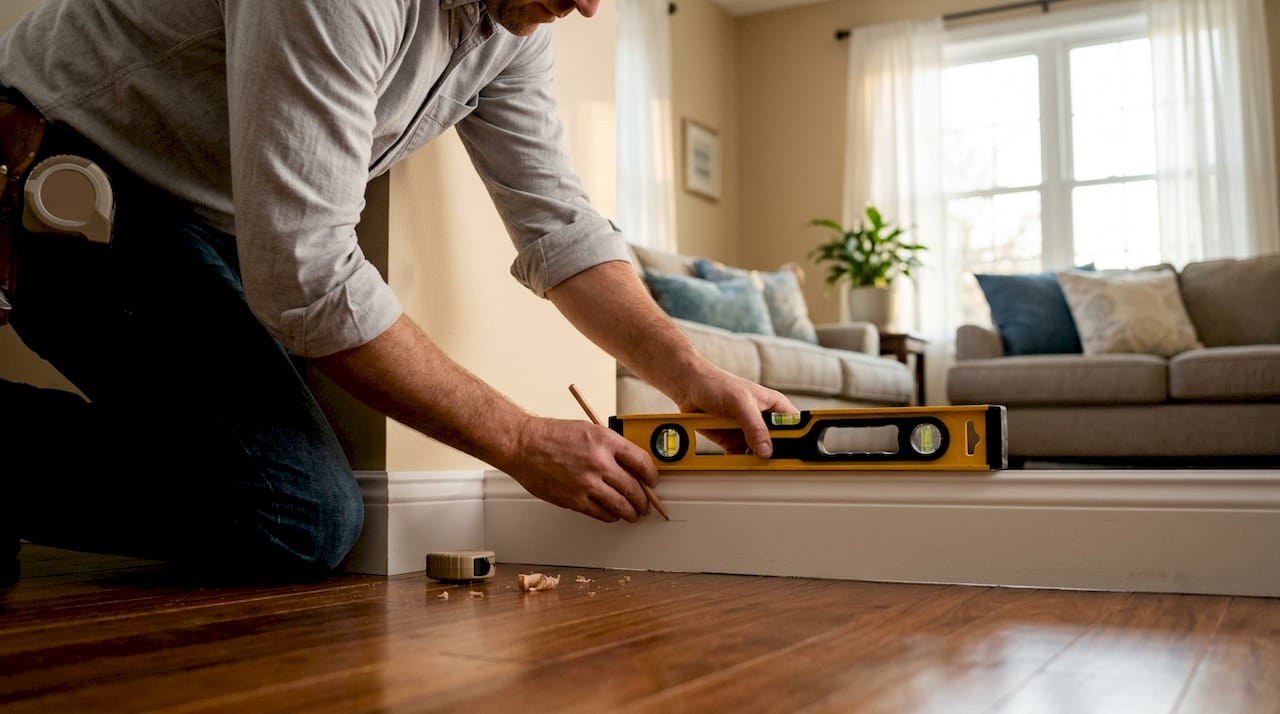
Standard builder-grade baseboards run 2.25 to 2.5 inches tall. Upgrading to a 4.5 to 5.5-inch profile with a simple ogee or colonial detail costs relatively little per linear foot but changes how a room reads entirely. Elevated baseboards and crown molding define architectural transitions and spatial proportions that make rooms feel larger and more finished. The effect is particularly strong in older homes where the original trim was minimal.
Door and window casings
Door and window casings create what finish carpenters call “architectural moments.” A well-proportioned casing with a back band or plinth block turns a functional opening into a designed feature. Upgrading casings is also one of the most cost-effective trim improvements because the linear footage per opening is low, and the visual payoff is immediate.
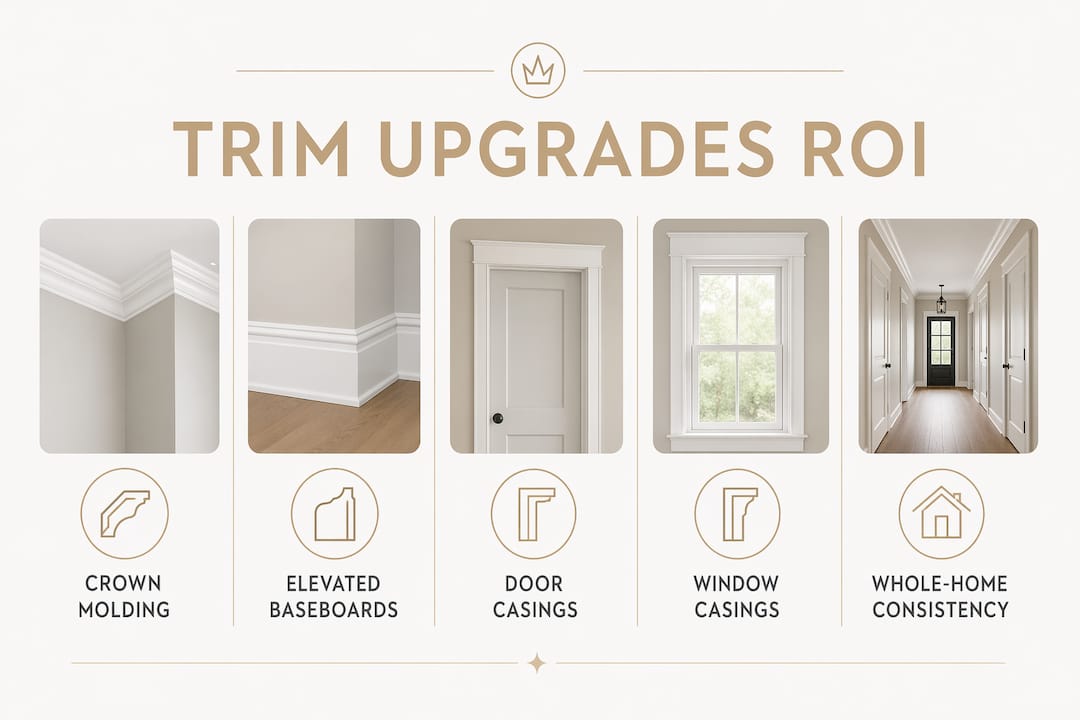
| Trim type | Typical cost range | Primary visual impact |
|---|---|---|
| Crown molding | $4–$50 per linear foot | Ceiling-to-wall transition, room height perception |
| Baseboards (upgraded) | $1–$8 per linear foot | Floor-to-wall grounding, room scale |
| Door casings | $3–$12 per opening | Architectural framing, craftsmanship signal |
| Window casings | $3–$15 per opening | Interior finish quality, design cohesion |
Pro Tip: Whole-home trim consistency matters more than any single upgrade. Buyers notice when the living room has crown molding and the hallway does not. Plan your trim upgrades as a system, not a collection of individual projects.
Are trim upgrades worth it compared to major remodels?
The honest answer is yes, and the numbers support it clearly. Minor fixes like updating trim deliver faster and more reliable value recovery than major remodels, which often return less than 60 cents on the dollar. Kitchen and bathroom remodels carry significant remodel risk: unexpected structural conditions, permit delays, and scope creep that push budgets well past original estimates.
Trim work avoids all of that. Trim upgrades limit remodel risk and cost variability because the scope is defined by linear footage and profile selection before the first nail is set. There are no walls to open, no plumbing to reroute, and no inspections to schedule. A skilled carpenter can complete a full room’s trim package in a single day.
The budget advantages stack up quickly:
- Predictable material costs. Trim profiles are priced by the linear foot, so a room estimate is straightforward to calculate before committing.
- Short project timelines. Most trim upgrades complete in one to three days per room, minimizing disruption and allowing homeowners to stage quickly.
- No permit requirements in most jurisdictions for interior trim work, which eliminates a common source of project delay.
- Stackable with other updates. Trim work pairs naturally with painting and flooring projects, allowing homeowners to bundle labor costs and reduce total project expense.
The comparison to additions is even starker. A room addition carries construction costs, permit fees, and design expenses that rarely return full value at resale. A whole-home trim upgrade, by contrast, costs a fraction of an addition and can produce a comparable lift in buyer perception. For homeowners focused on home interior upgrade best practices, trim is consistently one of the highest-efficiency investments available.
What are the most common trim upgrade mistakes?
The most damaging mistake homeowners make is installing trim inconsistently. Poorly installed or mismatched trim reduces buyer confidence and signals a lack of attention to detail, which buyers extend to their judgment of the entire home. A room with beautiful crown molding and a door casing that does not match the profile reads as unfinished, not upgraded.
The second most common mistake is choosing profiles that conflict with the home’s architectural style. A Victorian home with flat, contemporary trim looks confused. A modern craftsman home with ornate, multi-piece crown molding looks overdone. Profile selection should reflect the home’s existing character, not the homeowner’s personal preference for a different style.
- Avoid mixing profile families. Colonial, craftsman, and contemporary profiles each have distinct proportions and details. Mixing them across rooms creates visual noise that buyers register as disorder.
- Match reveals consistently. The reveal, the small gap between the edge of a casing and the door jamb, should be uniform throughout the home. Inconsistent reveals signal rushed installation.
- Never skip back-priming. Trim installed without back-priming will absorb moisture unevenly, leading to paint failure and gaps at joints within a year or two.
- Scale profiles to ceiling height. A 3-inch baseboard in a room with 9-foot ceilings looks undersized. A 6-inch baseboard in a room with 7-foot ceilings looks heavy. Proportion is everything.
Whole-home trim consistency with matching profiles and proportions is rarely achieved by DIY installations but is the single most important factor in maximizing perceived value. This is where professional finish carpentry earns its cost.
Pro Tip: Before purchasing trim profiles, bring a sample to each room in your home and hold it against the existing trim. Photograph it under natural light. What looks cohesive in a showroom can read as mismatched in your specific space.
How to plan trim upgrades alongside other home improvements
Timing trim upgrades correctly multiplies their value. The most cost-efficient sequence places trim installation after flooring and before final paint.
- Complete flooring first. New flooring changes the room’s base height and may require new shoe molding or baseboard adjustments. Installing trim over finished floors eliminates gaps and ensures a clean fit.
- Install trim before final paint. Painters can cut in cleanly against new trim profiles, and any nail holes or caulk lines get covered in the final coat. This sequence saves labor and produces a cleaner result.
- Combine trim with hardware updates. Upgrading door casings while replacing door hardware and hinges in the same visit reduces labor cost and produces a unified result that buyers notice.
- Plan room by room, but design whole-home. Start with the highest-visibility rooms, the entry, living room, and primary bedroom, but select profiles that will carry through the entire home. This approach lets you spread cost across multiple projects while maintaining consistency.
- Address updating tired interiors as a system. Trim, paint, and hardware together cost less than any single structural improvement and produce a move-in-ready impression that accelerates buyer decisions.
Updating trim can modernize older homes without major structural changes, improving visual balance and making spaces feel intentional. For homeowners preparing to list within 12 months, a phased trim upgrade plan is one of the most reliable ways to improve market readiness without overextending the renovation budget.
Key Takeaways
Trim upgrades are the most cost-efficient way to raise perceived home quality, improve buyer confidence, and increase resale value without structural changes.
| Point | Details |
|---|---|
| Trim drives buyer perception | Consistent, well-installed trim signals craftsmanship and raises buyer confidence faster than most structural upgrades. |
| Crown molding delivers strong ROI | At $4–$50 per linear foot, crown molding can return up to 53% ROI as part of a living room remodel. |
| Whole-home consistency is critical | Matching profiles and proportions throughout the home produce stronger perceived value than isolated room upgrades. |
| Trim avoids remodel risk | Unlike kitchen or bath remodels, trim work keeps costs predictable, timelines short, and budgets intact. |
| Sequence upgrades strategically | Install trim after flooring and before final paint to reduce labor costs and produce the cleanest result. |
What I have learned from years of finish carpentry work
After years of working on homes across Central Illinois, the pattern I see most clearly is this: buyers do not buy square footage. They buy the feeling that a home was cared for. Trim is the clearest expression of that care.
I have watched homeowners spend tens of thousands of dollars on kitchen remodels and still struggle to get asking price, because the rest of the home felt unfinished. Then I have seen a modest home with consistent, well-proportioned trim throughout sell above asking within days. The difference was not the kitchen. It was the sense that someone had paid attention to every room.
The mistake I see most often is homeowners treating trim as a finishing detail rather than a value strategy. They upgrade appliances, replace countertops, and repaint walls, then install the same thin builder-grade baseboard they pulled off. That sequence leaves real money on the table.
My honest advice: before you spend on anything visible but replaceable, like fixtures or hardware, walk your home and assess the trim. If it is thin, mismatched, or poorly installed, fix that first. The custom carpentry interior design decisions you make at the trim level set the tone for everything else a buyer sees.
Trim is not the most glamorous upgrade. It is the most reliable one.
— Wood
Woodmadeillinois can help you get trim upgrades right
Trim work looks simple from a distance. Up close, the difference between a professional installation and a rushed one is obvious to every buyer who walks through the door.
Woodmadeillinois brings over 100 years of combined carpentry experience to trim projects across Central Illinois, from single-room crown molding installations to whole-home finish carpentry upgrades. The team works with homeowners to select profiles that match their home’s architectural character, then installs them with the consistency and precision that buyers recognize. Whether you are preparing to list or simply want your home to feel more finished, the trusted local carpentry experts at Woodmadeillinois offer personalized consultations and carpentry project ideas for every budget to help you plan the right upgrades for your specific home and timeline.
FAQ
What is the role of trim upgrades in home value?
Trim upgrades improve perceived home quality and buyer confidence by signaling craftsmanship and attention to detail. Targeted improvements can increase resale value by 5% to 15% without structural changes.
How much does crown molding cost to install?
Crown molding costs between $4 and $50 per linear foot depending on material and profile complexity. It can deliver up to 53% ROI when installed as part of a living room remodel.
Are trim upgrades worth it before selling a home?
Yes. Trim upgrades return value more reliably than major remodels, which often return less than 60 cents on the dollar. Trim work also keeps costs predictable and timelines short.
What trim upgrades add the most value?
Crown molding, elevated baseboards, and upgraded door and window casings deliver the strongest impact. Whole-home consistency across all three categories produces the greatest lift in buyer perception.
Can poor trim installation hurt home value?
Poorly installed or mismatched trim actively reduces buyer confidence by signaling rushed or low-quality workmanship. In some cases, bad trim is more damaging than no trim at all.