A cosmetic renovation concept is defined as the strategic updating of a home’s visible surfaces and fixtures to improve appearance and functionality without altering its structure. Think of it as refreshing the skin of a house while leaving the bones untouched. Painting walls, replacing cabinet hardware, installing new flooring, and upgrading light fixtures all fall within this category. Understanding what is a cosmetic renovation concept helps homeowners make confident decisions about where to spend renovation dollars for the greatest visual and financial return.
What does a cosmetic renovation concept actually involve?
A cosmetic renovation focuses entirely on what you can see and touch, not on what holds the house together. No load-bearing walls come down. No plumbing lines move. The existing floor plan stays intact. The goal is to refresh the space so it feels newer, cleaner, and more appealing without the cost or disruption of a full structural overhaul.
Common cosmetic renovation ideas include:
- Painting walls and cabinetry to update color without replacing materials
- Replacing door and drawer hardware with matte black or brushed nickel finishes for an instant quality upgrade
- Installing new flooring such as luxury vinyl plank or hardwood over existing subfloors
- Resurfacing or painting countertops when replacement is not in the budget
- Swapping outdated light fixtures for modern pendants or recessed lighting
- Updating bathroom vanity mirrors, faucets, and towel bars as a weekend project
- Applying peel-and-stick tile backsplash in kitchens for a fast visual refresh
Each of these tasks stays within the cosmetic upgrade concept: no permits required in most cases, no contractors tearing out walls, and no weeks of construction dust. Low-impact bathroom upgrades like painting cabinets, replacing light fixtures, and updating hardware can cost between $100 and $500 and be completed within a single weekend. That kind of speed and affordability makes cosmetic work the first choice for homeowners who want results without a major commitment.
Pro Tip: Start with the room that gets the most foot traffic or the one guests see first. A refreshed entryway or kitchen creates an immediate impression that carries through the entire home.

What are the benefits of cosmetic renovations?
Cosmetic renovations are not cheap fixes. They are professional strategies focused on visual appeal that accelerate property sales and improve emotional impact. The return on investment is one of the strongest arguments for this approach.
Kitchen and bathroom updates frequently yield 60–80% ROI when planned carefully, with overall cosmetic renovations often returning $2 or more for every $1 spent. That figure matters because it means a $3,000 cabinet painting project can add $6,000 or more in perceived value at resale. Few home improvements offer that kind of leverage without structural risk.
“Cosmetic renovations enhance emotional appeal through visual and tactile cues. Buyers respond to lighting ambiance, hardware finish, and surface quality before they consciously evaluate square footage or layout. That emotional response drives faster sales and stronger offers.”
Speed is another major advantage. A structural renovation can take months and displace a family from their home. A well-planned cosmetic project often wraps up in days or a few weekends. Less disruption means less stress, lower temporary housing costs, and faster results.
The functional benefits extend beyond resale. Updated lighting, organized cabinetry, and fresh surfaces make a home more enjoyable to live in every day. Cosmetic upgrades also allow homeowners to save money on interior updates while still achieving a dramatic visual transformation.
How to plan a cosmetic renovation project
A well-planned cosmetic renovation delivers far better results than one approached impulsively. The sequence of decisions matters as much as the individual choices.
- Assess the existing layout and condition first. Identify what works well structurally and functionally before spending a dollar. Cosmetic work performs best when the underlying layout is sound.
- Choose neutral palettes and timeless finishes. Trend-chasing in cosmetic upgrades can deter buyers after 3–5 years. Stick to warm whites, soft grays, and natural wood tones as your foundation. Use accessories and textiles to introduce personality.
- Prioritize layered lighting. Layered lighting that combines ceiling fixtures, vanity lights, and soft accent sources creates a balanced, professional ambiance that single-fixture upgrades cannot match. This is one of the highest-impact changes you can make for the cost.
- Upgrade hardware with tactile quality in mind. Replacing builder-grade hardware with matte black or brushed nickel finishes signals higher quality to anyone who touches a door or drawer. The subconscious registers the weight and finish before the eye does.
- Set a realistic budget and timeline. Small rooms like bathrooms and laundry areas are ideal weekend projects. Kitchens may require two to three weekends depending on the scope of cabinet painting or refacing.
- Check local permit requirements. Most cosmetic renovations are exempt from council approval. Heritage-listed properties and conservation areas, however, may require permits even for exterior paint color changes. Confirm before you start.
- Sequence your updates logically. Paint walls before installing new flooring. Replace light fixtures before painting ceilings. Work from top to bottom and from the back of the room toward the exit to protect finished surfaces.
Pro Tip: When planning a kitchen refresh, consider cabinet refacing before committing to full replacement. Refacing preserves the existing box structure while delivering a completely new visual result at a fraction of the cost.
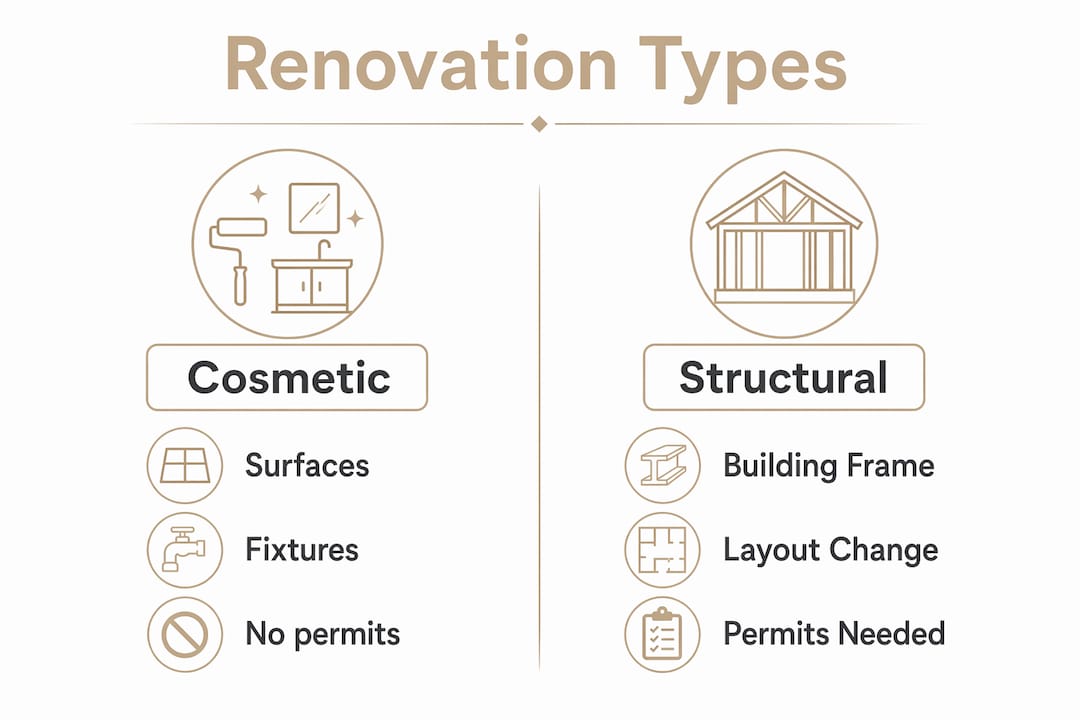
Cosmetic vs. structural renovations: which one does your home need?
Understanding the difference between cosmetic and structural renovations prevents costly mistakes. The distinction is straightforward but the implications are significant.
A structural renovation changes the building’s skeleton or footprint. Moving a load-bearing wall, relocating a kitchen to a different floor, rerouting major plumbing lines, or adding square footage all qualify as structural work. These projects require permits, licensed contractors, and extended timelines. They also carry higher risk and cost.
A cosmetic renovation, by contrast, leaves the structure completely intact. It updates what exists rather than reconfiguring how the space is organized.
| Category | Cosmetic Renovation | Structural Renovation |
|---|---|---|
| Scope | Surfaces, fixtures, finishes | Walls, layout, plumbing, electrical |
| Typical cost | $500–$15,000 | $20,000–$100,000+ |
| Timeline | Days to a few weekends | Weeks to months |
| Permits required | Rarely | Almost always |
| Best for | Aesthetic refresh, resale prep | Poor layout, safety issues, major damage |
| ROI potential | High, especially kitchens and baths | Variable, depends on market |
The critical limitation of cosmetic work is this: a fresh coat of paint will not fix poor functional issues such as a bad layout or a chronically dark room. If your kitchen forces you to walk in a triangle that adds ten steps to every meal, no amount of new cabinet paint resolves that frustration. Cosmetic upgrades provide limited long-term satisfaction when functional problems remain unaddressed.
The right choice depends on what your home actually needs. If the layout works and the structure is sound, cosmetic renovation concepts deliver exceptional value. If the layout creates daily friction, a targeted structural change may be worth the investment before cosmetic work begins.
Key Takeaways
A cosmetic renovation concept delivers the highest return when applied to a structurally sound home with a functional layout, using timeless finishes, layered lighting, and quality hardware.
| Point | Details |
|---|---|
| Definition is precise | Cosmetic renovations update visible surfaces and fixtures without touching the structure or layout. |
| ROI is measurable | Kitchen and bathroom cosmetic updates return 60–80%, with overall projects often returning $2+ per $1 spent. |
| Planning sequence matters | Paint before flooring, replace fixtures before painting ceilings, and always check permit requirements first. |
| Hardware quality signals value | Replacing builder-grade hardware with matte black or brushed nickel finishes raises perceived quality immediately. |
| Know the limits | Cosmetic work cannot fix a poor layout; structural problems require structural solutions before surface updates begin. |
What I have learned after years of cosmetic renovation work
The most common mistake I see homeowners make is treating cosmetic renovation as a consolation prize for not being able to afford structural work. That framing is wrong. Cosmetic renovation is its own discipline, and when executed with intention, it outperforms structural work on a dollar-for-dollar basis in most markets.
What actually moves the needle is not the number of projects completed but the quality of the decisions behind each one. A homeowner who replaces every fixture in a bathroom but keeps a single overhead light has missed the most important upgrade available. Layered lighting changes how a room feels at a neurological level. Hardware finish changes how a room feels at a tactile level. These are not decorating choices. They are perception engineering.
I also caution against chasing trends. Shiplap, open shelving, and bold tile patterns all have their moment, and then they have their decade of looking dated. The homes that hold their value and their appeal are the ones built on neutral foundations with personality added through textiles, art, and plants. Those elements cost almost nothing to swap out when tastes change.
The most satisfying projects I have been part of started with an honest assessment of what the home already did well. When the bones are good, cosmetic renovation concepts are not a compromise. They are the most direct path from where the space is to where it needs to be.
— Wood
How Woodmadeillinois can help you execute your renovation vision
Woodmadeillinois brings over 100 years of combined carpentry experience to cosmetic renovation projects across Central Illinois. The team works directly with homeowners to identify the highest-impact upgrades for their specific space, budget, and timeline.

Whether you need cabinet painting to refresh a dated kitchen, custom shelving to add storage without structural changes, or a full interior facelift planned from the ground up, Woodmadeillinois delivers results that feel considered and crafted. The team’s trusted local carpentry experts specialize in the kind of surface-level work that creates lasting impressions. Reach out for a personalized design consultation and find out exactly which cosmetic upgrades will deliver the strongest return in your home.
FAQ
What is a cosmetic renovation concept in simple terms?
A cosmetic renovation concept is the practice of updating a home’s visible surfaces, fixtures, and finishes to improve appearance and functionality without altering its structure or layout.
How much does a typical cosmetic renovation cost?
Costs range widely based on scope. Simple bathroom upgrades like painting cabinets, replacing fixtures, and updating hardware can cost between $100 and $500, while larger kitchen projects may reach $10,000–$15,000.
Do cosmetic renovations require permits?
Most cosmetic renovations do not require permits. Heritage-listed properties and conservation areas are exceptions, where even exterior paint color changes may need council approval before work begins.
What cosmetic renovation ideas offer the best ROI?
Kitchen and bathroom updates consistently deliver the strongest returns, with ROI frequently in the 60–80% range. Hardware upgrades, fresh paint, and layered lighting offer some of the highest returns relative to their cost.
When should I choose structural renovation over cosmetic upgrades?
Choose structural renovation when the existing layout creates functional problems that surface updates cannot resolve, such as poor traffic flow, inadequate natural light, or safety issues with plumbing or electrical systems.