Quick turnaround renovation is defined as a structured approach that compresses project timelines by 30–50% through synchronized scheduling, dedicated management, and pre-ordered materials, without cutting corners on quality. Homeowners and property investors who understand the benefits of quick turnaround renovations gain a real edge: lower indirect costs, faster access to improved spaces, and stronger returns on investment. The approach differs from rushed work in one critical way. Speed is built into the project design from day one, not bolted on at the end. This article breaks down exactly how that works and what it means for your property.
What does quick turnaround mean in a renovation project?
Quick turnaround in renovation means completing a defined scope of work in the shortest possible time through deliberate planning, not improvisation. The industry recognizes three broad timeline categories:
- Light refreshes (painting, flooring, fixture swaps): 1–5 days
- Mid-level remodels (kitchen updates, bathroom upgrades): 7–12 days
- Gut rehabs (full structural or layout changes): 3–5 weeks
These timelines are achievable when scheduling gaps between trades are eliminated. Most renovation delays do not come from slow installation. They come from idle days between one contractor finishing and the next arriving.
Two disciplines make fast turnaround possible. First, a design freeze: all finishes, fixtures, and materials must be selected and ordered before construction begins. Second, parallel workflows: electrical, plumbing rough-ins, and framing happen in coordinated sequences rather than one after another. Mid-project design changes are the single most common cause of timeline collapse, so locking decisions early is non-negotiable.

Pro Tip: Finalize every material selection, including grout color and hardware finish, before your contractor breaks ground. A single late decision can push a 10-day project to 20 days.
1. Reduced disruption to daily life
Renovation is the “skin” of a home being replaced while the family still lives inside the “bones.” The shorter that process, the less stress everyone absorbs. A fast home renovation that wraps in 10 days causes far less disruption than a traditional project stretched over 6–8 weeks.
Families with young children, remote workers, and property investors managing tenant transitions all feel this benefit most acutely. A well-managed fast turnaround produces predictable timelines, which means you can plan around the work rather than rearranging your life indefinitely.
Predictability also reduces decision fatigue. Long projects force homeowners to make dozens of small choices over weeks, each one carrying the anxiety of “did I pick the right thing?” A compressed timeline concentrates decisions into a short pre-construction window, then lets the work proceed without constant interruption.
2. Lower indirect costs
Speed saves money beyond the contractor invoice. Every day a renovation runs, indirect costs accumulate: temporary housing, storage unit rental, lost rental income, and carrying costs on investment properties. Turnkey fast remodeling reduces these indirect expenses significantly, which is why investors treat timeline compression as a financial tool, not just a convenience.
For a property investor, a vacant unit is a bleeding wound. A renovation that takes 3 weeks instead of 8 weeks can recover weeks of lost rent. That difference compounds across a portfolio. For homeowners, the savings show up as fewer nights in a hotel or fewer weeks paying for off-site storage.
Affordable renovation planning starts with understanding that the contractor’s quote is only part of the total cost. The indirect costs are often invisible until you are living them.
3. Stronger return on investment
Turnkey rapid projects achieve ROIs of 50–80% by combining lower indirect costs with faster access to the improved property. That figure reflects the reality that a renovated property commands higher rent or sale price, and the sooner it reaches that state, the sooner the return begins.
For homeowners, ROI is not purely financial. A kitchen that functions better, a home office that supports focused work, or a storage solution that reclaims a cluttered room all deliver daily returns in quality of life. Speed accelerates when those returns begin.
“The renovation that finishes on time is almost always worth more than the renovation that finishes perfectly late.” This is the core logic behind every fast turnaround project.
Property investors who want to save money while renovating should calculate carrying costs per day before signing any contract. That number makes the value of a faster timeline concrete and comparable.
4. Better quality control through tighter management
A shorter project window forces tighter oversight. When a contractor commits to a 10-day delivery, every day of that schedule is accounted for. There is no slack to hide poor work or redo mistakes quietly. That accountability produces better outcomes.
Integrated project management eliminates idle days and keeps every trade on a live schedule. When the plumber finishes, the tile setter is already staged. When the painter wraps, the trim carpenter is ready. This handoff discipline catches errors immediately rather than discovering them weeks later when the next trade arrives.
Quality control also improves because the same core team handles the project start to finish. Rotating crews on a long project introduce inconsistency. A dedicated team on a fast project builds familiarity with the space and the client’s expectations quickly.
5. Reduced stress and clearer decision-making
Long renovations are a marathon of uncertainty. Fast renovations are a sprint with a visible finish line. Clients report calmer renovation experiences when timelines are short and well-communicated. The psychological benefit is real and measurable in how homeowners describe the experience afterward.
Decision fatigue is a genuine risk in any renovation. When choices stretch over weeks, each decision feels heavier because the project feels endless. Compressing the decision window into a pre-construction phase, then executing without interruption, removes that weight entirely.
Proactive communication from the contractor amplifies this benefit. Daily updates, clear milestones, and a single point of contact eliminate the ambiguity that makes long projects feel chaotic.
6. Faster access to improved functionality
The point of any renovation is to use the improved space. Every day of construction is a day that benefit is deferred. A custom home office design completed in a week delivers ergonomic and productivity benefits 5 weeks sooner than the same project dragged over 6 weeks.
For remote workers, that gap is not abstract. A functional workspace affects daily output, focus, and professional presence on video calls. For families, a completed storage solution or refreshed living room changes how the household operates every single day.
Speed to benefit is the most underrated advantage of fast turnaround work. Homeowners often focus on the renovation itself and forget that the goal is the life they live after it.
How efficient project coordination makes quick renovations work
The difference between a fast renovation and a rushed one is structural. Specialists eliminate timeline gaps between trades through integrated scheduling and immediate crew handoffs, cutting 30–50% off total project time. That compression comes from process design, not from cutting corners.
Key coordination factors include:
- In-house trades or exclusive subcontractors: Contractors with dedicated teams can guarantee labor availability. Those relying on open-market subcontractors cannot.
- Pre-scheduled vendor deliveries: Materials arrive before they are needed, not when they are needed.
- Parallel workflows: Trades that can work simultaneously do so, rather than waiting in sequence.
- Single project manager: One person owns the schedule, the communication, and the problem-solving.
Mid-project changes break every one of these systems. A new tile selection requires a new delivery window. A layout change requires re-sequencing trades. The design freeze is not a bureaucratic formality. It is the load-bearing wall of the fast turnaround model.
Pro Tip: Ask any contractor you interview: “Do you use in-house trades or open-market subs?” The answer tells you immediately whether they can actually guarantee a fast timeline.
When quick turnaround renovations are the right fit
Fast turnaround works best for defined, standard-scope projects. Light refreshes, standard kitchen and bathroom remodels, flooring replacements, and kitchen renovations on a budget all fit the model well. These projects have established material options, predictable labor sequences, and limited structural complexity.
Projects that may require a slower, phased approach include:
- Highly customized designs requiring bespoke millwork or imported materials
- Historic properties with unknown structural conditions behind walls
- Full additions or projects requiring extensive permitting and inspections
- Renovations where the homeowner wants maximum design flexibility throughout the process
Light renovations like painting and flooring are ideal for quick turnarounds. Customized, complex design projects may require longer timelines. The honest trade-off is this: speed and bespoke customization pull in opposite directions. A fast turnaround project requires you to select from proven, available options rather than designing from scratch.
Homeowners must weigh downtime reduction against limited customization, as rapid renovations prioritize speed over bespoke details. That is not a flaw in the model. It is the model. Knowing this upfront prevents disappointment and sets realistic expectations.
Key Takeaways
Quick turnaround renovations deliver the most value when speed is treated as a structural project element, not an afterthought.
| Point | Details |
|---|---|
| Timeline compression is real | Synchronized scheduling cuts project time by 30–50% versus traditional methods. |
| Indirect costs matter | Every extra day of renovation adds housing, storage, and lost-rent costs that compound fast. |
| Design freeze is non-negotiable | Finalizing all materials before construction starts is what makes fast timelines possible. |
| In-house trades guarantee speed | Contractors with dedicated crews deliver reliable timelines; open-market subs cannot. |
| Speed suits standard scope | Quick turnaround fits refreshes and standard remodels best; bespoke projects need more time. |
Speed is a craft, not a shortcut
After years of working on renovation projects across Central Illinois, I have come to believe that most homeowners misunderstand what makes a fast renovation fast. They assume speed means less care. The opposite is true. A fast project demands more planning, more discipline, and more upfront honesty than a slow one.
The contractors who deliver reliable quick turnarounds are not cutting corners. They are doing more work before the first nail goes in. Every material is sourced. Every trade is staged. Every decision is made. By the time construction starts, the project is already half done in the planning. That is the craft of it.
I have also seen what happens when speed is applied without that foundation. A project that starts fast and encounters a mid-course design change does not just slow down. It unravels. The trades fall out of sequence, the materials are wrong, and the client ends up with a longer timeline than a traditional project would have produced.
My advice: treat the pre-construction phase as seriously as the construction itself. The homeowners and investors who do that consistently get the results they were promised.
— Wood
Woodmadeillinois: fast, quality carpentry in Central Illinois
Woodmadeillinois brings over 100 years of combined carpentry experience to homeowners and property investors across Central Illinois who need reliable, fast results without sacrificing craftsmanship.
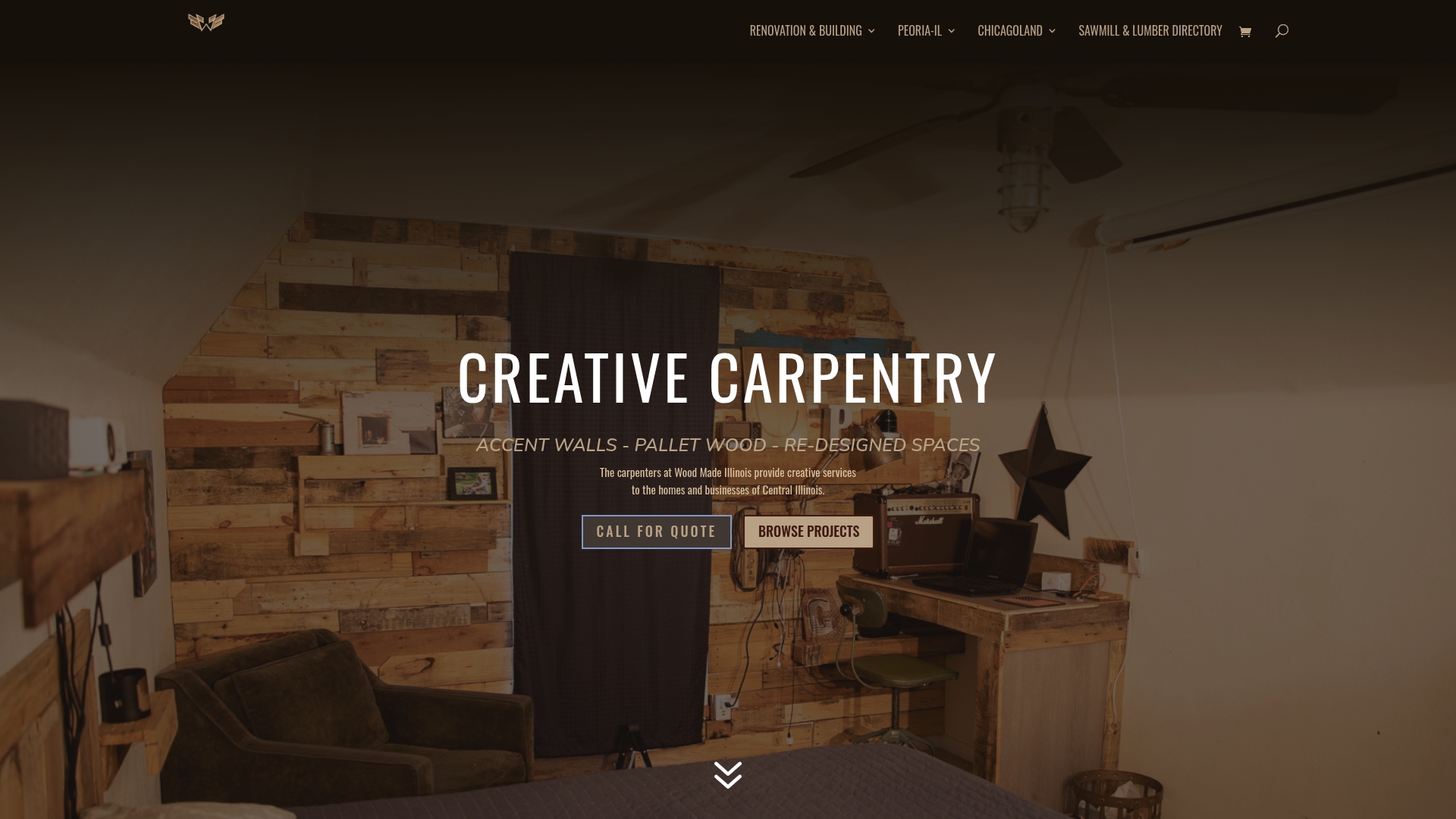
The team at Woodmadeillinois coordinates all trades and installations in-house, which means no scheduling gaps, no waiting on outside subcontractors, and no surprises on your timeline. From custom home office builds to full room refreshes, every project starts with a personalized design consultation and ends on schedule. Homeowners who want a trusted partner for fast, quality work can connect with Woodmadeillinois’s carpentry team to discuss their project and get a clear plan before any work begins. Reach the team directly at 309.704.0132.
FAQ
What does quick turnaround mean in renovation?
Quick turnaround renovation means completing a defined project scope in the shortest possible time through pre-planned scheduling, design freeze, and coordinated trades. It reduces total project time by 30–50% compared to traditional renovation timelines.
How do quick renovations save money?
Fast renovations reduce indirect costs like temporary housing, storage, and lost rental income that accumulate with every extra day of construction. Turnkey rapid projects can achieve ROIs of 50–80% by minimizing these carrying costs.
Are quick turnaround renovations lower quality?
No. Quality fast renovations use tighter project management and dedicated crews, which actually improves oversight and consistency. The key is that speed must be built into the project design from the start, not forced onto a poorly planned project.
What projects are best suited for quick turnaround?
Light refreshes, standard kitchen and bathroom remodels, flooring replacements, and painting projects fit the quick turnaround model best. Highly customized or structurally complex projects typically require longer timelines.
What is the biggest risk in a fast renovation project?
Mid-project design changes are the primary risk. Changing a material selection or layout after construction begins breaks the scheduling sequence and can extend a fast project well beyond a traditional timeline.