Budget carpentry renovation is defined as the practice of planning and executing woodwork projects that improve home functionality and aesthetics while staying within a controlled spending limit. Carpentry is the largest single cost category in most home renovations, typically accounting for 25–40% of total budgets. That share means your carpentry decisions set the financial tone for the entire project. The good news is that strategic choices, from cabinet refacing to finish trim work, let you achieve a polished result without paying for work you do not need. This guide breaks down where the money goes, where you can save, and how to protect your investment at every stage.
What are the essential carpentry elements in a budget renovation?
Carpentry in a home renovation divides into two categories: structural carpentry and finish carpentry. Structural carpentry covers the framework that supports walls, floors, and built-in units. Finish carpentry covers everything you see and touch, including baseboards, door casings, crown moulding, and cabinet faces.
The biggest cost drivers in most homes are built-in wardrobes, kitchen cabinets, and TV consoles. These three items alone can consume the majority of your carpentry budget because they require custom sizing, precise joinery, and durable hardware. Choosing pre-made carcasses with custom fronts, rather than fully bespoke joinery, cuts fabrication time and material waste significantly.
Material selection shapes both cost and longevity. Solid hardwood delivers the best durability but carries the highest price. Medium-density fiberboard, commonly called MDF, costs less and paints cleanly, making it a practical choice for painted cabinetry. Plywood sits between the two: stronger than MDF in humid conditions and more affordable than solid hardwood. Matching your material to the room’s moisture exposure is one of the most cost-effective decisions you can make early in the planning process.
- Built-in wardrobes: Custom sizing drives cost; consider modular systems with custom trim to reduce labor.
- Kitchen cabinets: The single largest carpentry line item in most renovations.
- TV consoles and shelving: Often over-specified; floating shelves on a pipe-built system deliver the same function at a lower price.
- Structural framing: Non-negotiable; never cut corners on load-bearing work.
- Finish trim: Baseboards, casings, and moulding complete the look and protect wall edges.
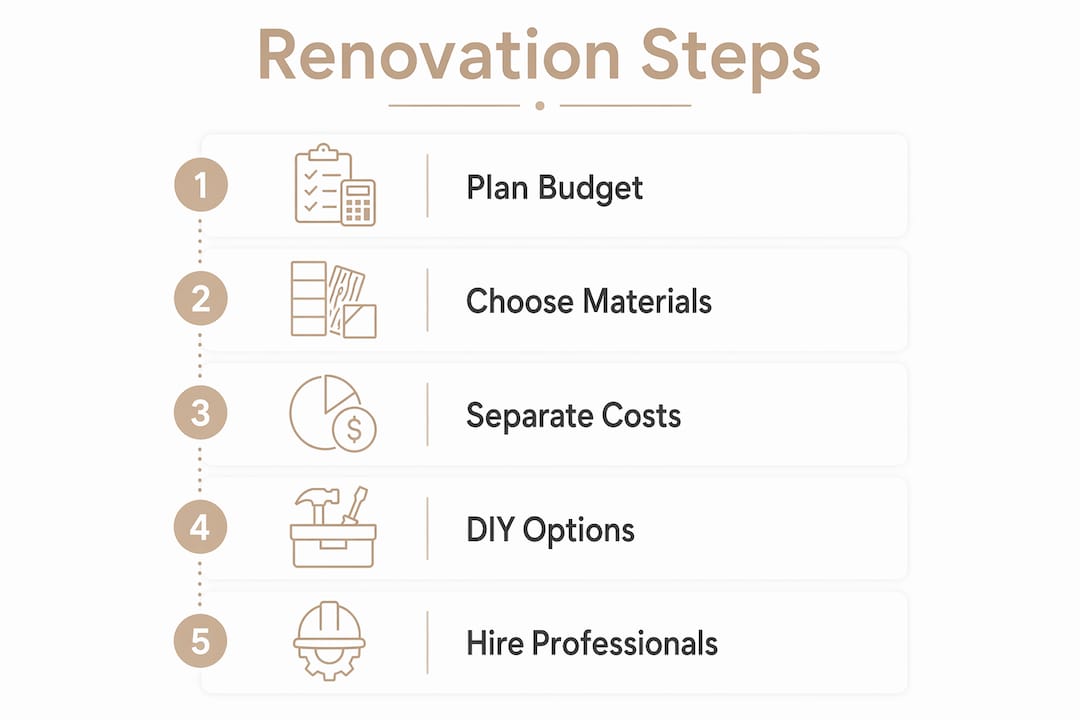
Pro Tip: Get quotes that separate material costs from labor costs. This lets you swap materials without renegotiating the entire contract.
How can homeowners save money with kitchen cabinet refacing and DIY refreshes?
The kitchen is where most homeowners feel the strongest pull to overspend. Full cabinet replacement feels like the obvious fix, but cabinet refacing costs 40–60% less than full replacement and typically takes about five days to complete. That time and cost difference is significant. Refacing keeps your existing cabinet boxes and replaces only the doors, drawer fronts, and visible surfaces, achieving a near-identical visual result.
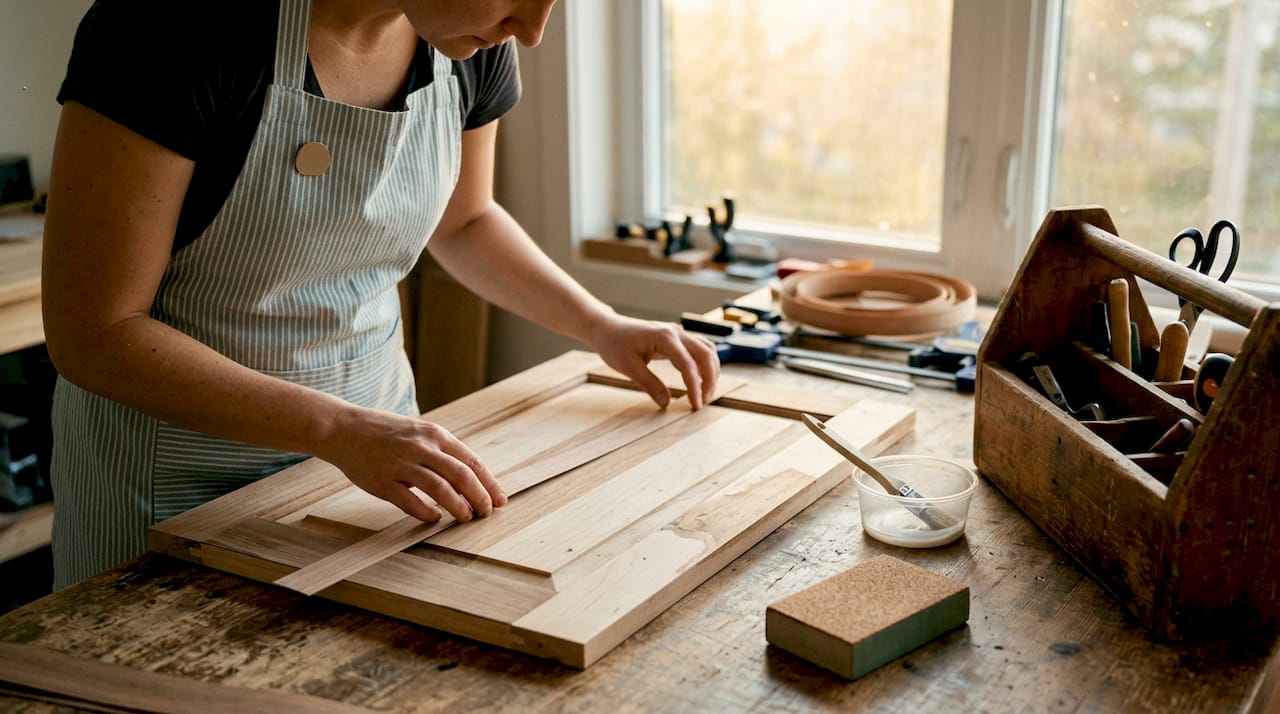
For homeowners willing to do some of the work themselves, a DIY kitchen refresh costs between $400 and $1,500, compared to professional work that can run up to $5,000 in materials alone. The gap between those numbers represents real money you can redirect to other parts of your renovation.
| Approach | Estimated Cost | Time Required | Best For |
|---|---|---|---|
| DIY paint and hardware swap | $400–$1,500 | 1–3 weekends | Tight budgets, good cabinet bones |
| Professional cabinet refacing | 40–60% less than replacement | ~5 days | Solid boxes, dated appearance |
| Full cabinet replacement | Highest cost | 2–4 weeks | Damaged boxes, full layout change |
The most effective DIY refresh steps for kitchen cabinets are:
- Paint the cabinet faces using a bonding primer followed by a water-based alkyd paint for a hard, cleanable finish.
- Swap the hardware by replacing plastic or worn pulls with mid-range metal hardware. The visual impact is immediate.
- Add under-cabinet lighting using plug-in LED strips to brighten work surfaces without any electrical work.
- Replace the doors only if the boxes are structurally sound. New shaker-style doors on existing boxes cost a fraction of full replacement.
Professional help is worth the cost when cabinet boxes show water damage, warping, or structural failure. A qualified carpenter can detect hidden damage like termite problems or rot that a DIY approach would miss and worsen. Skipping that inspection to save money often leads to far larger repair bills within a year.
What are affordable carpentry tips for stylish and functional interior upgrades?
Spending wisely on a carpentry renovation means knowing which details earn their cost and which ones do not. The principle is straightforward: put your money where your hands go every day.
-
Prioritize hardware and faucets. Daily touchpoints like faucets and cabinet pulls deserve mid-range investment because you interact with them hundreds of times a week. A $4 plastic pull feels cheap every single time you open a drawer. A $12 solid metal pull does not.
-
Avoid marketing-heavy materials. Suppliers often charge a premium for finishes with brand names attached. Unbranded MDF with a quality primer and paint coat performs identically to many branded “designer” panels at a fraction of the price.
-
Choose durable, affordable wood species. Poplar is an excellent choice for painted trim and cabinetry. It machines cleanly, takes paint well, and costs significantly less than maple or cherry. For stained work, alder gives a warm grain at a lower price than oak.
-
Set a contingency fund before you start. Homeowners underestimate renovation costs by 10–20% on average due to unforeseen variations. Hold that percentage back from your total budget before you commit to any contract. Treating the contingency as already spent protects you from the stress of mid-project shortfalls.
-
Phase the work if needed. Completing structural and kitchen carpentry first, then adding finish trim and built-ins in a second phase, spreads cost over time without compromising the final result.
-
Get three quotes, not one. Pricing for the same scope of work varies widely between carpenters. Three quotes give you a realistic market rate and reveal outliers in both directions.
Pro Tip: Ask each carpenter to quote the same written scope. Vague quotes invite scope creep. A detailed scope document protects both you and the tradesperson.
Woodmadeillinois recommends reviewing cost-saving renovation strategies specific to Central Illinois before finalizing any budget, since regional labor rates and material availability affect real costs more than national averages suggest.
How does finish carpentry impact final renovation aesthetics and home value?
Finish carpentry is the final layer of a renovation, and it functions like the skin protecting the bones of your home. Baseboards, door casings, window trim, crown moulding, and custom millwork are the details that signal quality to anyone who walks through your door. Poor finish work diminishes the entire renovation’s appearance, regardless of how well the structural work was done.
The visual impact of finish carpentry is disproportionate to its cost. A room with freshly painted walls but no baseboard trim looks unfinished. The same room with clean, well-fitted baseboards and door casings reads as complete and considered. This is why experienced renovators treat finish carpentry as a non-negotiable line item, not an optional upgrade.
Key finish carpentry elements that deliver the highest return:
- Baseboards: Cover the gap between flooring and walls; protect drywall from scuffs and moisture.
- Door and window casings: Frame openings and create visual cohesion between rooms.
- Crown moulding: Adds perceived height and formality; works best in living rooms and primary bedrooms.
- Built-in shelving: Combines storage with architectural detail, increasing both function and perceived home value.
- Stair treads and risers: High-traffic finish work that signals quality immediately upon entry.
Timing matters as much as quality. Finish carpentry must follow painting and flooring installation but precede final touch-up painting. Installing trim before floors are laid creates gaps; installing it after floors are finished produces a clean, professional result. Coordinating this sequence with your contractor prevents rework, which is one of the most avoidable costs in any renovation.
Cheap carpentry quotes often lead to poor materials or workmanship that require repairs within 6–12 months. A moderate budget with a reputable craftsperson balances cost and durability far better than chasing the lowest number on a quote sheet.
Key Takeaways
Budget carpentry renovation succeeds when homeowners allocate spending to high-impact elements, hold a 10–20% contingency, and choose refacing or DIY refresh over full replacement wherever the existing structure is sound.
| Point | Details |
|---|---|
| Carpentry dominates renovation budgets | Carpentry typically accounts for 25–40% of total renovation costs, making it the most critical budget decision. |
| Refacing beats replacement on cost | Cabinet refacing costs 40–60% less than full replacement and delivers a comparable visual result in about five days. |
| DIY refreshes are genuinely affordable | Painting, hardware swaps, and lighting upgrades cost $400–$1,500, a fraction of professional renovation pricing. |
| Finish carpentry protects your investment | Baseboards, trim, and casings complete the renovation’s appearance and protect walls and floors from daily wear. |
| Contingency funds prevent mid-project stress | Holding 10–20% of your total budget in reserve covers the cost variations that nearly every renovation encounters. |
What I’ve learned after years of budget carpentry work
The most common mistake I see homeowners make is treating carpentry as a single line item rather than a collection of decisions. They get one number from a contractor, approve it, and then discover mid-project that the quote assumed lower-grade materials or excluded finish work entirely. By the time that becomes clear, the budget is committed and the options are limited.
The second mistake is undervaluing finish carpentry. Homeowners will spend weeks agonizing over cabinet door styles and then accept whatever baseboard profile the carpenter has leftover from another job. That misplaced priority shows up in the finished room. The trim is what your eye lands on when you stand in a doorway. It deserves the same deliberate choice as the cabinets.
What actually works, in my experience, is building the budget from the finish backward. Decide what the room needs to look complete, price that finish work first, and then allocate the remaining budget to structural and built-in work. This approach forces realistic prioritization instead of leaving finish carpentry as an afterthought funded by whatever is left over.
Balancing DIY and professional work is also worth thinking through carefully. Painting cabinet faces and swapping hardware are genuinely achievable for most homeowners with patience and the right primer. Structural framing, load-bearing modifications, and anything involving hidden plumbing or electrical is not. Knowing that line before you start saves both money and safety risks.
— Wood
Woodmadeillinois: carpentry expertise for every budget
Woodmadeillinois has over 100 years of combined carpentry experience serving homeowners across Central Illinois, and that depth shows in how the team approaches budget planning from the first consultation.
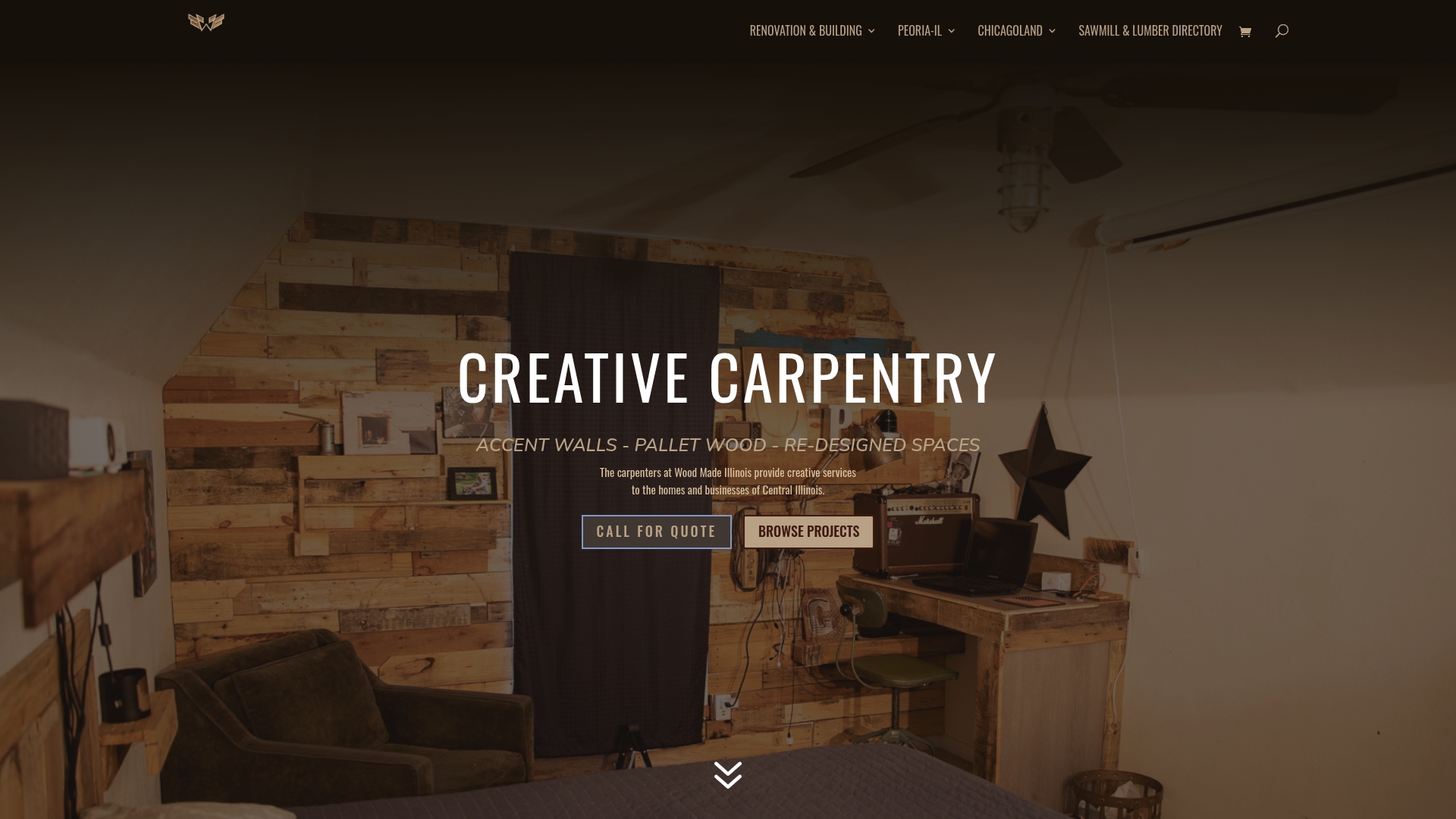
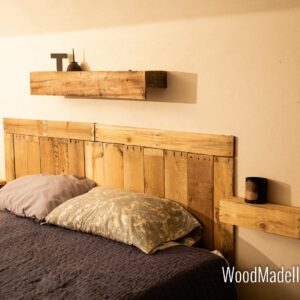
Whether you are weighing cabinet refacing options against full replacement or looking for custom carpentry ideas that fit a specific budget, the Woodmadeillinois team works through the numbers with you before any work begins. The team specializes in pallet wood installations, built-in shelving, kitchen refreshes, and custom millwork, all priced to deliver real value without unnecessary markup. Reach out to trusted local carpentry experts at Woodmadeillinois to schedule a personalized design consultation and get a clear, itemized quote for your project.
FAQ
What does budget carpentry renovation mean?
Budget carpentry renovation is the practice of planning woodwork projects that improve home function and appearance while controlling total spending. It prioritizes high-impact elements like cabinetry and finish trim over decorative extras.
How much of a renovation budget should go to carpentry?
Carpentry typically accounts for 25–40% of total renovation budgets. Planning that allocation first helps homeowners distribute remaining funds across flooring, painting, and fixtures without overspending.
Is cabinet refacing worth it on a tight budget?
Cabinet refacing costs 40–60% less than full replacement and takes about five days to complete. It is the most cost-effective option when existing cabinet boxes are structurally sound.
What finish carpentry elements add the most value?
Baseboards, door casings, and built-in shelving deliver the highest return because they complete the room’s appearance and protect surfaces from daily wear. Skipping these elements makes even expensive renovations look unfinished.
How much contingency should I hold for a carpentry renovation?
Hold 10–20% of your total budget as a contingency reserve. Most renovations encounter unforeseen variations, and having that buffer prevents mid-project decisions driven by financial pressure rather than quality.