Homeowners considering entertainment center built ins have three realistic routes: a stock or RTA cabinet hack (best for budget DIYers, roughly $500 to $2,500 and a weekend or two), a full DIY plywood build (best for a competent woodworker, $1,500 to $4,000 and one to three weekends), or a custom carpenter install (best for anyone wanting a guaranteed, permanent finish, several thousand dollars and two to six weeks). What follows covers design, materials, TV fit, ventilation, cost, and how to hire well.
TL;DR:
- A DIY plywood or RTA cabinet hack can cost between $500 and $2,500 and be completed in one to two weekends, suitable for budget-conscious homeowners.
- Custom millwork offers the longest lifespan and best tolerances but can cost several thousand dollars and take up to six weeks to complete.
- Proper ventilation, at least two inches of clearance for airflow, and future-proofing for larger TVs are critical to prevent overheating and costly remodels later.
- Building permits are generally not required unless electrical or structural modifications are involved, such as adding outlets or altering load-bearing walls.
- Internal storage should prioritize adjustable shelves, cable organization, and open cubbies for easy access and future device changes.
Table of Contents
- What Are the Best Entertainment Center Built In Layouts?
- Which Materials and Construction Methods Hold Up Best?
- Should You DIY Your Built In or Hire a Carpenter?
- How Do You Size and Vent a Built In for a TV?
- What Do Entertainment Center Built Ins Cost and How Long Do They Take?
- What Should You Ask Before Hiring a Carpenter?
- What Do Real Built In Projects Actually Look Like?
- Do You Need a Permit for a Built In Entertainment Center?
- How Should You Organize Storage Inside a Built In?
- An Honest Take on Built In Entertainment Center Advice
- Ready to Build Your Entertainment Center Built In?
- Sources
What Are the Best Entertainment Center Built In Layouts?
The layout you choose depends less on personal taste than on the shape of your wall. A room with a wide, unbroken wall favors a full-wall media wall, where cabinetry runs edge to edge and the TV sits centered in a recessed niche. Narrower rooms often do better with flanking towers, two bookcase-style columns on either side of the TV with open shelving between them. If you’re renting or not ready to commit to permanence, a floating console built into a slim wall-mounted shelf gives you storage without touching the floor.
Homes with an existing fireplace present a special case: a fireplace-integrated design frames the mantel with matching cabinetry on both sides, unifying two features that otherwise compete for attention. And when a window, door, or HVAC vent throws off the wall’s symmetry, an asymmetrical layout, taller storage on one side, lower shelving on the other, usually looks more intentional than forcing a mismatched mirror image.
A few rules of thumb worth following:
- Symmetry works when the wall is clear and centered; asymmetry works when it isn’t, and fighting that reality with a symmetrical design usually looks worse than embracing the offset.
- In small rooms, keep the cabinet depth shallow and push storage vertically rather than outward.
- A well-proportioned niche makes the TV read like a piece of art on the wall rather than a black rectangle bolted to furniture.
Which Materials and Construction Methods Hold Up Best?
Four build approaches dominate entertainment center built ins, and all trades cost against durability differently.
- Custom millwork: Solid wood or plywood carcasses with painted MDF faces, built and installed by a carpenter. Highest cost, longest lifespan, tightest tolerances.
- Semi-custom cabinetry: Off-the-shelf cabinet boxes finished with custom trim, crown, and a scribed face frame to fake a built-in look.
- Stock or RTA cabinet hacks: Kitchen cabinets fastened to wall studs and dressed with trim, the most budget-friendly path for a DIYer with basic tools.
- Plywood shop builds: Fully custom boxes built from sheet goods, requiring table saw and finishing skills but costing far less than millwork.
For carcasses, professionals generally prefer plywood for its stability under weight and humidity swings, reserving painted MDF for visible face frames where a glass-smooth painted surface matters more than raw strength. Veneers and MDF are fine for painted finishes; solid wood earns its premium on stained, natural-grain work where every joint shows. Hardware matters more than most homeowners expect. Soft-close hinges and full-extension drawer slides cost more upfront but prevent the sagging and slamming that age cheap cabinetry within a year.
Should You DIY Your Built In or Hire a Carpenter?
Before you commit to a weekend project, run through this checklist:
- Do you own or have access to a circular saw, pocket-hole jig, and a laser level?
- Have you painted or stained cabinetry before, and are you comfortable with caulk and wood filler for gap-free seams?
- Do you know how to locate studs and fasten heavy cabinetry safely to a wall?
- Can you scribe a face frame to an uneven wall or ceiling without leaving visible gaps?
DIYers consistently underestimate a handful of tasks: running in-wall power for the TV and components, true-fitting cabinets against walls that are rarely perfectly plumb, and the finishing work (sanding, filling, priming, painting) that often takes longer than the assembly itself. If your walls are badly out of square, or you want a warranty on the finished product, hiring a carpenter usually costs less in the long run than a DIY redo.
Pro Tip: Dry-fit every panel before you commit to glue or screws. A five-minute test fit catches a scribing error that would otherwise cost you an entire weekend of rework.
How Do You Size and Vent a Built In for a TV?
Give the TV cavity at least 2 inches of clearance on each side for airflow, and measure for the largest screen you might reasonably buy in the next several years rather than the one you own today. A niche built too tight can force another remodel when you upgrade your TV.
Overheating is the most common built-in mistake. Enclosed cabinets without airflow trap heat around streaming boxes and receivers, so professionals lean toward vented doors or fully open cubbies for electronics rather than solid enclosed doors. Industry guidance generally calls for a couple of inches of clearance around components plus a clear air path in and out of the cavity.
- Route cable and power lines through in-wall rated conduit before the back panel goes on.
- Place the AV receiver and surge protector in the most accessible cubby, since these need the most cable swaps over time.
- Leave a pull-cord or accessible outlet rather than a hardwired connection buried behind a fixed panel.
What Do Entertainment Center Built Ins Cost and How Long Do They Take?
Three cost bands cover most projects:
- Budget stock-hack: $500 to $2,500, using RTA or stock kitchen cabinets with trim. Timeline: one to two weekends.
- Mid-range custom-semi-custom: $2,500 to $6,000, blending stock boxes with custom face frames and crown. Timeline: two to three weeks from measure to install.
- Premium custom: Several thousand dollars and up for a full-wall unit, with cabinet shops citing starting price bands that scale with wall length and material grade. Timeline: three to six weeks including design and production.
The biggest cost driver in every band is material grade, followed by hardware quality and finish complexity. Phasing the install, building the base cabinets first and adding upper shelving later, spreads cost without sacrificing the final look. Explore more budget-conscious project options if you’re weighing where to spend versus save.
What Should You Ask Before Hiring a Carpenter?
A short first call can save you weeks of frustration later. Ask:
- Are you licensed and insured for work in my home?
- Can you show photos of completed built-ins, not just renderings?
- Do you have references I can contact directly?
- Where do you source your lumber and cabinet materials?
- What warranty do you offer on materials and labor?
- What’s the realistic timeline from measure to install?
- Will you subcontract any part of this job?
- What does the payment schedule look like?
- How do you handle change orders if I adjust the design mid-project?
- Do you handle permits if my project requires one?
A trustworthy carpenter delivers drawings, an itemized material list, milestone-based payments, and clear warranty terms before work starts. Vague verbal estimates, no photos of finished work, and reluctance to share references are the three clearest red flags in this trade.
What Do Real Built In Projects Actually Look Like?
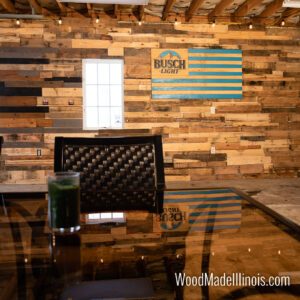
Wood Made Illinois’s Rustic Media Center Cover with Rolling Barn Door Closure solved a common problem: a client wanted the TV visually hidden when not in use without sacrificing an inch of storage. A rolling barn door on a simple track let the cabinetry double as a concealment feature, not just a media shelf.
Other room makeovers followed a similar pattern: measure the largest likely future TV, build in a false back where an old niche runs too deep, and always test airflow before closing up the back panel.
The recurring lesson across these builds isn’t the finish or the hardware. It’s that ventilation and future-proofing the TV cavity get skipped more than anything else, and both are cheap to fix at the framing stage and expensive to fix after the paint dries.
- Niche modification for oversized legacy cabinetry prevents a boxy, disproportionate look.
- False backs recover shallow depth in old built-ins originally sized for CRT televisions.
- Open cubbies beat solid doors whenever a receiver or streaming box lives inside.
Do You Need a Permit for a Built In Entertainment Center?
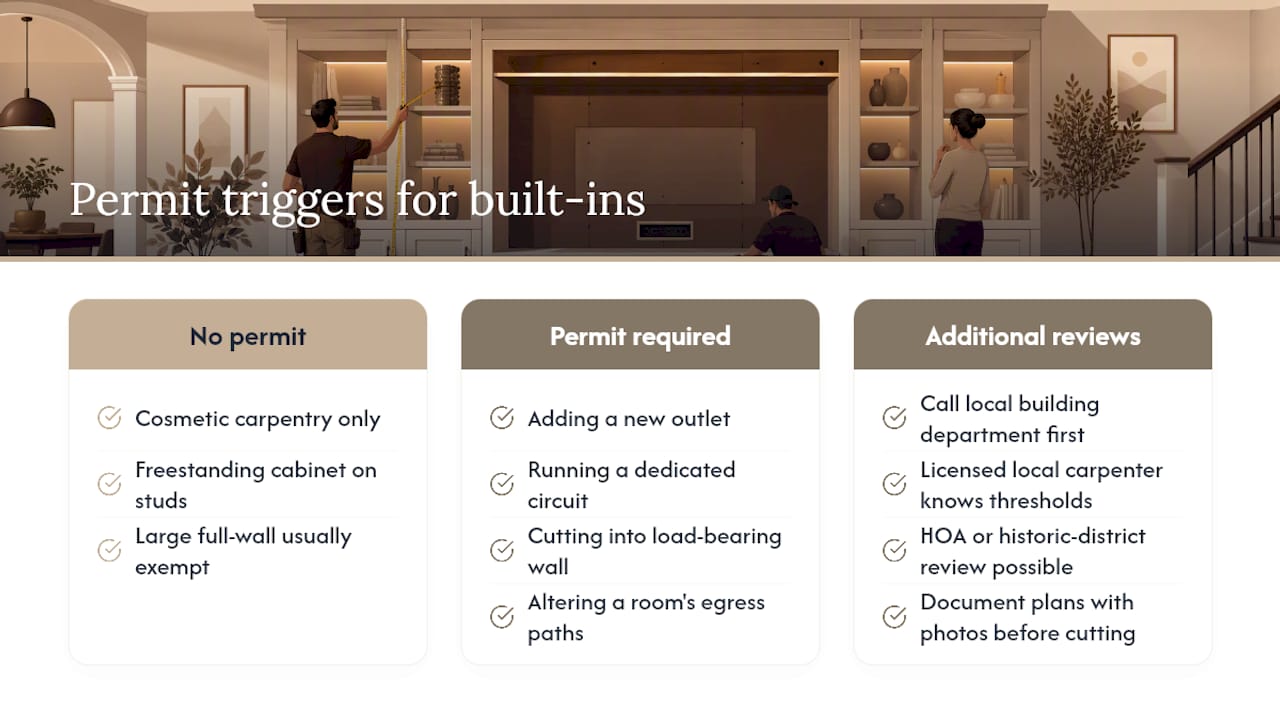
Most entertainment center built ins skip permitting entirely because they’re cosmetic carpentry, not structural work. A freestanding cabinet unit fastened to studs, even a large full-wall installation, typically falls outside your local building code’s permit triggers.
That changes the moment your project crosses into electrical or structural territory. Adding a new outlet, running a dedicated circuit for a home theater setup, or cutting into a load-bearing wall to recess the TV cavity deeper usually requires a permit and inspection, even if the cabinetry itself doesn’t. Some municipalities also flag any built-in that alters egress paths in a room, though this is rare in typical living room installs.
The safest approach is a quick call to your local building department before work starts, especially if your plan includes new wiring or wall modification. A licensed carpenter familiar with your area will usually know these thresholds without you asking, which is one more reason hiring locally beats guessing from a national DIY guide. Homeowners associations and historic districts sometimes add their own review requirements on top of city code, particularly for exterior-visible changes like new venting. When in doubt, document your plan with photos and measurements and ask before you cut into drywall, not after.
How Should You Organize Storage Inside a Built In?
Storage organization is where entertainment center built ins earn their keep over a standalone TV stand. Adjustable shelving is the single most valuable feature you can request, since media formats and device sizes change faster than most people replace their cabinetry.
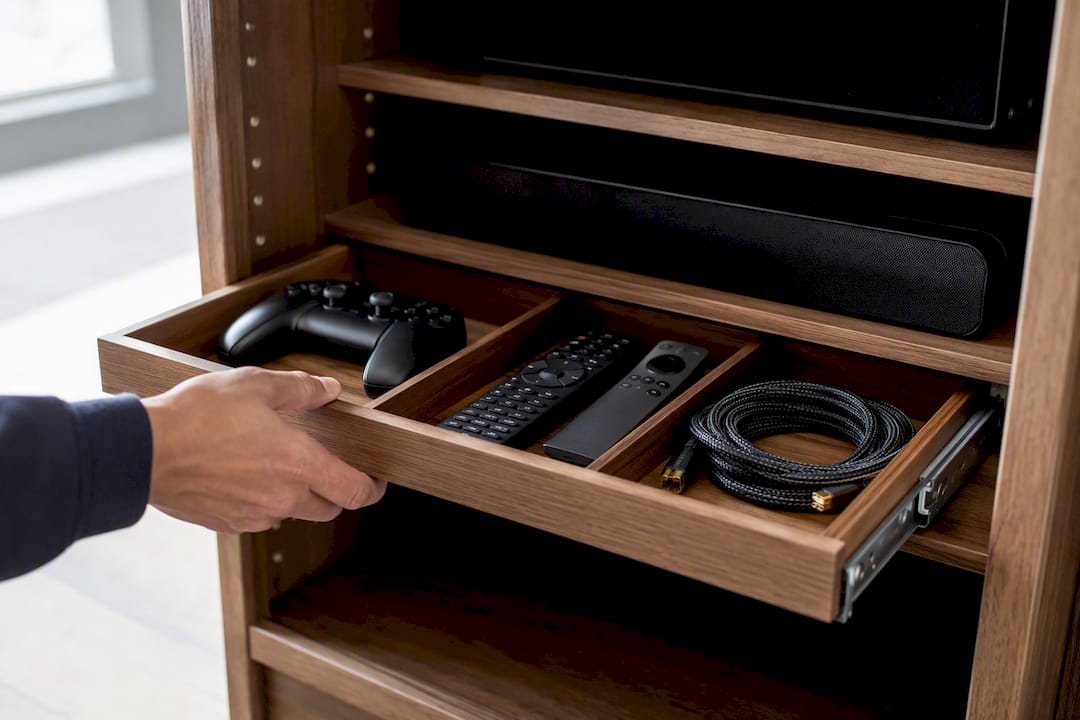
Drawer inserts for cables, remotes, and game controllers keep small items from turning into a junk drawer that never closes properly. Pull-out shelves rated for equipment weight let you access the back of a receiver or game console without unplugging everything and dragging it forward.
For households with a large media collection, open cubbies sized to standard box dimensions (records, board games, blu-rays) beat closed cabinets, since you can scan contents at a glance instead of opening every door. Glass-front doors on upper cabinets display curated items while keeping dust out, a good middle ground between fully open shelving and closed storage. Adding a fold-down or pull-out desk section works well if the built-in doubles as a home command center. Whatever mix you choose, plan the internal layout on paper before construction starts. Rearranging shelf pin holes after installation is far more annoying than adjusting a sketch.
An Honest Take on Built In Entertainment Center Advice
Most guides oversell design and undersell airflow. Paint colors and hardware finishes get pages of attention while the two things that actually cause callbacks, ventilation and TV sizing for future upgrades, get a single line buried near the bottom. That’s backwards. A gorgeous built-in with a receiver that overheats after eighteen months isn’t a design win.
The conventional wisdom also treats DIY and custom hiring as an either/or choice based purely on budget. In practice, the better question is about tolerance for risk. A stock-cabinet hack that goes wrong costs you a weekend and some lumber. A custom install that goes wrong, because a carpenter skipped questions about material sourcing or warranty terms, costs you thousands and a torn-up wall. Vet the person before you vet the price.
If you take one thing from this guide, prioritize the TV cavity dimensions and airflow plan before you touch paint chips or hardware catalogs. Everything else is reversible. A cavity built too shallow or too sealed usually isn’t.
— Wood
Ready to Build Your Entertainment Center Built In?
If you’ve read this far and know you want a guaranteed fit, real materials, and a finish that doesn’t need a redo in two years, that’s exactly where Wood Made Illinois comes in. The team brings over 100 years of combined carpentry experience to projects across Central Illinois, handling everything from false-back modifications for oversized niches to full custom media walls with integrated lighting and concealed cable runs.
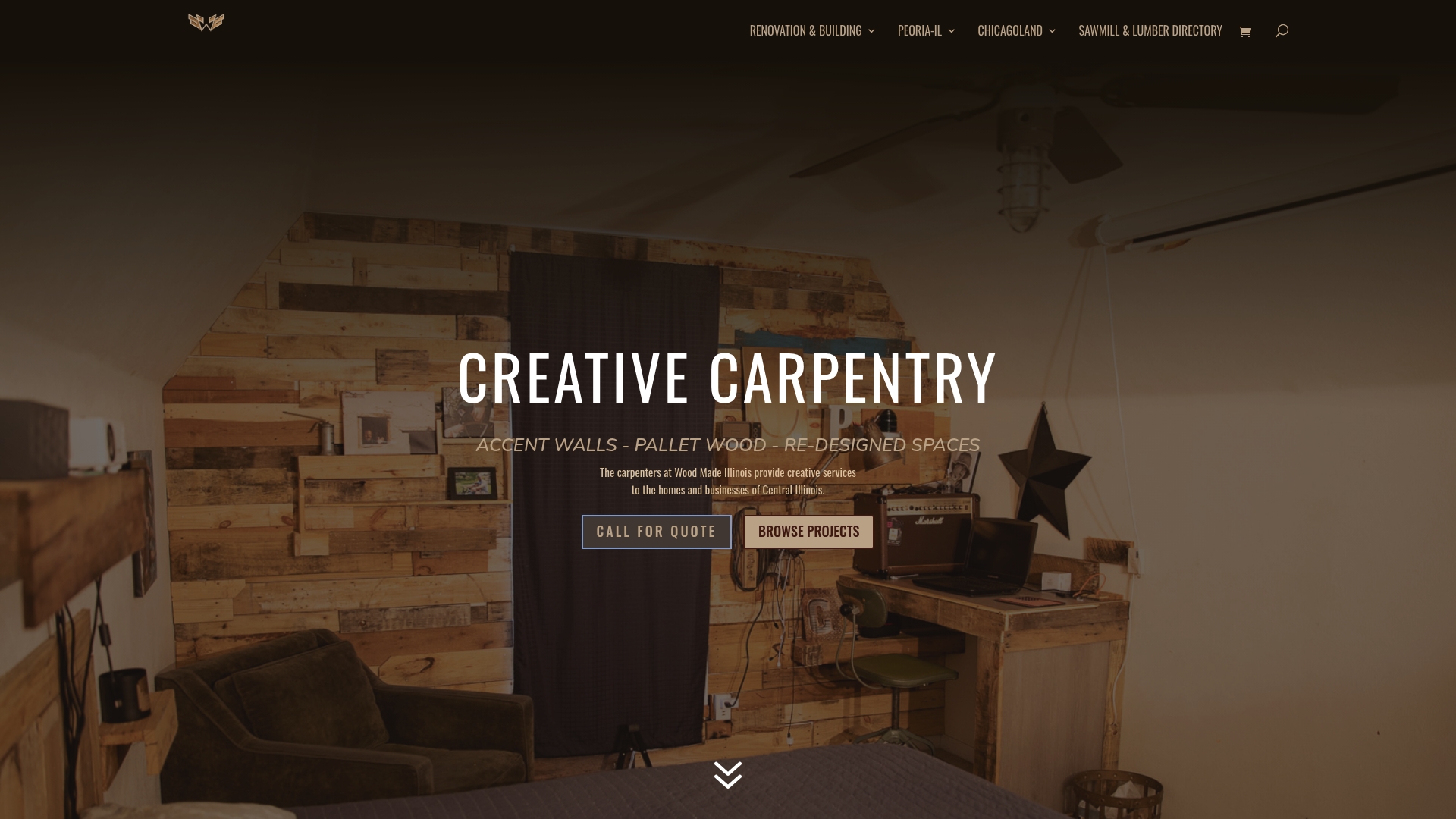
Before your consultation, gather a few phone photos of the wall, rough measurements (width, height, depth to the nearest obstruction), and a general budget range. That’s enough for a productive first conversation about layout options and realistic pricing. From there, expect a design discussion, a material walkthrough, and a clear production timeline before anyone picks up a saw. Reach out through the trusted local carpentry experts page to schedule a consultation and get a quote tailored to your wall, your TV, and your budget.
Sources
- Build a Custom Entertainment Center with RTA Cabinets
- Custom Built-In Entertainment Center – Choice Custom Cabinetry & Design