The best home bar lighting layers dimmable warm LEDs: pendants over the counter, strips under shelves, and a few accents for bottles and art. Choose bulbs in the 2700K to 3000K range, or dim-to-warm products, and pair them with a dimmer the bulb maker lists as compatible. Plan GFCI protection near any water, and bring in an electrician for new wiring or built-in work.
TL;DR:
- Use recessed lights for ambient coverage, pendants or under cabinet strips for prep, and shelf accents; control each layer independently for different activities.
- Choose bulbs with a CRI of at least 80, or 90 or higher when accurate bottle and glass colors matter.
- A dimmable bulb may flicker with an existing control, so check the bulb maker’s compatibility list before buying or installing a dimmer.
- Near sinks, use fixtures rated for damp or wet locations and GFCI protection; hire a licensed electrician for new circuits, hardwired dimmers, or GFCI work.
- Prioritize a reliable dimmer and LED driver over a costly pendant, and plan wire paths and driver access before cabinetry installation.
Table of Contents
- 1. Which fixture types suit a home bar?
- 2. 15 creative home bar lighting ideas to copy
- 3. How do you layer ambient, task, and accent light?
- 4. What color temperature, CRI, and dimming should you choose?
- 5. Where should you mount fixtures, and what safety steps matter?
- 6. Where should your budget go?
- 7. What does a carpenter see when lighting meets a built-in bar?
- 8. Our take: plan the dimmer before the pendant
- 9. How we help with custom bars and integrated lighting
- FAQ
1. Which fixture types suit a home bar?
Each fixture does a different job, so match the type to what that spot of the bar needs.
- Pendants: Use them as a statement over the counter or as focused task light. Size them to the counter, so a long bar can take several small pendants or one linear fixture.
- LED strip tape: Run it under cabinets, along shelving, or under the counter lip. Look for an IP rating suited to the spot, since a strip near a sink sees more moisture than one behind a shelf.
- Recessed lights: They supply soft ambient support. Keep them back from the bar edge so they wash the work surface instead of glaring at guests.
- Wall sconces and picture lights: They accent bottles or artwork from the side or above, with little glare on glassware.
- Backlit shelves and mirrors: Light behind bottles adds depth, and a mirrored backsplash doubles the glow.
A good rule: pick the pendants for looks, but spend your care on the strips, the bulbs, and the dimmer.
2. 15 creative home bar lighting ideas to copy
- Statement pendant cluster. Three pendants at varied heights over the counter. Put them on their own dimmer.
- Warm recessed plus undercabinet LED. Soft ambient from above, task light below. Keep both at 2700K so they match.
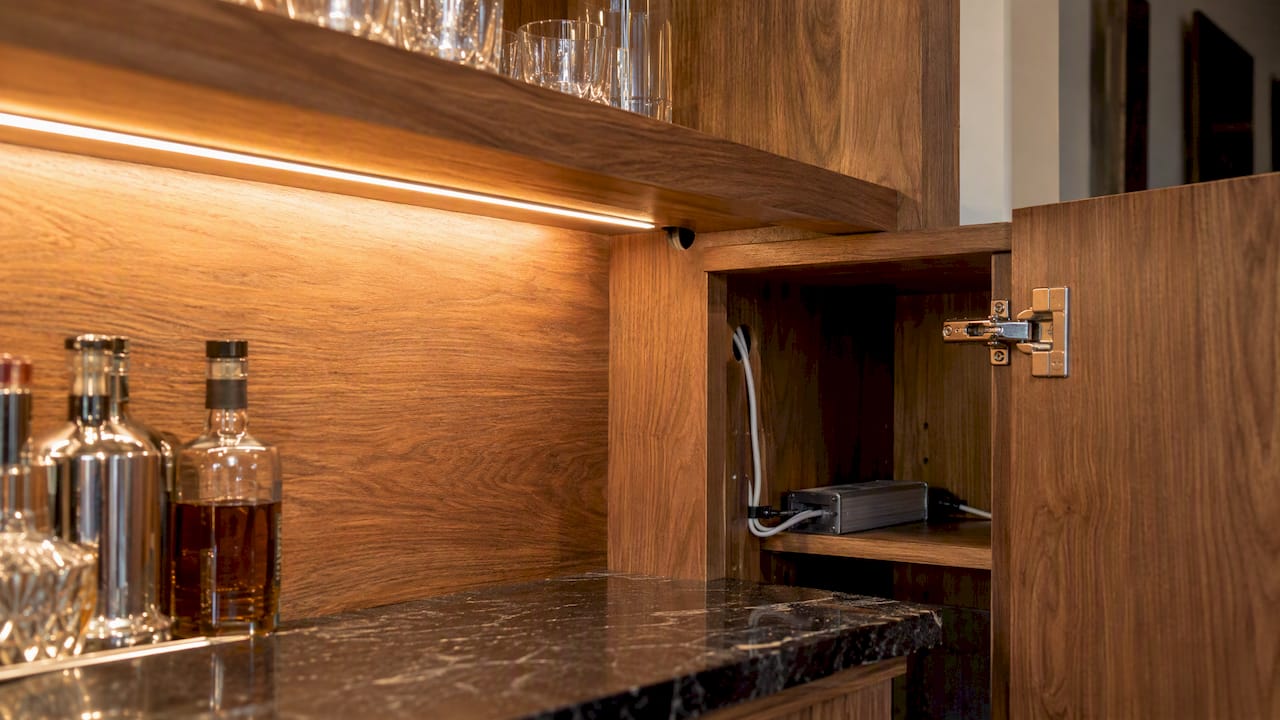
- Backlit shelving. Tape inside the shelf edges so bottles glow. Hide drivers in a side cabinet.
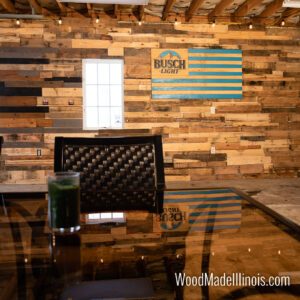
- Neon or sign accent. One sign sets the personality. Keep it away from the main task area.
- Rustic lanterns on a dimmer. Great for a cabin feel. Use dimmable bulbs rated for the fixture.
- Multiple small pendants. Space them evenly for a clean, repeating rhythm.
- Horizontal linear pendant. Suits a long counter and avoids a cluttered ceiling.
- Color-tunable accents. Handy for parties. Color-tunable systems allow color or white tuning for events and mood shifts.
- Dim-to-warm party mode. Lights cool and bright for cleanup, then glide to candle tones as you dim.
- Strip behind the bar lip. A hidden glow that lights the front of the counter and guests’ hands.
- Toe-kick LED. A low line of light for a floating look and safer footing.
- Mirrored backsplash with backlighting. Backlight the mirror edges to widen the space.
- Vintage fixture as a focal point. One old piece, with new dimmable LED bulbs inside.
- Light panel divider. A slatted or glowing screen separates the bar from the room.
- Staggered pendants. Different drop heights create movement over a long run.
If you like a textured backdrop behind the bar, our basement accent wall ideas show how wood and stone interact with light.
3. How do you layer ambient, task, and accent light?
Layering means giving the bar three kinds of light that you control separately. ENERGY STAR notes that designers favor a layered approach for bar spaces: ambient for general illumination, task for countertops, and accent for bottles or architectural features.
- Ambient: Recessed or overhead fixtures that set a base level.
- Task: Pendants or undercabinet strips over the prep surface.
- Accent: Shelf tape, sconces, and picture lights.
- Common combo: Recessed plus pendant plus strip covers cleaning, casual drinks, and entertaining.
ENERGY STAR dimmable LEDs also dim to at least 20% of their light output, so every layer can go low.
Pro Tip: Put each layer on its own dimmer so you can lower the ceiling lights while keeping the shelves glowing.
4. What color temperature, CRI, and dimming should you choose?
Aim for 2700K to 3000K for a moody, warm bar, and choose a brighter neutral white where you need task light. Look for a CRI of 80 or higher, and 90 or higher if you want bottles and glass to look true. The ENERGY STAR builder guidance points to CRI around 80 or more for homes.
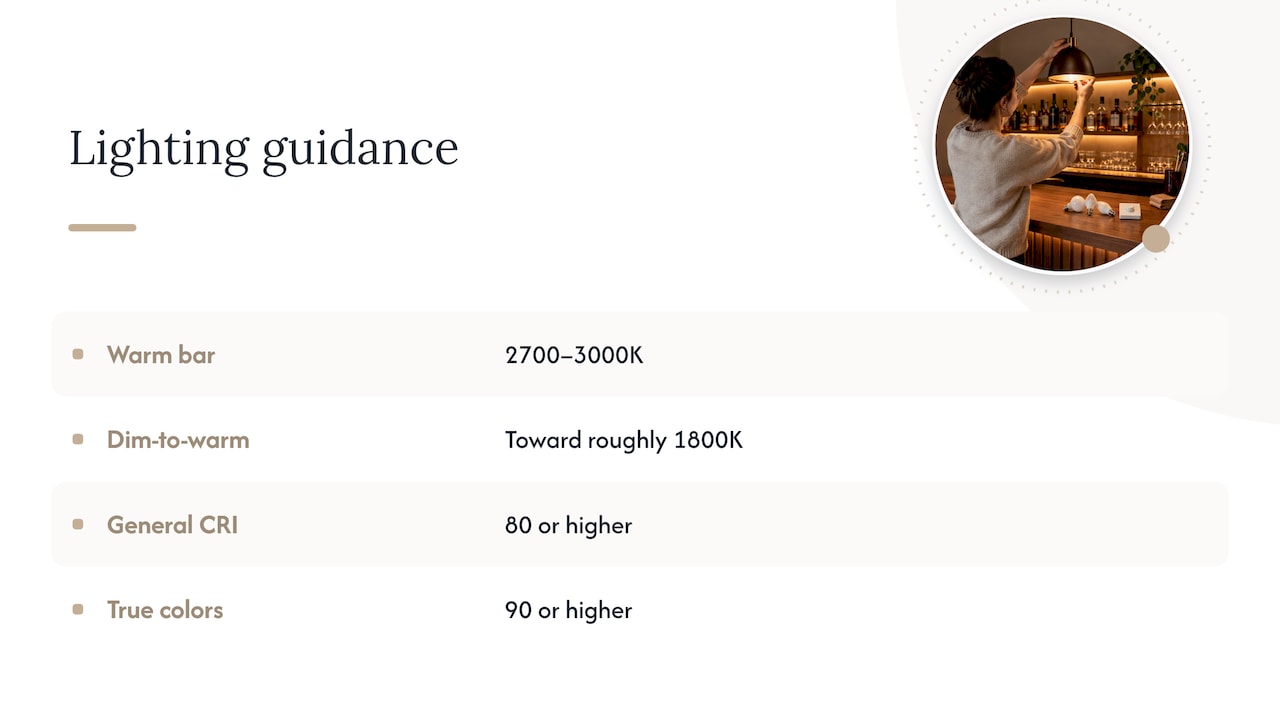
Dim-to-warm products mimic incandescent bulbs as they dim. The Department of Energy says they can shift down toward roughly 1800K, a candlelight tone. Research on dynamic white systems adds that they offer flexibility, though at higher initial cost.
Bulbs and dimmers must agree. ENERGY STAR’s dimming guide tells you to buy bulbs labeled “dimmable” and to check the maker’s recommended dimmers, because not every pairing runs smoothly.
A bulb marked “dimmable” can still flicker on your existing dimmer, so check the compatibility list first.
5. Where should you mount fixtures, and what safety steps matter?
- Pendants: Hang them at a comfortable height above the counter.
- Chandeliers: Hang them at a comfortable height above the bar counter.
- Multiple pendants: Divide the bar length into equal sections and center one in each.
- Recessed spacing: Follow the fixture maker’s spacing chart, and keep the lights off the bar’s very edge.
- Wet areas: Use damp or wet-rated fixtures near sinks, and provide GFCI protection where water may touch electrical equipment, as ESFI’s kitchen safety guidance recommends.
- Wiring: Check that bulbs are secure and wattage matches the fixture, per the ESFI indoor electrical checklist.
- Electrician: Hire a licensed pro for new circuits, GFCI work, or dimmer installs. An experienced electrical service provider can walk you through upgrade options.
6. Where should your budget go?
- Pendants: Economy, mid-range, and designer fixtures differ mostly in finish and brand. Looks are the main variable.
- Strip kits: A good driver matters more than the tape itself.
- Dimmers and smart controls: These shape how the bar feels every night, and integrated lighting control guides cover smart zones.
- Priorities: Spend on compatible dimmable LEDs, a solid driver, and a reliable dimmer before an expensive pendant.
- Tunable or dim-to-warm: Worth it if you entertain often and want one fixture to serve every mood.
- DIY or pro: Swapping bulbs and plugging in strips is DIY territory. Hardwired work belongs to a pro.
Our guide to cost-effective interior updates can help you decide what to prioritize.
7. What does a carpenter see when lighting meets a built-in bar?
Lighting is easiest to plan before the cabinets are built. A solid wood bar or built-in shelving lets us route a channel for strips, drill clean wire paths, and tuck the driver in a service cabinet. Warm light also deepens wood tones, so we test finishes under the bulbs you plan to use.
8. Our take: plan the dimmer before the pendant
Most people start with the fixture, because pendants are the part you can photograph. The research points elsewhere. The winners are warm color, layered sources, and controls that work, and none of those are the glamorous parts. A beautiful pendant on a flickering dimmer will disappoint you every night, while modest fixtures on good dimmers will feel expensive.
Conventional advice also under-weights the carpentry. Wire paths, driver access, and where light actually lands are easy to settle on paper and costly to fix after the bar is built. Decide your layers and your controls first, then pick fixtures that suit them. If you want a built-in bar, bring lighting into the design conversation on day one.
— Wood
9. How we help with custom bars and integrated lighting
We build custom bars, accent walls, and built-ins in Central Illinois, and our design consultations include lighting planning. If you want a bar where the wood, wiring, and light work together, see our services and request a consultation.
FAQ
What is the best type of lighting for a home bar?
Layered, dimmable warm LED lighting works best. Combine pendants, under-shelf strips, and accent lights so each layer dims on its own. ENERGY STAR dimmable LEDs are a safe starting point.
How much does a bar light cost for a home?
Cost depends on the fixture, its finish, and the controls. Economy pendants cost far less than designer ones, so put money into the driver and dimmer first. Installation costs are separate and depend on your wiring.
What color temperature suits a home bar?
Most people prefer 2700K to 3000K for a warm, moody feel. Choose a brighter neutral white where you prep drinks. Dim-to-warm products shift warmer on their own as you lower them.
Do I need an electrician for home bar lighting?
Plug-in strips and bulb swaps are manageable yourself. New circuits, GFCI protection, and hardwired dimmers should go to a licensed electrician. That keeps the install safe near water.