Yes, but conditionally: built-ins generally increase a home’s appeal without returning their full cost at resale, and the payoff depends on three things — the quality of the work, how genuinely useful the built-in is, and how long you plan to live with it. A beautifully framed mudroom bench that solves a real storage problem earns its keep. A gimmicky wine niche in a spare bedroom usually does not.
TL;DR:
- Built-ins enhance a home’s appeal primarily through craftsmanship, useful design, and room functionality, but rarely recoup their full cost at resale.
- Kitchen and entryway built-ins offer the highest resale value, with custom kitchen upgrades recouping 55 to 80 percent of their cost in many cases.
- Poor material choices, over-personalization, and improper scale can make built-ins detract from resale value or turn off buyers.
- Design focus on function and flexibility, such as adjustable shelves and neutral finishes, significantly improves long-term usefulness.
- Consulting a professional for tailored design and cost estimates maximizes the benefits and minimizes the risk of over-investing.
Table of Contents
- Does Adding Built-Ins Add Value? How Buyers and Appraisers See Them
- Built-In Cabinets and Custom Furniture Costs: What’s the Real ROI?
- Which Rooms Benefit Most From Built-In Storage?
- When Do Built-Ins Hurt Resale Value?
- Building a Buyer-Friendly Built-In: A Practical Checklist
- What We’ve Learned Building Hundreds of Custom Installations
- Ready to Add Built-Ins? Here’s What to Expect
- Sources
Does Adding Built-Ins Add Value? How Buyers and Appraisers See Them
Appraisers treat built-ins differently than furniture the moment a buyer walks through the door. A bookcase you can carry out the front door is personal property. A cabinet fastened to the wall studs is a fixture, and fixtures get counted as part of the house itself, which is why they show up in appraisals in a way that a freestanding armoire never will. That distinction matters because it changes the negotiation: a buyer can’t ask you to leave the bookcase, but a built-in pantry wall stays with the sale by default.
Real estate professionals consistently describe built-ins as a value amplifier rather than a dollar-for-dollar return. They rarely move an appraisal by a specific line item, but they change how a buyer feels walking through the space, and that feeling often shows up in faster offers or fewer requested concessions.
What buyers actually notice:
- A kitchen or mudroom that already solves their storage problem, so they don’t need to budget for it later
- Visible craftsmanship: tight seams, flush panels, hardware that doesn’t rattle
- A sense that the house was cared for, not just occupied
- Architectural character that a generic remodel doesn’t provide
Built-In Cabinets and Custom Furniture Costs: What’s the Real ROI?
Stock built-in shelving units typically run a few hundred dollars per linear foot installed, while fully custom cabinetry with hardwood faces, soft-close hardware, and integrated lighting can climb several times higher. The gap between “built-in” and “custom built-in” is almost entirely about materials and joinery, not size.
The clearest cost data comes from kitchens. Custom or major cabinet upgrades typically recoup 55 to 80 percent of their cost at resale, with the recapture rate shifting depending on how far the upgrade strays from what buyers in that price range expect. Ironically, midrange updates often recoup a higher percentage than ultra high-end custom work, because buyers paying midrange prices don’t expect (or pay for) top-tier finish details.
Two things worth weighing before you commit:
- Holding period changes the math entirely. Homeowners who plan to stay eight or more years get years of daily function out of a built-in, which makes the “ROI” question almost beside the point.
- Sellers moving within two to three years rarely see the investment reflected dollar-for-dollar at closing.
Pro Tip: If you’re selling within a year or two, spend on the built-ins buyers expect to see (kitchen storage, closet systems) and skip the highly personalized ones you’d only enjoy yourself.
Which Rooms Benefit Most From Built-In Storage?
Not every room rewards a built-in the same way. Kitchens and entryways tend to pay back the most attention; niche rooms tend to pay back the least.
- Kitchen. Pantry systems and cabinetry upgrades consistently rank among the highest-recapture renovations because every buyer evaluates kitchen storage.
- Mudroom or entry. A built-in bench with cubbies solves a problem almost every household has, which is exactly why it tests well with buyers.
- Living room or fireplace surround. Flanking shelves read as architectural rather than decorative, especially when the finish matches existing trim.
- Closets. Organized closet systems are a near-universal want; buyers notice them immediately during a walkthrough, a pattern echoed by home organization specialists who work almost exclusively in this category.
- Home office. Built-in desks and cabinetry appeal to remote workers, but keep the footprint modest so the room can still function as a bedroom if a buyer needs one.
Bars in secondary bedrooms, deeply specialized hobby niches, and anything that blocks a standard bed or sofa placement tend to sit on the “avoid” side of that list.
When Do Built-Ins Hurt Resale Value?
Three mistakes account for most of the built-ins buyers dislike. The first is over-personalization: a built-in aquarium wall or a shelf sized to one specific record collection reads as a project for the next owner to undo, not a feature to inherit. The second is poor material choice. Particleboard faces, weak drawer slides, and mismatched stain color age fast, and buyers notice quality gaps even when they can’t name exactly what feels off. The third is bad scale: a built-in that swallows a small room or blocks where a couch or bed naturally goes limits how a buyer can furnish the space, which limits how many buyers want it.
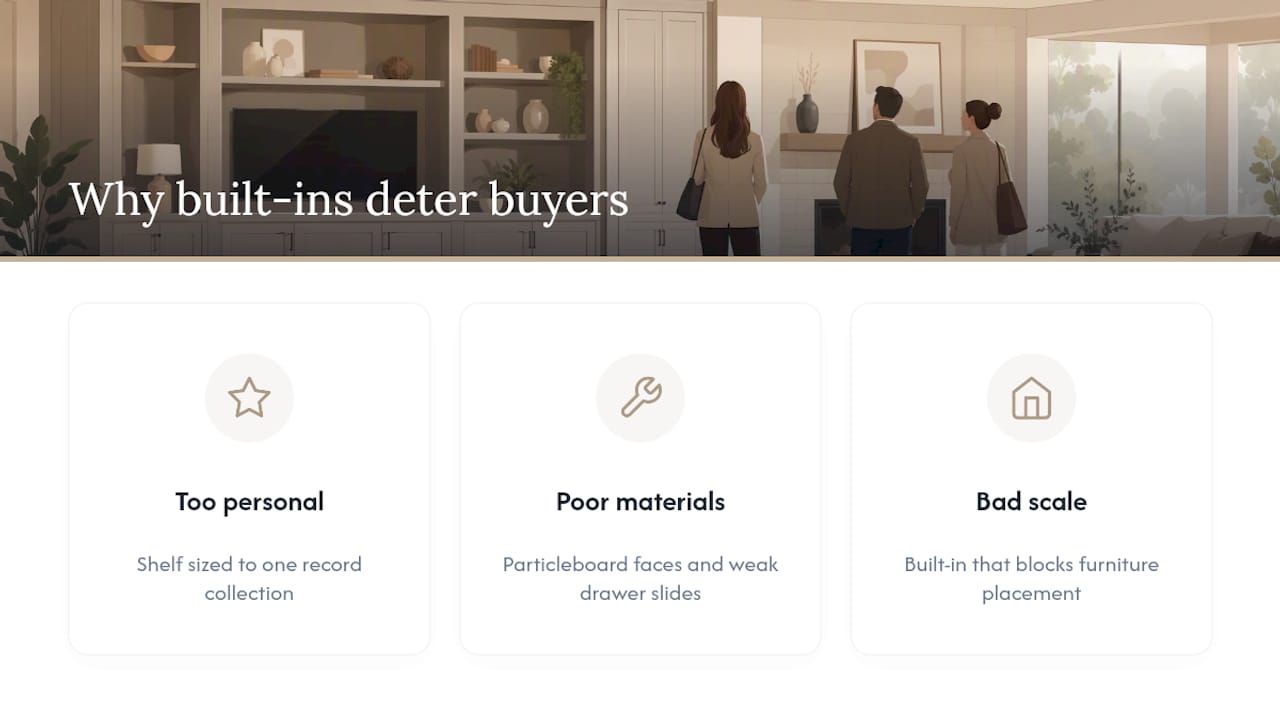
Designers are genuinely split on built-ins for this reason. Some call them timeless additions; others warn they feel purely utilitarian when the design is an afterthought.
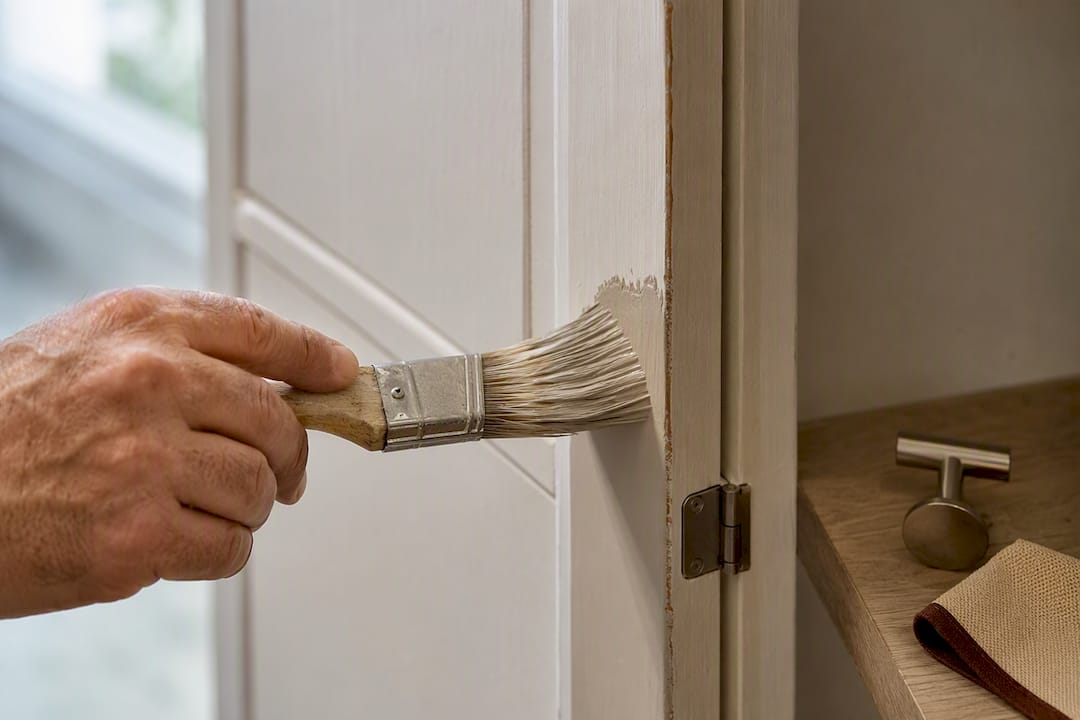
Pro Tip: If an older built-in feels dated, a repaint with modern hardware and updated shelf spacing often revives it for a fraction of a full rebuild.
Building a Buyer-Friendly Built-In: A Practical Checklist
Design decisions matter more than square footage here. A well-proportioned five-foot bookcase outperforms a poorly scaled ten-foot wall unit almost every time.
- Solve a real function first. Storage, seating, or workspace, not decoration alone.
- Add adjustable shelving so the space can flex for books, bins, or electronics later.
- Mix open and closed storage so buyers see both display space and hidden clutter storage.
- Choose neutral finishes and durable hardware over trend colors that date quickly.
- Match scale to the room so furniture placement isn’t compromised.
- Plan for future repurposing. A home office built-in that could become a nursery closet is a stronger long-term bet.
Spend your budget on face-frame construction and hardware, the two elements buyers actually touch and test, rather than on cosmetic trim upgrades that look nice in photos but don’t affect daily use. Small, strategic upgrades like flush inset panels or better hinges often deliver more perceived quality than a full custom overhaul. Note that wall removals or added electrical inside cabinetry usually require a permit, so loop in your contractor before demo day.
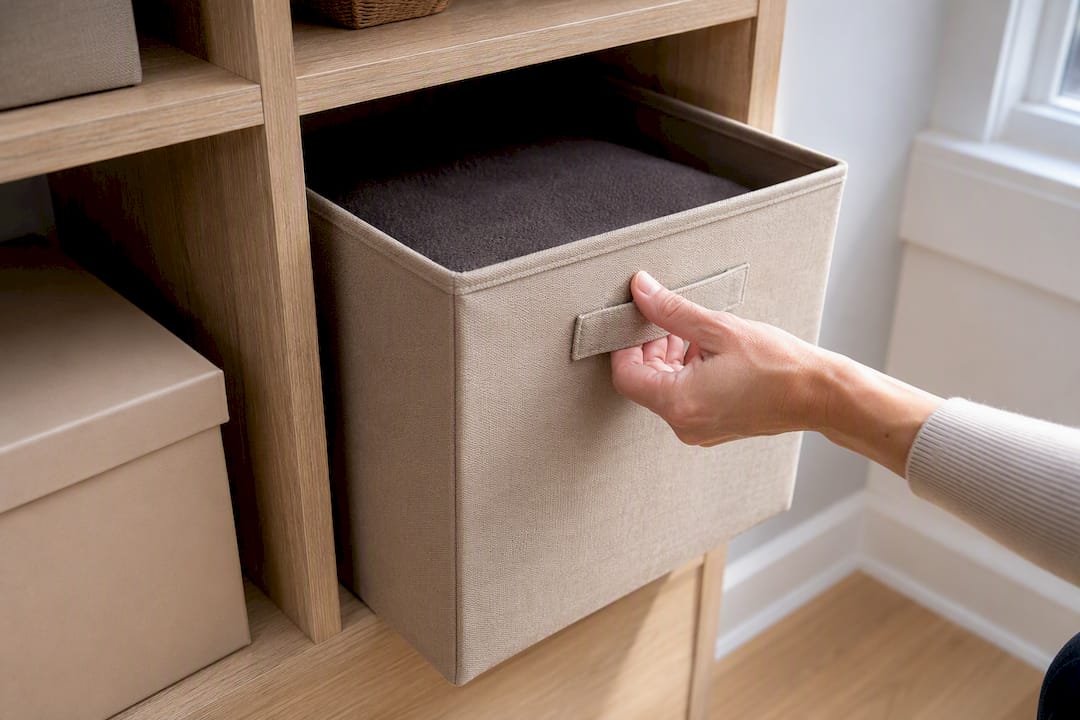
Pro Tip: Ask your carpenter to design shelf spacing around standard bin and file-box sizes. It looks intentional and keeps the built-in useful for whoever buys the house next.
What We’ve Learned Building Hundreds of Custom Installations
Experience in carpentry shows one consistent lesson: buyers respond to function first, style second. The built-ins that hold up best in resale conversations are rarely the flashiest ones. They’re the entryway bench that finally organizes muddy boots, the home office cabinetry that hides cords and keeps a remote worker productive, the pantry wall that ends the fight for counter space.
Every project brief we take on starts with the same question: how will this family actually use the space in five years? That shapes material choices, too. Pallet wood and semi-custom elements let us hit a tighter budget without sacrificing the visual weight that makes a built-in feel permanent rather than tacked on. Fixed built-ins make sense for kitchens and mudrooms. Modular options make more sense for offices and closets, where a family’s needs might shift.
— Wood
Ready to Add Built-Ins? Here’s What to Expect
If the built-in you’re picturing solves a real problem in your home, a design consultation is the fastest way to find out what it actually costs and how long it takes. Some local carpentry services work directly with homeowners on custom installations and price projects individually instead of offering one-size packages. That means you get a plan built around your budget, not a generic showroom quote.
A good consultation covers scope, realistic timeline, warranty terms, and photos of comparable past work, so ask for all four before signing anything. Bring rough measurements, inspiration photos, and a target budget range to your first meeting; it speeds up the design process considerably. Whether you’re weighing a full interior built-in plan or just a single custom shelving wall, the next step is the same: schedule a consultation with our carpentry team and get a real number instead of a guess.
Sources
- The Ultimate Guide to Built-Ins—and Why Buyers Still Find Them Valuable
- I’ve Sold Three Fixer-Uppers, and This DIY Project Adds the Most Value Every Time
- Is It Worth It To Get Custom Kitchen Cabinets – Rebon
- Are Built-Ins Worth It? What Designers Say