Personalized woodwork is defined as custom carpentry that shapes a home’s character through built-in cabinetry, wall treatments, and tailored wood accents designed for both function and beauty. The ways to personalize home with woodwork range from a simple floating shelf to a full wall of floor-to-ceiling built-ins, and each choice tells something specific about how you live. Woodmadeillinois, with over 100 years of combined carpentry experience, sees this firsthand: homeowners who invest in custom carpentry interior design consistently report spaces that feel more intentional and more livable. Wood is the skin of a room. Get it right, and everything else falls into place.
What custom wood features add the most value and personality to your home?
Functional personalization is the defining trend of 2026. Homeowners want built-in cabinetry that converts awkward corners, dead-end hallways, and underused walls into purposeful storage. Popular solutions include mudroom drop zones with cubbies and hooks, media centers with concealed wiring channels, home libraries with floor-to-ceiling shelving, and window seats with hidden storage beneath the cushion. Each of these adds square footage in function without adding it in footprint.
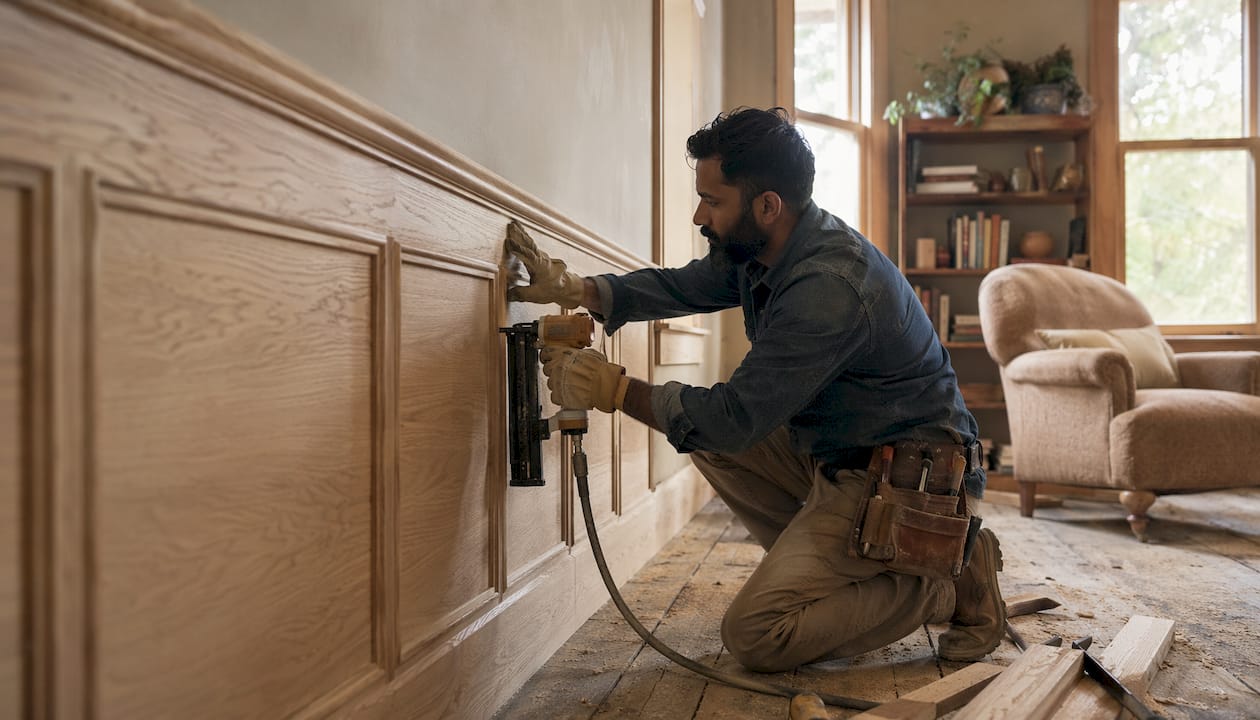
Wall treatments are the second major category. Wainscoting covers 33–50% of a wall’s surface and delivers a classic, structured look that plain paint cannot replicate. Shiplap panels create a horizontal rhythm that makes rooms feel wider. Decorative molding and trim framing doorways or ceilings add architectural weight to otherwise flat surfaces. These treatments work in living rooms, dining rooms, and primary bedrooms with equal effect.
Ceiling treatments are the most underused category in residential woodwork. Tray ceilings with painted or stained wood inserts add depth to a flat room. Exposed beams, whether structural or decorative, bring warmth and a sense of craftsmanship that no wallpaper can match. In 2026, the “wood-drenched interior” trend pushes beams, paneling, and floors into the same tonal family, creating a unified envelope of natural texture.
Pro Tip: When selecting wood for wall panels or beams, choose a species with visible grain, such as white oak or Douglas fir. Grain is what makes wood feel alive. A smooth, featureless wood loses the warmth that makes the investment worthwhile.
| Wood Feature | Best Room | Primary Benefit |
|---|---|---|
| Built-in cabinetry | Mudroom, living room | Storage without extra square footage |
| Wainscoting | Dining room, hallway | Architectural character, wall protection |
| Shiplap panels | Bedroom, living room | Visual width, texture |
| Exposed beams | Kitchen, great room | Warmth, craftsmanship |
| Window seat with storage | Reading nook, bedroom | Seating plus hidden storage |
How can you plan and execute personalized woodwork projects effectively?
Good planning is the difference between a built-in that looks like furniture and one that looks like it grew from the wall. The process has a clear sequence, and skipping steps creates problems that are expensive to fix later.
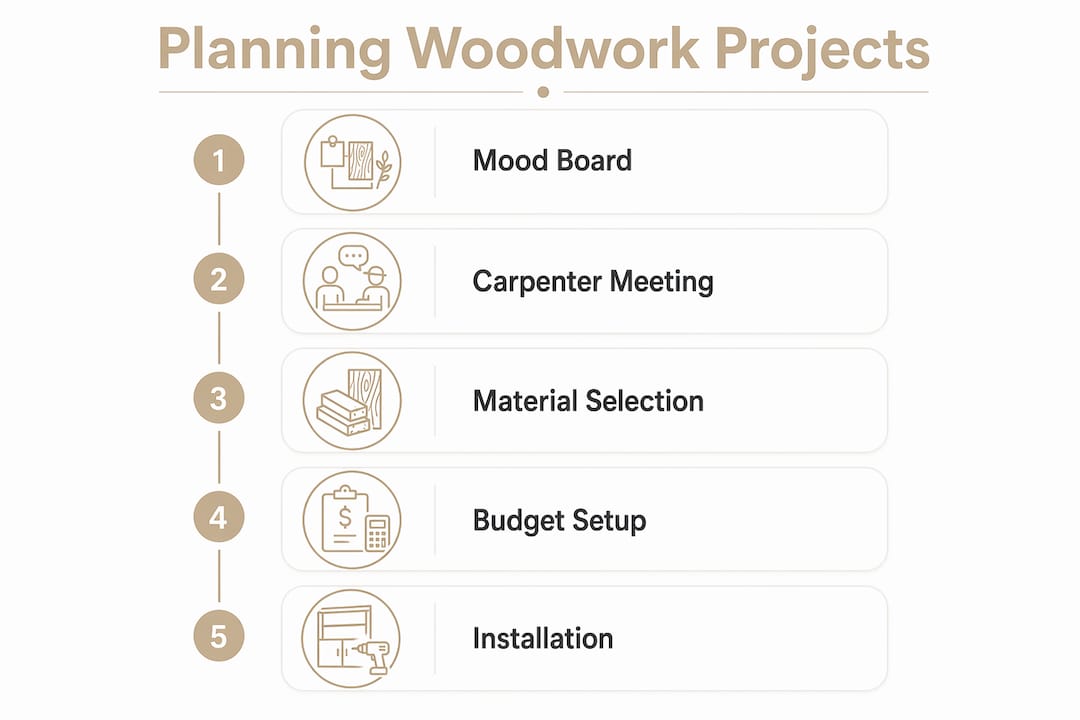
- Assess your space. Walk through each room and identify what is not working. A hallway with no storage, a living room wall that swallows furniture, a bedroom with no dedicated reading spot. Write these down as problems, not as solutions. Solutions come later.
- Gather measurements and inspiration. Measure ceiling height, wall width, door and window placements, and any existing trim profiles. Collect inspiration photos and mark specific features you want, such as shelf spacing, door styles, or hardware finishes. Circling details in photos gives a carpenter something concrete to work from.
- Choose your wood species and finish. White oak suits modern and transitional interiors. Pine works well for painted built-ins. Walnut delivers richness in statement pieces. Match the species to the finish: clear coat preserves grain, while paint hides it. Choose based on what the room needs most.
- Decide between DIY and professional installation. Built-ins require scribing to uneven walls and cutting oversized parts to fit precisely. This step alone separates professional results from amateur ones. If your walls are out of plumb or your floors are not level, a professional carpenter will catch and correct these issues before they become visible gaps.
- Set a realistic budget. Material costs vary widely by wood species and hardware selection. Labor is the largest cost driver for complex built-ins. Savings come from simplifying door profiles, choosing painted finishes over stained hardwood, and phasing projects over time rather than completing everything at once.
Pro Tip: Before meeting with a carpenter, build a simple mood board with three to five photos that share a common detail. That shared detail is your design anchor. It tells the carpenter what you actually want, not just what you think you want.
| Project Type | Key Tools Needed | Skill Level |
|---|---|---|
| Floating shelves | Drill, level, stud finder | Beginner |
| Wainscoting | Miter saw, nail gun, level | Intermediate |
| Built-in cabinetry | Table saw, router, scribing tools | Advanced |
| Wood accent wall | Circular saw, brad nailer, level | Intermediate |
| Exposed beam installation | Reciprocating saw, structural hardware | Advanced |
What DIY wood decor projects can personalize your home on a budget?
DIY wood projects deliver real results when the scope matches the skill level. The most successful budget projects share one trait: they use standard materials available at any lumber yard and require no specialty equipment beyond what a homeowner likely already owns.
- Modular closet towers. Standard plywood and pocket hole screws are all you need to build a closet tower that rivals store-bought systems. A shelf pin jig keeps shelf holes aligned and evenly spaced. Build the tower slightly oversized, then scribe it to fit the closet walls for a built-in appearance.
- Floating shelves. A floating shelf requires a drill, a level, a stud finder, and a length of solid wood or thick plywood with edge banding. The key is finding studs and using long screws. Shelves that pull away from the wall after six months were never properly anchored.
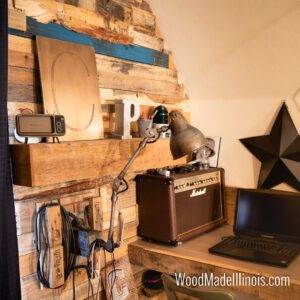
- Wood accent walls. Pallet wood, shiplap, or tongue-and-groove boards applied to a single wall create a focal point without a full room renovation. A pallet wood wall adds texture and warmth at a fraction of the cost of wallpaper or tile. Sand lightly and apply a clear matte finish to preserve the natural grain.
- Personalized wooden signs and frames. Router lettering or hand-painted text on a solid wood blank creates a piece that no mass-market store can replicate. Use a wood burner for fine detail work on softer species like basswood or pine.
- Stained vs. painted finishes. A light stain in a warm walnut or honey oak tone enhances grain without obscuring it. Paint covers grain entirely and works best on MDF or pine when a clean, furniture-like look is the goal. Preserving natural grain supports biophilic design principles and keeps the emotional warmth of wood intact.
Pro Tip: Never skip sanding between coats of finish. One coat of stain followed by unsanded polyurethane traps dust and creates a rough surface. Two light coats with a 220-grit sand between them produce a finish that looks professional and lasts for years.
How to achieve a cohesive look using wood accents throughout your home?
Custom carpentry is a visual language, and like any language, it needs consistency to communicate clearly. A home with five different wood tones in five different rooms reads as unfinished, not eclectic. Cohesion comes from deliberate repetition, not from matching everything exactly.
The repetition strategy works like this: choose one primary wood tone and place it in at least three separate locations throughout the home. A white oak TV slat wall in the living room, a single white oak floating shelf in the hallway, and a white oak bench in the entryway create a thread that ties the spaces together without making them identical. Repeating the same wood tone in three or more spread-out elements prevents visual clutter and creates a sense of intention.
Practical principles for design cohesion:
- Keep wood tones within the same warm or cool family. Mixing a gray-toned ash with a red-toned cherry creates tension that reads as a mistake.
- Use natural textures to balance smooth surfaces. A rough-sawn beam above a smooth quartz countertop creates contrast that feels deliberate.
- Coordinate wood finishes with metal hardware. Warm wood tones pair with brass or matte black. Cool gray tones pair with brushed nickel or chrome.
- Biophilic design recommends sustainably sourced wood with visible grain to bring outdoor warmth inside. Hiding wood behind dark paint defeats this purpose entirely.
- In kitchens, a wood hood surround or open wood shelving breaks up the visual weight of upper cabinets without requiring a full renovation.
The entryway is the highest-leverage room for wood cohesion. It is the first and last space a visitor sees. A built-in bench with hooks above and storage below, finished in the same tone as the living room shelving, signals that the home was designed with care from the first step inside.
Key Takeaways
Custom woodwork personalizes a home most effectively when it combines deliberate design repetition, functional built-ins, and wood species chosen to preserve natural grain.
| Point | Details |
|---|---|
| Built-ins maximize function | Mudroom drop zones, window seats, and media centers add storage without expanding square footage. |
| Wall treatments add character | Wainscoting at 33–50% wall height and shiplap panels deliver architectural depth that paint cannot. |
| Repetition creates cohesion | Place the same wood tone in three or more locations to unify separate rooms visually. |
| Planning prevents costly errors | Scribing to uneven walls and gathering detailed inspiration photos improves both fit and carpenter communication. |
| DIY projects work within limits | Floating shelves, closet towers, and accent walls are accessible with standard tools and plywood. |
What I have learned from years of watching wood transform a home
Wood is patient. It does not demand attention the way a bold paint color does, but it rewards the homeowner who chooses it deliberately. After years of working with clients across Central Illinois, the pattern I see most often is this: the projects that disappoint are the ones where beauty was chosen over function. A beautiful floating shelf that bows under the weight of books within a year is not a success. Well-balanced custom wood pieces must serve a daily function to earn their place in a room.
The 2026 trend toward built-in minimalism is one I genuinely respect. It asks homeowners to commit to fewer, better pieces rather than filling every wall with something decorative. A single, well-built media wall with clean lines and concealed storage does more for a living room than six separate furniture pieces ever could. That restraint takes confidence, and it takes trust in the craftsman executing the work.
My honest advice: tell your carpenter what frustrates you about your space before you tell them what you want it to look like. The best woodwork solutions come from solving real problems, not from replicating a photo. And when you do bring photos, mark the specific details that matter to you. Door style, shelf depth, hardware finish. Those specifics are what separate a project that feels like yours from one that feels like it belongs to someone else’s house.
— Wood
Woodmadeillinois: where your woodwork ideas become real rooms
Woodmadeillinois brings over 100 years of combined carpentry experience to every project in Central Illinois, from a single accent wall to a full home built-in installation. The team specializes in personalized design consultations that start with your space’s real challenges, not a catalog of preset options.
Whether you are planning a mudroom overhaul, a custom shelving installation, or a full living room built-in, Woodmadeillinois delivers cost-effective solutions with a quick turnaround. Every project uses materials selected for your style, your budget, and your daily life. Connect with the trusted local carpentry experts at Woodmadeillinois to schedule a consultation and turn your woodwork ideas into a finished room worth living in.
FAQ
What are the best ways to personalize home with woodwork?
Built-in cabinetry, wood accent walls, and wainscoting are the highest-impact options. Each adds both character and function without requiring a structural renovation.
How much does custom woodwork cost for a home?
Cost varies by project scope, wood species, and hardware selection. Painted pine built-ins cost significantly less than stained white oak, and phasing projects over time reduces upfront investment.
Can beginners tackle DIY wood decor projects?
Floating shelves and modular closet towers are accessible to beginners using standard tools like a drill, level, and stud finder. Built-in cabinetry with scribing to uneven walls requires intermediate to advanced skill.
How do I keep wood accents from looking mismatched?
Repeat the same wood tone in at least three separate locations throughout your home. Keeping all tones within the same warm or cool family prevents the visual tension that reads as a design mistake.
What wood species work best for home personalization projects?
White oak suits modern and transitional interiors, pine works well for painted built-ins, and walnut delivers richness in statement furniture pieces. Match the species to the finish and the room’s existing color palette.