You can safely reuse pallet wood for outdoor decor, accent walls, and non-food-contact furniture, but never for cutting boards, baby furniture, raised garden beds, or anything you burn without knowing its treatment history. Two red flags mean stop immediately: a stamp marked “MB” which signals methyl bromide fumigation, and heavy chemical staining or a sharp, unnatural odor, so consider looking into safer material alternatives when planning your project. Look for the IPPC/HT stamp before anything else. Remember that Penn State Extension tracked a very large number of pallet-related ER visits over several years, most from handling, not chemicals.
TL;DR:
- Pallet wood treated with methyl bromide (MB) or showing chemical odors must be avoided, especially for indoor, food-contact, or baby-related projects.
- Most injuries from handling pallets result from physical damage like punctures or strains, not chemical residues, emphasizing the need for proper lifting and protective gear.
- The IPPC stamp confirms a pallet’s compliance with pest control standards; HT indicates heat treatment, while MB signals fumigation, which is unsafe for reuse.
- Visual inspection for paint markings, mold, or structural damage is crucial before repurposing pallets for any project.
- Professional verification, including stamp checking, moisture testing, and nail removal, is recommended for load-bearing or indoor applications to ensure safety and safety compliance.
Table of Contents
- Quick On-Site Checklist: Inspecting a Pallet Before You Take It
- Reading Pallet Stamps: What IPPC, HT, MB, and KD Actually Mean
- Why Handling Injuries Outnumber Chemical Exposure Risks
- Deconstruction Safety: Tools and Steps for Taking a Pallet Apart
- Chemical and Contamination Hazards You Can’t See
- Is Pallet Wood Safe Indoors? What to Avoid and What’s Fine
- Who Owns That Pallet? Sourcing and Permission Guidelines
- Storage and Stacking: Preventing Fires and Collapses
- What Professional Carpenters Actually Do With Pallet Wood
- A Quick Framework: DIY It or Call a Carpenter?
- Get Professional Help With Your Pallet Wood Project
- Where to Verify Pallet Safety Standards
- Sources
- FAQ
Quick On-Site Checklist: Inspecting a Pallet Before You Take It
Before a pallet leaves the loading dock or curb, give it sixty seconds of real scrutiny. Most safety mistakes happen because someone grabbed a pallet without a second look.
Start with the stamp burned or stenciled into the wood, usually on the center block. Check for paint, since color often signals company ownership rather than abandonment. Sniff for chemical odors and scan for mold, dark staining, or pest tunnels in the grain.
- Confirm there’s a visible IPPC stamp with a country code and treatment letter
- Check for red or blue paint, which usually marks rental fleets like PECO or CHEP
- Look for mold, soft or crumbling wood, and insect exit holes
- Smell the wood; a sharp chemical scent means walk away
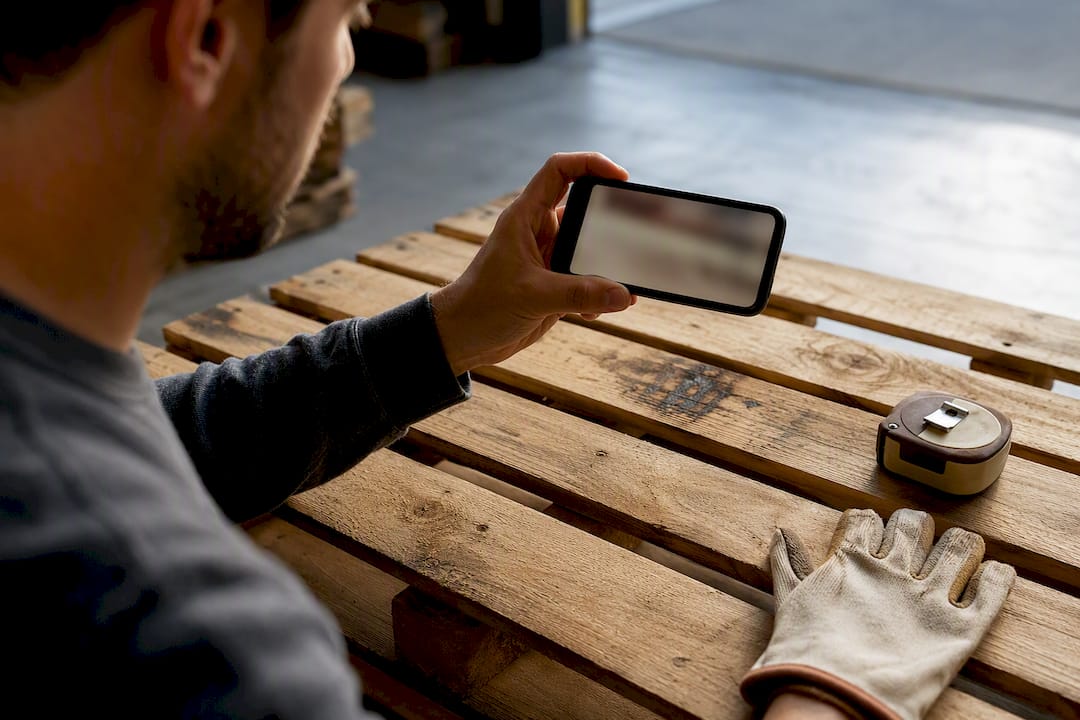
- Photograph the pallet and stamp before moving it, in case you need to confirm origin later
If the pallet sits behind a business, ask before taking it. Painted, branded pallets almost always belong to a rental pool, and helping yourself can create liability you don’t want. Wear gloves when handling any pallet you haven’t inspected closely. Splinters and old nails cause more real damage than any chemical residue you’ll encounter in a parking lot.
Pro Tip: Keep a phone photo log of every pallet stamp you collect. If a project later raises questions about wood origin, you’ll have a record instead of a guess.
Reading Pallet Stamps: What IPPC, HT, MB, and KD Actually Mean
The IPPC wheat stamp is the international mark confirming a pallet meets ISPM-15 standards for pest control in wood packaging. Find it on the pallet’s block or a stringer board, usually inside a circle or box logo.
Reading it left to right, you’ll typically see the wheat-stalk symbol, a two-letter country code, a facility registration number, and a treatment code. That last code determines whether the wood is worth saving.
- HT means heat treated, with the core brought to 56°C for 30 minutes under ISPM-15 rules and no chemical fumigant involved
- MB means methyl bromide fumigation, a pesticide gas that leaves residue risk; avoid these pallets entirely
- KD means kiln dried, often paired with HT, and indicates lower moisture content
- DB means debarked, a bark-removal step with no bearing on chemical safety
HT is the dominant treatment used across the United States, and MB has fallen out of favor, though older MB-stamped pallets still circulate in warehouses and resale yards. If a pallet has no stamp at all, or the mark looks hand-drawn or peeling off as a sticker rather than burned into the wood, treat it as unverified. A missing stamp isn’t proof of danger, but it removes your ability to rule anything out, which is its own kind of risk.
Why Handling Injuries Outnumber Chemical Exposure Risks
Most pallet accidents have nothing to do with treatment chemicals. Penn State Extension’s ER-visit data indicates physical injuries like strains, punctures, and crush injuries from falling stacks are far more common than reported chemical exposure incidents. The wood itself is heavy, unevenly weighted, and studded with exposed fasteners, which makes basic technique your best defense.
- Lift with your legs, not your back, and get a second person for anything over 40 pounds or awkwardly shaped
- Wear cut-resistant gloves, steel-toe or composite-toe boots, and safety glasses whenever you’re moving or cutting pallets
- Check for protruding nails on every face before you grip a board
- Inspect whether the pallet uses stringers (solid runner boards) or blocks (smaller support cubes); block pallets flex differently and fail differently under load
- Never stand on a pallet as a makeshift ladder or step, and never stack furniture on one without reinforcing it first
Structural failure sneaks up on people because a pallet can look solid while a hidden crack in a stringer waits for one more pound of pressure. If a board flexes more than its neighbors or a stringer shows a hairline split, retire that pallet from anything load-bearing.
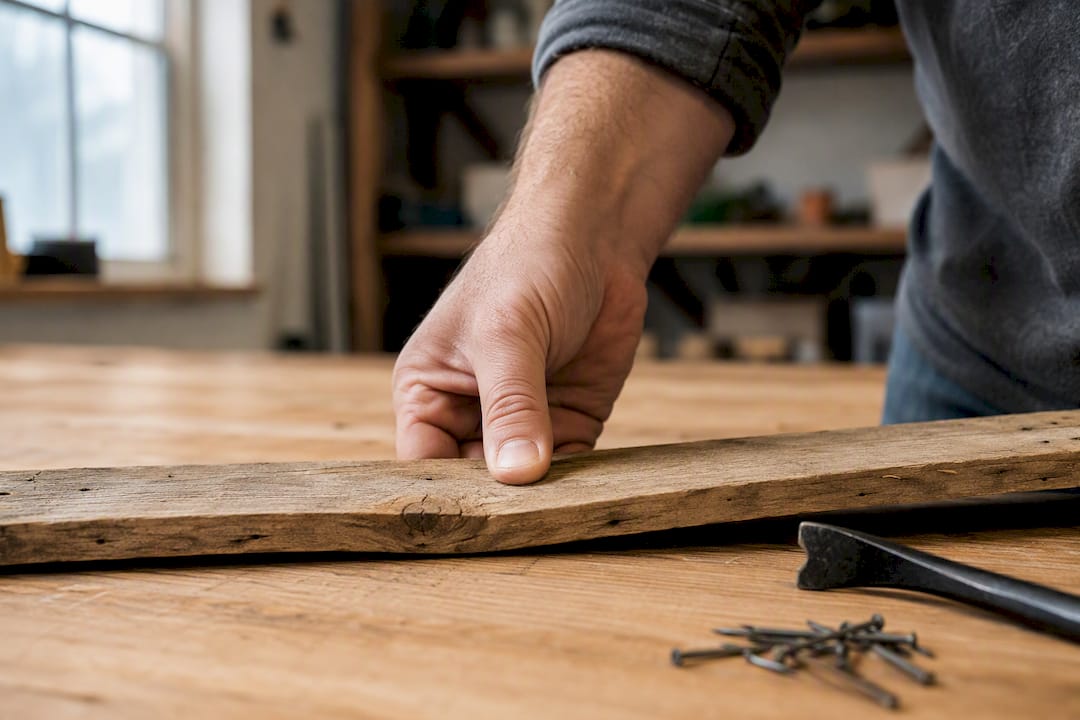
Pro Tip: Test every board with hand pressure before cutting it into furniture. A board that creaks or bows under light thumb pressure has hidden damage a visual check will miss.
Deconstruction Safety: Tools and Steps for Taking a Pallet Apart
Deconstruction is where most DIY injuries actually happen, largely from prying against resistance or hitting a buried nail with a saw blade. A pallet buster or pry bar designed for demolition work gives you leverage without the kickback risk of a saw fighting through metal.
- Stabilize the pallet on a flat surface or workbench, never balanced on an edge
- Put on gloves and eye protection before the first pry
- Remove long nails or staples first, working from the outer boards inward
- Only introduce a saw once you’ve confirmed the cut path is clear of metal
- Sand rough edges, wipe down dust, and sort boards by condition before storage
A reciprocating saw fitted with a nail-cutting blade handles stubborn fasteners better than a standard wood blade, which dulls fast and can snag. Clamp boards down rather than holding them freehand.
- Discard any board with dark staining that doesn’t sand out, since it may indicate a chemical spill from cargo rather than surface dirt
- Discard boards with soft, spongy sections, which often mean rot or long-term moisture damage
- Keep aside boards with visible metal fragments for extra inspection before use.
Chemical and Contamination Hazards You Can’t See
Methyl bromide fumigation was designed to kill pests inside the wood, and that’s exactly why MB-marked pallets carry lingering concern. The fumigant is a gas applied under controlled conditions, and pallets treated with it should never be burned, sanded into dust you’d breathe, or used anywhere near food. If you see “MB” stamped anywhere, set that pallet aside for return or disposal, not your next project.
Chemical treatment isn’t the only hidden hazard. A study cited by Down To Earth Woodworker found E. coli and Listeria present in a notable portion of tested pallets, likely from spilled cargo, animal products, or standing water during transport and storage. No amount of sanding or wiping reliably removes bacterial contamination once it’s worked into the wood grain, which is exactly why extension resources caution against using pallet wood for raised garden beds even when the pallet carries an HT stamp. Heat treatment addresses pests, not whatever leaked onto the boards afterward.
- Never burn a pallet with an MB stamp, unknown treatment history, or visible chemical staining
- Never burn painted pallet wood; the paint itself can release toxic fumes
- Take unwanted treated pallets to a certified recycling center or return them to the original supplier
- Reserve backyard fire pits for untreated, verified scrap lumber only
Burning treated wood in an enclosed space, including a wood stove or fire pit near a home, can concentrate fumes in ways open-air ventilation won’t fully clear. When in doubt, don’t burn it.
Is Pallet Wood Safe Indoors? What to Avoid and What’s Fine
Indoor pallet projects split cleanly into two categories: things that touch nothing you eat or that a baby chews on, and everything else. Accent walls, shelving, picture frames, and decorative furniture fall into the safer category, provided the wood passed inspection for stamps, staining, and odor.
Cutting boards, countertops, baby cribs, and anything with direct or repeated food contact sit firmly on the avoid list, regardless of how clean the pallet looks. Consumer safety guides note that surface cleaning or sealing doesn’t reliably remove contamination once it’s absorbed into the wood, so a coat of polyurethane won’t undo an unknown exposure history.
- Verified HT-stamped pallets with no staining or odor: reasonable for accent walls and shelving
- Unstamped or unknown-origin pallets: decorative outdoor use only, never indoors near food
- Anything touching food, mouths, or infant skin: skip pallet wood entirely
Professionals who do accept pallet wood for interior work typically dry it fully, test a scrap piece for lingering odor after a heat cycle, and seal only after confirming there’s no staining bleeding through. If a project calls for a cutting board or a crib, buy new lumber or source reclaimed wood from a reputable supplier with documented origin instead.
Who Owns That Pallet? Sourcing and Permission Guidelines
Painted pallets almost always belong to someone else. Red paint commonly marks PECO-owned pallets, while blue paint typically indicates CHEP ownership, and both companies run rental pools that expect their equipment back. Taking a painted pallet without asking isn’t a gray area; it’s taking company property.
- Ask store or warehouse staff directly before removing any pallet, painted or not
- Prefer manufacturer offcuts and certified recycled lumber over curbside finds when the project matters
- Treat any pallet with a peeling sticker, faded stamp, or hand-scrawled marking as unknown risk rather than assuming it’s safe
- Document permission with a quick photo or text if you’re taking pallets regularly from one location
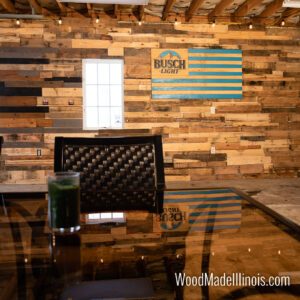
Some carpenters build entire pallet wood accent walls using only verified, unpainted, HT-stamped stock sourced with permission, which sidesteps both the ownership and the contamination question at once.
Storage and Stacking: Preventing Fires and Collapses
A pile of pallets in a garage or yard is a bigger hazard than most people assume, both for collapse and for fire load. OSHA’s material handling and storage rules call for stable stacking, weight limits appropriate to the surface, and clear aisles for movement, and the same logic applies at home scale.
- Stack pallets no more than four or five high on level, solid ground
- Leave a clear path around any stack so nothing gets pinned or blocked
- Keep pallets dry and off bare soil to slow rot and mold growth
- Cover outdoor stacks to reduce moisture cycling and pest attraction
- Label any pallet with an unclear stamp so it doesn’t get grabbed for the wrong project later
For disposal, return branded pallets to their owner, check for a municipal pallet recycling program, or contact a certified recycler. Burning is never the answer for anything with unverified treatment.
What Professional Carpenters Actually Do With Pallet Wood
A carpenter who works with pallet wood daily follows a repeatable sequence: verify the stamp, check moisture content, pull every nail, let the wood acclimate indoors for several days, then finish. Skipping any one of those steps is how amateur accent walls end up with warped boards or trapped moisture.
For anything load-bearing or food-adjacent, most professionals reach for new or certified reclaimed lumber instead. The labor to fully verify and prep pallet wood for high-contact use often costs more time than buying known-origin material outright. That trade-off is worth weighing honestly before committing a weekend to salvage.
A Quick Framework: DIY It or Call a Carpenter?
Ask yourself three things: is the project indoor or outdoor, will it touch food or children, and does it bear structural weight? Any “yes” on the last two points means hiring a professional, since accountability and contamination history matter more than saved time once something touches your family or your home’s frame.
— Wood
Get Professional Help With Your Pallet Wood Project
Verifying stamps, checking moisture content, and pulling every nail from a stack of pallets takes real time, and one missed detail can mean redoing an entire wall. Professional carpentry services handle verification as part of custom pallet wood installations to ensure reclaimed wood quality without uncertainty about unmarked boards.

Our team builds pallet wood wall accents starting from $500 for homeowners and small businesses across Central Illinois who want the character of reclaimed wood without the guesswork of sourcing and prepping it themselves. Before any installation, ask us about provenance and treatment verification. If pallet wood doesn’t fit your project’s safety needs, our broader carpentry services cover everything from built-ins to home office renovations using materials chosen for the specific job. Reach out through our trusted local carpentry page to schedule a design consultation and get a straight answer on whether pallet wood or new lumber makes more sense for your space.
Where to Verify Pallet Safety Standards
- Penn State Extension: handling injury data and general pallet safety guidance
- OSHA 1910.176: material handling and storage regulations
- ISPM-15 heat treatment standard: stamp codes and treatment requirements
- UC ANR Backyard Gardener: contamination risk for garden use
- NIOSH woodworking safety publications: workplace hazard guidance
Sources
- Be Safe Around Wooden Pallets! — Penn State Extension
- Picking Pallets for Raised Beds — The Backyard Gardener (UC ANR)
- OSHA — Material handling and storage regulation (1910.176)
FAQ
What Are the OSHA Safety Standards for Pallets?
OSHA’s material handling and storage regulation (1910.176) covers safe stacking heights, stable storage, and clear aisle access for pallets in workplace settings.
How Can You Tell if Pallet Wood Is Toxic?
Check the stamp for “MB,” which means methyl bromide fumigation, and inspect for heavy staining, chemical odor, or mold; any of these signal the wood isn’t safe for indoor or food-contact use.
How Do You Know if Pallet Wood Is Safe to Burn?
Never burn painted pallets or any pallet stamped MB or missing a stamp entirely; only untreated, unpainted scrap wood with a confirmed clean history belongs in a fire.
How Can You Tell if a Pallet Has Been Treated?
Look for the IPPC wheat stamp on the block, usually with an “HT” for heat treatment or “MB” for fumigation printed next to the country code and facility number.
Can Woodmadeillinois Help With a Safe Pallet Wood Project?
Yes. Woodmadeillinois builds custom pallet wood wall accents starting from $500, with verified sourcing and treatment checks handled as part of the installation.